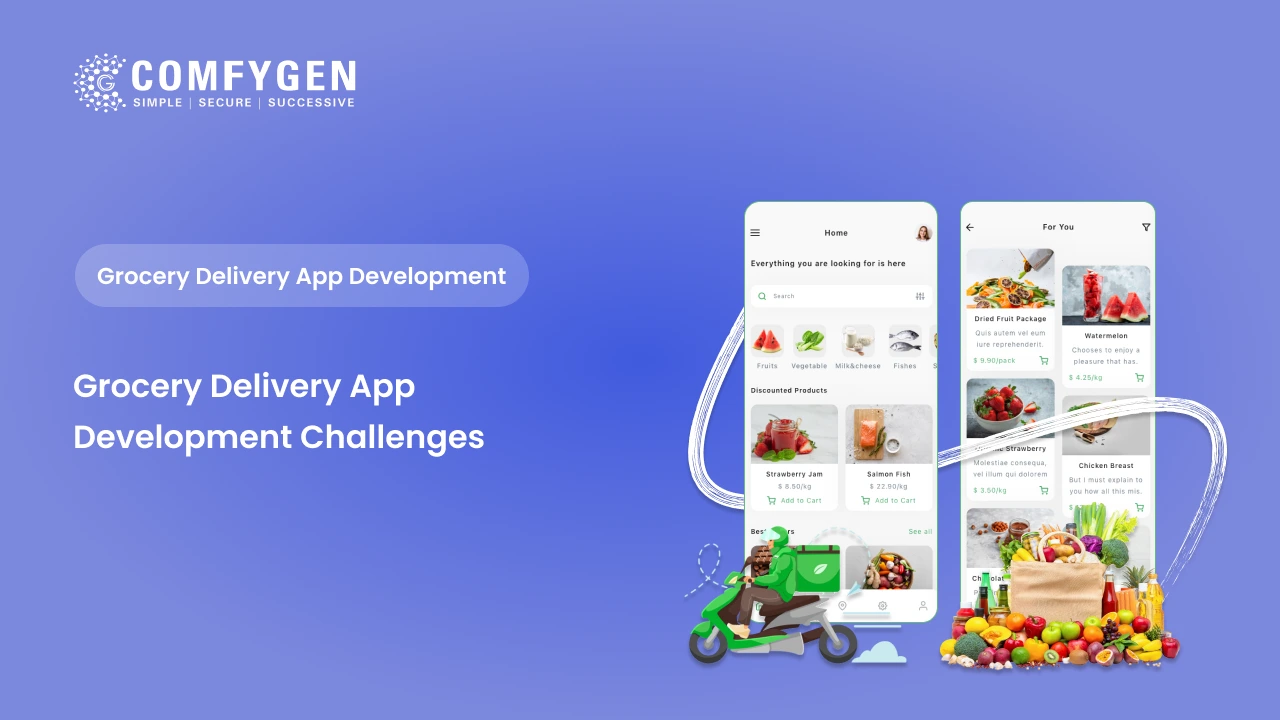





The problems that break grocery delivery apps are operational, not technical. Stock counts drift out of sync with the shelf. Items run out after the customer has paid. Peak-hour traffic overwhelms checkout. Delivery slots get double-booked. Fresh produce weight changes the final total. Each one has a known fix, and each one costs far more to retrofit than to build in from the start.
Most articles about grocery app development challenges list generic software problems with the word grocery inserted. Budget overruns. Choosing a tech stack. Finding good developers. Those apply to every app ever built.
This article covers the eight problems specific to grocery, the ones that show up after launch when real orders start flowing. Each comes with a fix a technical team can act on.
1. Stock Counts Drift Away From the Shelf
The problem: Grocery catalogs run past 10,000 items, and counts change with every in-store sale, not just app orders. A shopper in aisle four buys the last two loaves and your app still shows six available. A count refreshed overnight is wrong by mid-morning on bread, milk, and bananas.
This causes more cancelled grocery orders than anything else, and it gets worse as you add stores.
The fix:
- Sync with the POS rather than treating the app as the source of truth. The till knows what left the building.
- Cache fast-moving items in Redis with a short expiry, because stock gets read on every product view and hitting the database each time will not hold at peak.
- Flag low-stock items in the customer app before they reach the cart, so nobody pays for something that is nearly gone.
- Set different refresh rates by category. Tinned goods can refresh hourly. Fresh bread cannot.
Teams that manage inventory in grocery delivery apps well treat the POS as the single source of truth and build everything else around it.
2. Items Run Out After the Customer Pays
The problem: The customer paid for it. The picker reaches the shelf and it is empty. Somebody has to decide what happens, and the picker is standing there waiting.
Grocery baskets average 20 to 40 items. Even a 2% out-of-stock rate touches most orders. Without a proper flow, every one of those becomes a cancelled line, a partial refund, and often a support ticket.
The fix: A three-point substitution flow.
- At checkout, the customer sets a preference per item or per order. Allow a similar brand, allow a different size, or refund instead.
- At the shelf, the picker sees that preference and gets replacements ranked by similarity and price. Suggest the closest match first, not the most expensive one.
- At approval, the customer gets a push notification with the proposed swap and a countdown. If they do not answer inside the window, the preset preference applies automatically.
Substitution handling is the one item on any list of grocery delivery app features that food delivery apps never need, which is why teams coming from restaurant delivery tend to leave it out.
3. Peak-Hour Traffic Breaks Checkout
The problem: Grocery demand is not spread evenly. Weekday evenings and weekend mornings carry most of the volume. A platform sized for the daily average falls over at 6pm on a Friday, which is exactly when you most need it working.
Teams usually discover this in week three of live operation, with customers watching.
The fix:
- Load test at three times your expected peak before launch, not after.
- Queue order processing instead of handling it synchronously. The customer needs a fast confirmation, not a completed backend transaction.
- Cache the catalog aggressively. Product names, images, and descriptions change far less often than stock levels, so they do not need a live database read.
- Scale horizontally at the application layer, and confirm your hosting plan allows it before you need it.
Reliable data analytics in grocery delivery apps shows the peak coming days ahead, which gives you time to add capacity instead of reacting to a crash.
4. Delivery Slots Get Double-Booked
The problem: Two customers book the same 6pm to 8pm slot because both capacity checks ran before either order finished writing. Now you have more deliveries than drivers, and someone gets a late order or an apology call.
This is a race condition, and it only shows up under load, which is why it usually survives testing.
The fix:
- Treat slot capacity as a reserved resource with a lock, the same way seat booking works in ticketing.
- Reserve the slot when the customer selects it, with a short hold, and release it if checkout is abandoned.
- Set capacity per zone rather than globally. Twenty orders is fine across four zones and impossible in one.
- Show slots as full when they are full. Failing at checkout after someone has picked a time is worse than not offering it.
Have a Grocery App Idea?
From planning to launch, get the right technology and development support to build a reliable grocery delivery platform
Discuss Your App Idea
5. Fresh Produce Changes the Final Bill
The problem: Loose fruit, vegetables, meat, and fish are priced by weight after picking. The customer checked out at one amount and the actual amount is different. Charge the wrong figure and you get a chargeback. Charge nothing extra and you absorb the difference on every order.
The fix:
- Authorise a slightly higher amount at checkout and capture the actual amount after weighing. Most payment gateways support this, but it has to be built in deliberately.
- Set a clear tolerance, commonly 10%, and tell the customer what it is on the checkout screen.
- Show weight-priced items separately in the cart so the estimate is visibly an estimate.
- Send the final receipt with the actual weights listed.
Skipping the explanation is what generates support tickets. Customers accept a variable total when they are told to expect one.
6. Driver Allocation Wastes Shifts
The problem: Orders get assigned by shift roster or by whoever is free, rather than by where the driver actually is. Two riders cross the same street in opposite directions. Drops per shift stay low, fuel costs stay high, and delivery times slip at exactly the wrong moment.
The fix:
- Allocate by live position and current load, not by roster.
- Batch nearby orders heading to the same zone into one run.
- Sequence the stops rather than assigning them one at a time, so the driver gets a route instead of a list.
- Rebalance when a new order arrives mid-route if it fits the existing path.
Location-driven dispatch sits at the centre of hyperlocal grocery app development, where store discovery and rider assignment both run off position rather than a central warehouse.
7. Frozen Items Arrive Warm
The problem: Frozen goods soften and chilled goods warm between the store and the door. The complaint arrives after delivery, when you have no evidence either way, and refunds on fresh produce add up faster than most operators expect.
The fix:
- Flag temperature-sensitive items in the picker workflow so they get collected last, not first.
- Prioritise orders containing frozen goods in route sequencing.
- Use insulated bags and record which orders used them.
- Capture proof of delivery with a timestamp, so a dispute about a two-hour-old delivery has a fact attached to it.
- Set a shorter maximum delivery window for orders containing frozen items, even if it limits slot options.
8. Customer Acquisition Costs More Than the Build
The problem: The app works. The stock syncs. The drivers deliver. Nobody uses it.
This kills the most grocery launches, and almost no development company writes about it, because it is not a development problem. A build might cost $30,000. Getting the first 5,000 active users can cost more than that.
The fix:
- Plan the acquisition budget alongside the build budget, not after launch.
- Launch in one delivery zone and win it before expanding. A dense, loyal postcode beats thin coverage across a city.
- Build reorder prompts early. Weekly grocery shops repeat, so retention is cheaper here than in almost any other app category.
- Offer a subscription for free delivery. Customers who pay for it order more often to justify it.
- Do not compete with national platforms on catalog size. Compete on delivery speed in a small radius, on fresh quality, or on serving a specific community.
The best grocery delivery apps all won one market before entering a second, and their early growth came from order frequency rather than new signups.
Which Problems Cost the Most to Fix Later
Retrofitting is always more expensive than building it in. These three are the worst offenders.
| Problem | Why retrofitting hurts |
| Substitution flow | Touches the picker app, the customer app, and the payment layer at once. Adding it later means reworking all three |
| Multi-store architecture | If the data model assumes one store, adding a second means a migration rather than a configuration change |
| Slot capacity locking | Race conditions surface under real load, so the fix arrives after customers have already been affected |
Decide your substitution policy and your expansion plan before development starts. Both are business decisions, not technical ones, and both shape the architecture.
What to Decide Before You Build
- What is your out-of-stock policy, in writing?
- Which POS are you syncing with, and does it have an API?
- What is your expected peak, and have you load tested three times that?
- How many delivery zones at launch, and what is the capacity per slot?
- Do you sell anything priced by weight?
- What is your acquisition budget for the first six months?
Answering these six before a line of code gets written saves more money than any other preparation step. The grocery delivery app development guide covers the full build sequence that follows, from planning through to app store launch.
Building With Comfygen
Comfygen has delivered 550+ projects for 400+ clients across 30+ countries since 2019. Our team has shipped grocery and quick commerce apps live on both app stores, which means the problems above are ones we have already solved rather than ones we will discover on your project.
Anyone planning a build can talk to our grocery delivery app development company team about scope, architecture, and where the operational risks sit in their specific model.
Frequently Asked Questions
What is the biggest challenge in grocery delivery app development?
Why are grocery apps harder to build than food delivery apps?
How do you handle out-of-stock items in a grocery app?
How do you stop delivery slots being double-booked?
What happens when produce weighs more than expected?
How much should I budget for customer acquisition?

Mr. Saddam Husen, (CTO)
Mr. Saddam Husen, CTO at Comfygen, is a renowned Blockchain expert and IT consultant with extensive experience in blockchain development, crypto wallets, DeFi, ICOs, and smart contracts. Passionate about digital transformation, he helps businesses harness blockchain technology’s potential, driving innovation and enhancing IT infrastructure for global success.