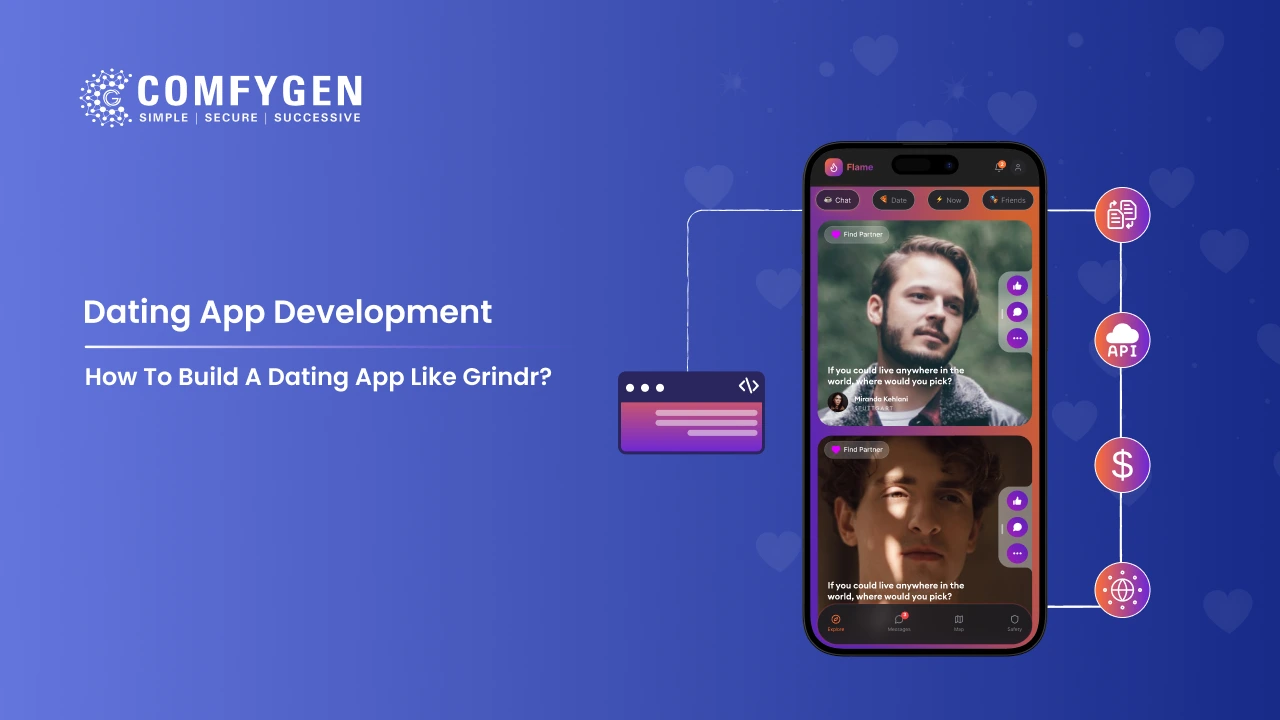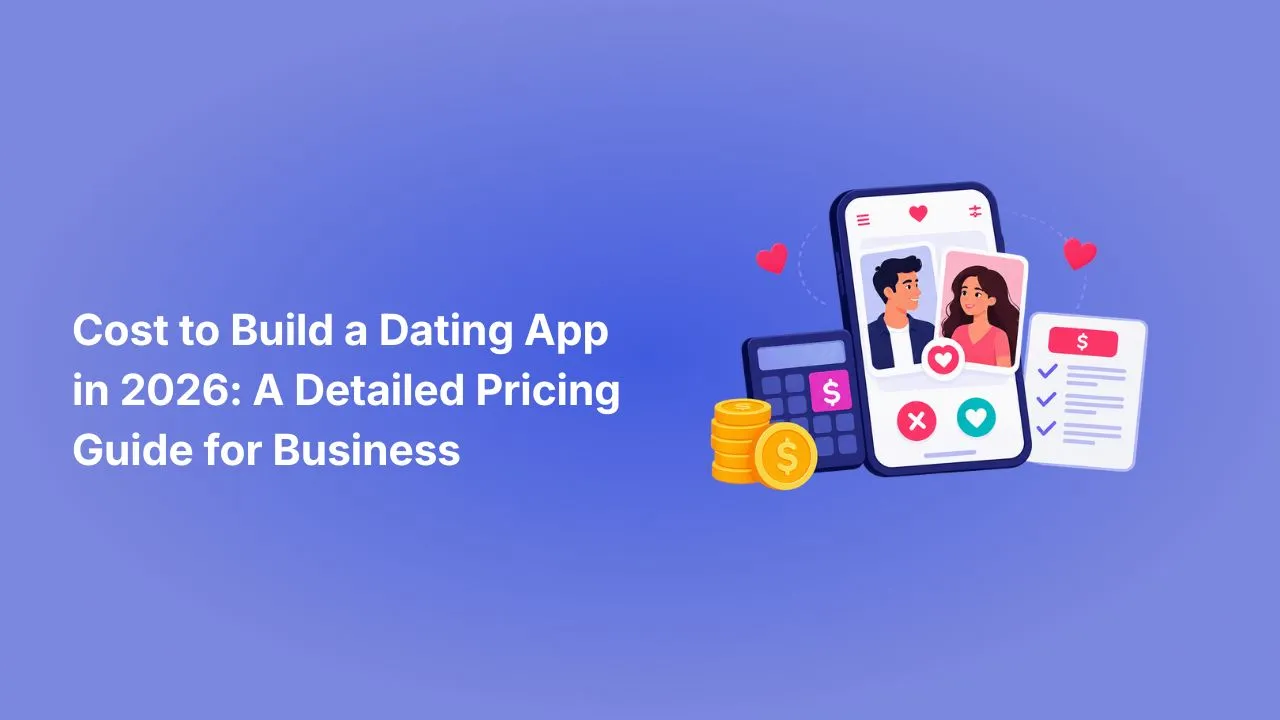





The cost to build a dating app in 2026 runs from $15,000 for a basic app to $200,000 or more for an AI-powered platform. Most founders land between $40,000 and $90,000 and launch in six to nine months. After this statemnt you must be wondering why the price get a instant hike. It’s because “dating app development ” covers everything from a weekend-project, swipe clone to a Tinder-scale platform with AI matchmaking, video calling, and fraud detection running in the background.
So, what determines where your project falls within this range? The main factors are the features you build, the platforms you launch on, and where your development team is based. This guide breaks down the major dating app cost factors and compares development costs in the US and India, so you can create a realistic budget before starting your project.
Key takeaways
- A basic app costs $15,000 to $40,000. Mid-complexity runs $40,000 to $90,000. Advanced platforms reach $200,000 or more.
- Where your team sits is the single biggest lever, often a 50% to 70% swing on the same feature list.
- Face and ID verification adds $4,000 to $9,000 to build, plus a fee per check afterwards.
- App stores take 15% to 30% of in-app revenue, so price your subscriptions with that already deducted.
- Building the app is usually the smaller number. User acquisition is where most first-year budgets go.
Cost to Build a Dating App: Three Tiers
All figures assume a development team based in India working with global clients. Agencies in the US, UK or Western Europe typically charge two to four times more for identical scope.
| Tier | What it includes | Cost | Timeline |
|---|---|---|---|
| Basic | Cross-platform app, sign-up with verification, profiles, search and filters, rules-based matching, chat, report and block, simple admin panel | $15,000 to $40,000 | 4 to 6 months |
| Mid-complexity | Everything above, plus geolocation matching, AI-assisted suggestions, video calls, subscriptions and one-off purchases, moderation dashboard, analytics | $40,000 to $90,000 | 6 to 9 months |
| Advanced | Everything above, plus trained matching models, multi-region infrastructure, a full trust and safety stack, events, and a web platform alongside the apps | $90,000 to $200,000+ | 9 to 12 months |
The Same Tiers in Rupees
Indian founders usually budget in rupees. Converted at roughly 88 rupees to the dollar:
| Tier | Cost in INR |
|---|---|
| Basic | Rs 13 lakh to Rs 35 lakh |
| Mid-complexity | Rs 35 lakh to Rs 79 lakh |
| Advanced | Rs 79 lakh to Rs 1.76 crore+ |
Quotes far below this exist, sometimes Rs 5 lakh. Those usually describe a ready-made clone script with a swipe screen and a chat box, carrying no face verification, no moderation tooling and no compliance work. That omission explains most of the spread you see between agency quotes.
A basic dating app and a swipe-based app are not the same build. Browsing profiles and sending messages is relatively straightforward. A double opt-in swipe engine has to handle high-frequency reads and writes without lag, while a tiered subscription system needs clear feature gating tied to billing status rather than a single premium toggle. That is why the cost to develop a dating app like Tinder goes much higher, depending on its features and technical requirements.
Dating App Development Cost by Feature
Dating app development cost is easier to reason about feature by feature. These are build costs, and they sit inside the tiers above rather than stacking on top of them.
| Feature | Cost |
|---|---|
| Sign-up, profiles and photo upload | $3,000 to $6,000 |
| Face or ID verification integration | $4,000 to $9,000 |
| Search, filters and preferences | $3,000 to $6,000 |
| Swipe interface and match logic | $3,000 to $7,000 |
| Geolocation and distance matching | $4,000 to $8,000 |
| Real-time chat | $5,000 to $12,000 |
| Push notifications | $1,500 to $3,000 |
| Rules-based matching | $4,000 to $9,000 |
| Trained ML matching | $20,000 to $50,000 |
| Video calls | $6,000 to $15,000 |
| Subscriptions and in-app purchases | $5,000 to $10,000 |
| Report, block and moderation tools | $5,000 to $12,000 |
| AI photo and message moderation | $8,000 to $20,000 |
| Admin panel and analytics | $6,000 to $15,000 |
| Safety features such as date check-in | $4,000 to $9,000 |
Two things stand out. Safety and verification together often cost more than the matching screen founders focus on. And trained machine learning matching is by far the most expensive single feature, which is why it belongs in version two rather than version one. A model with no usage data has nothing to learn from.
Which Dating Model Should You Build?
The model you choose changes the budget more than any individual feature, because each one puts the engineering effort somewhere different. Here is how the four common models compare.
| Model | Core loop | Where the money goes | Typical MVP | Main risk |
|---|---|---|---|---|
| Swipe | Swipe, match, chat | Real-time matching engine, subscription tiers | $25,000 to $45,000 | A crowded category with falling paying users |
| Compatibility | Answer questions, get scored matches | Question bank and scoring engine | $30,000 to $50,000 | Slower onboarding, higher drop-off before first match |
| Niche community | Join, browse, connect within one audience | Smaller build, heavier community features | $15,000 to $35,000 | Limited ceiling, but far cheaper to grow |
| Video-first | Short call, then decide | Video infrastructure and live moderation | $35,000 to $60,000 | Per-minute costs and harder moderation |
The right dating model depends on your target audience, product positioning, required functionality, and budget. A niche platform may require fewer features initially, while swipe-based and compatibility-focused products can require more complex matching logic and user flows.
Compatibility-led products are worth a look too, since that is where growth currently sits while swipe apps lose paying users. Building an app like OkCupid costs more upfront because of the question and scoring engine, though it tends to attract users with clearer intent.
One more option deserves a mention. A dating website avoids app store commission entirely, and web pages can rank in Google in a way apps cannot. For a niche audience, that combination sometimes How to Build a Dating Website beats a mobile-first launch.
What Drives the Cost Up or Down
Features You Choose to Build
This is the biggest lever you control. Registration, profiles, basic matching and chat form the baseline of any dating app and are relatively cheap to build well. Adding AI suggestions, geofencing or in-app video is not just more screens. Each one brings infrastructure that has to stay reliable under load.
A practical rule: launch with core matching and messaging, watch how people actually use it, then add the expensive features once real data says they are worth it. Most of the dating app development mistakes that blow budgets come from building everything before anyone has used anything.
Platform Choice
One codebase built with Flutter or React Native covers Android and iOS for roughly 30% to 40% less than two native builds. Separate iOS and Android apps earn their premium only when you need the smoothest possible animation or deep camera work. If a quote tells you cross-platform costs more, ask why.
Backend and Scale
The backend is the part users never see and the part that decides whether your app survives its first busy weekend. Matching, real-time messaging and data security all live here, usually on Node.js or Python. A backend built for 1,000 users behaves very differently at 100,000, and retrofitting that later costs more than building for it now. Planning the tech stack for dating apps early is cheaper than migrating under pressure.
Geospatial queries deserve particular attention. Distance matching on a plain database gets slow fast, so the location matching layer should be designed in from the start.
Design Depth
A template-led design runs $4,000 to $8,000. Custom illustration, motion work and a full design system push past $15,000. Dating products live on feel, so this is a poor place to economise too hard.
Team Model
An in-house team of five in India costs roughly $12,000 to $20,000 a month once salaries, equipment and overhead are counted, and you carry that whether the roadmap is busy or not. Bringing in an agency or a dedicated mobile developer team instead lets the cost move with the work.
Trust and Safety
Most cost guides still skip this, and in 2026 that is a serious omission. Verification, moderation tooling and compliance are now conditions of getting approved and staying listed, not optional extras. The section below covers what they cost.
Dating App Development Cost by Region
Where your team sits is often the single biggest variable, bigger than most feature decisions.
| Region | Hourly rate | Same basic app |
|---|---|---|
| India | $25 to $60 | $15,000 to $40,000 |
| Eastern Europe | $40 to $75 | $35,000 to $70,000 |
| Latin America | $45 to $80 | $40,000 to $75,000 |
| Western Europe | $70 to $150 | $70,000 to $140,000 |
| United States and Canada | $100 to $250 | $90,000 to $180,000 |
The gap is not only labour cost. Office overhead and benefits are baked into hourly rates, and many Indian firms run larger dedicated teams per project, which parallelises work a smaller team would do in sequence.
Cost by App Type
Founders often arrive with a specific app in mind. Here is where each model lands, with the detailed breakdowns living on their own pages.
| App you have in mind | MVP range | Full build |
|---|---|---|
| Tinder-style swipe app | $25,000 to $45,000 | $90,000 to $180,000+ |
| Bumble-style app | $25,000 to $45,000 | $90,000 to $180,000+ |
| OkCupid-style compatibility app | $35,000 to $65,000 | $120,000 to $220,000+ |
| Hinge-style prompt-based app | $30,000 to $50,000 | $100,000 to $200,000+ |
| Grindr-style location-first app | $25,000 to $45,000 | $90,000 to $170,000+ |
Swipe apps carry the extra engineering of a real-time double opt-in engine and tiered subscriptions, which the Tinder app development cost breakdown sets out feature by feature. Costs for an app like Bumble sit in much the same place, though the extra modes for friends and networking add to the upper end. Compatibility products cost more at MVP because the question bank and scoring engine have to work before anyone gets a single match.
Verification and Compliance: The New Line Item
Match Group made face verification a condition of service across its apps during 2026, reporting that interactions with bad actors dropped sharply once it was in place. Users now look for a verified badge, and app reviewers increasingly expect one on any product where people meet in person.
Three costs follow. Integration runs $4,000 to $9,000, including the screens for failures, retries and appeals. Vendors such as Onfido and Jumio then charge per check, usually $0.30 to $1.50 depending on volume and whether document checks are included. Holding face data also brings legal duties, since several US states treat biometric data as a special category with its own consent rules.
Regulation adds its own line. Here is what applies where.
| Market | What applies | What to budget for |
|---|---|---|
| United Kingdom | Online Safety Act child safety duties, in force since July 2025, require effective age checks | Age assurance vendor and a risk assessment |
| European Union | GDPR, with dating platforms processing sexual orientation as special category data | Legal review, data mapping, deletion flows |
| India | DPDP Rules notified November 2025, compliance due May 2027, under-18s count as children | Age checks and consent screens |
| United States | State biometric privacy laws plus a growing set of state age-verification rules | Consent flows and state-by-state review |
| Apple and Google | Extra review for dating apps, plus rules requiring reporting, blocking and moderation | Build these in rather than bolting them on |
Set aside $3,000 to $10,000 for legal and compliance work before launch, more if you open in several regions at once. Treat this as planning input rather than legal advice.
Development Timeline
| Stage | Basic | Mid-complexity | Advanced |
|---|---|---|---|
| Planning and research | 2 to 3 weeks | 3 to 4 weeks | 4 weeks |
| UI/UX design | 3 to 4 weeks | 5 to 6 weeks | 6 to 8 weeks |
| Core development | 6 to 8 weeks | 10 to 14 weeks | 16 to 20 weeks |
| Advanced features | Not applicable | 4 to 6 weeks | 8 to 10 weeks |
| Testing and QA | 3 to 4 weeks | 4 to 5 weeks | 5 to 6 weeks |
| Deployment | 2 weeks | 2 to 3 weeks | 3 weeks |
| Total | 4 to 6 months | 6 to 9 months | 9 to 12 months |
Abuse testing deserves its own mention inside the QA stage. Ask testers to behave like bad users: create fake profiles, dodge bans, bypass the age gate, share contact details. Every gap found before launch is far cheaper than one found after.
Ongoing Costs After Launch
Building the app is usually the smaller half of year one.
| Cost | Typical range |
|---|---|
| Cloud hosting | $500 to $5,000 a month, scaling with users |
| Face verification | $0.30 to $1.50 per new user |
| AI moderation | $200 to $2,000 a month |
| Human moderators | $800 to $5,000 a month |
| Third-party APIs | $200 to $800 a month |
| App store commission | 15% to 30% of in-app revenue |
| Maintenance and updates | 15% to 20% of build cost a year |
| User acquisition | Usually the largest line of all |
Two of these catch founders out. Store commission comes off the top of every subscription, so a $20 plan nets you $14 to $17 before anything else. And user acquisition in this category is brutally expensive, because a new app has no network effect to lean on. Budget for one city or one campus rather than a country, since a busy app in one place beats an empty one everywhere.
How to Spend Less Without Cutting Quality
Launch a genuine MVP rather than the full vision. Core matching, profiles and chat first, with AI matching and video added once usage data justifies them. This alone typically saves $10,000 to $30,000.
Go cross-platform from day one, which usually saves another $10,000 to $15,000 against two native codebases. Use managed services for the things that are not your product, since Stripe for payments, a chat SDK for messaging and a verification vendor all cost less than building equivalents. A white label app shortens the path further, though custom safety work still sits on top. Founders adding dating to an existing community product can sometimes reuse parts of a social media app build instead of starting over.
What not to cut: verification, reporting and moderation. Those decide whether your app stays listed, and retrofitting them under pressure costs far more than building them in. Several of the recurring challenges in dating app development trace back to treating safety as a phase two concern.
How Dating Apps Make Money
Monetization matters here because it decides which features earn their development cost. A feature that maps to neither revenue nor retention is usually one you can defer.
Freemium subscriptions do most of the work across the category: free core access, paid tiers for unlimited swipes, seeing who liked you, or advanced filters. One-off purchases such as boosts and super-likes catch users who will not commit monthly, and they are easy to test after launch. Advertising works on a free tier once you have scale, though it sits awkwardly beside a paid experience. Paid matchmaking suits premium and niche products, and event ticketing has become a common addition for community-style apps.
Whichever mix you pick, price with store commission already deducted. The dating app features people actually pay for are the ones that save them time or show them who is already interested.
Why Choose Comfygen for Dating App Development
Comfygen has built mobile and web products since 2019. In that time the team has delivered 550+ projects for 400+ clients across 30+ countries, with a 97% client retention rate. Its ISO 9001:2015, ISO/IEC 20000-1:2018 and ISO 27001 certifications matter in this category, because dating products handle identity documents, face data, location and private messages.
For a dating build, the team covers discovery and model selection, UI/UX design, cross-platform or native development, matching logic, verification and moderation integration, testing, store submission and support. Early-stage founders often begin through startup app development and grow into full dating app development as the user base builds. Scoping questions are worth settling first, which is what application consulting is for.
Final Words
There is no single answer to “how much does a dating app cost.” The total depends on your features, platform, technology, development team, and location. A basic dating app may cost much less than a platform with AI matching, video calling, advanced moderation, subscriptions, and other complex features.
Use the estimates in this guide as a starting point for your budget. Define your core features first, choose the platforms you need, compare development costs by region, and set aside a separate budget for maintenance and post-launch updates.
If you are testing a new dating app idea, starting with an MVP can help you validate the concept before investing in advanced features. Once you understand what users need, you can add more functionality based on actual usage and business goals.
FAQs
How much does it cost to build a dating app in 2026?
Most dating apps cost between $15,000 and $200,000+, depending on features, platform choice, and where your development team is based. A basic MVP with profiles, matching, and chat sits at the lower end; an AI-powered platform with video calling and advanced matching sits at the higher end.
How much does it cost to develop a dating app like Tinder specifically?
A Tinder-style app with swipe-based matching and a tiered subscription model typically runs $25,000 to $150,000+, depending on how closely you replicate Tinder's full feature set versus building a leaner, swipe-inspired MVP.
Is it cheaper to build a dating app in India or the USA?
India-based development is typically 50 to 70% cheaper than US-based development for a comparable feature set, mainly due to differences in hourly rates ($25 to $60/hr vs. $100 to $250/hr) rather than a difference in quality.
What's the fastest way to reduce dating app development cost?
Launching an MVP instead of a fully-featured app on day one, choosing cross-platform development, and using pre-built third-party APIs for geolocation, payments, and messaging are the three changes that move the number the most.
Are there ongoing costs after the app launches?
Yes. Budget 15 to 20% of your original development cost annually for maintenance, plus separate line items for cloud hosting ($500 to $5,000/month depending on scale) and marketing.
Do I need identity verification in a dating app?
Increasingly, yes. App stores are tightening requirements around safety for apps where people meet in person, and users themselves now expect some form of verification. Budget $2,000 to $8,000 to implement this properly.

Mr. Saddam Husen, (CTO)
Mr. Saddam Husen, CTO at Comfygen, is a renowned Blockchain expert and IT consultant with extensive experience in blockchain development, crypto wallets, DeFi, ICOs, and smart contracts. Passionate about digital transformation, he helps businesses harness blockchain technology’s potential, driving innovation and enhancing IT infrastructure for global success.