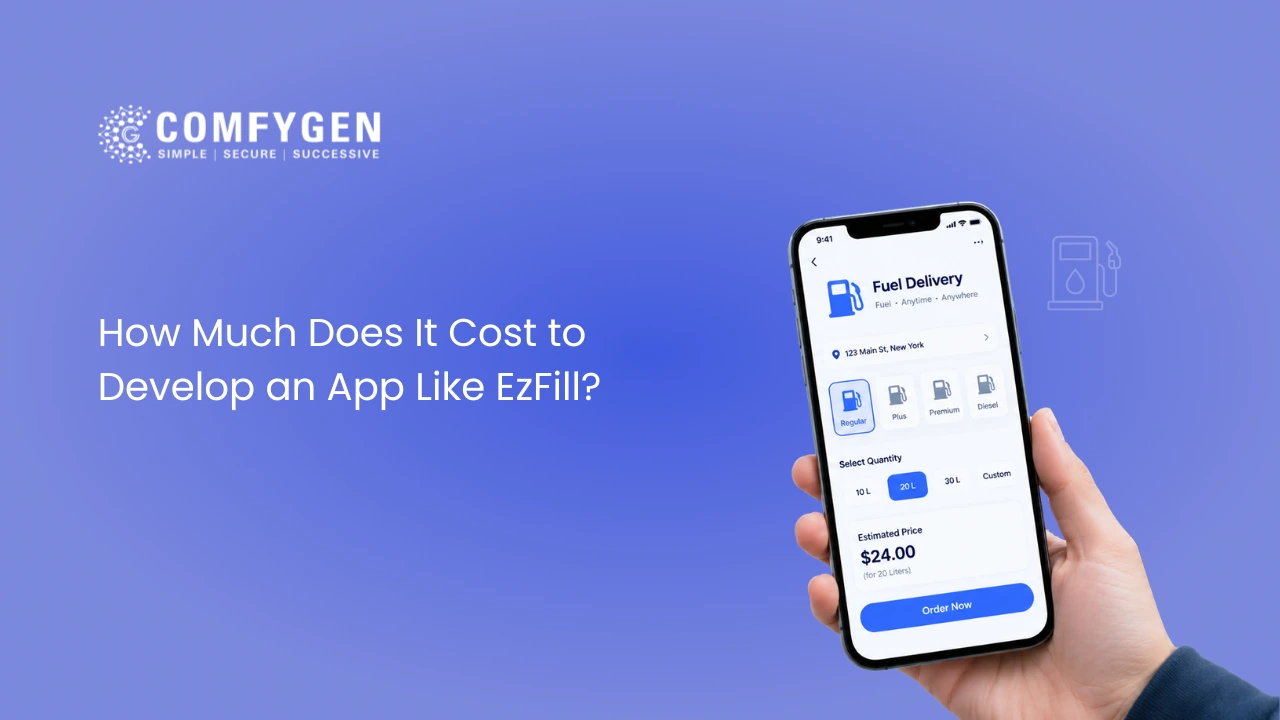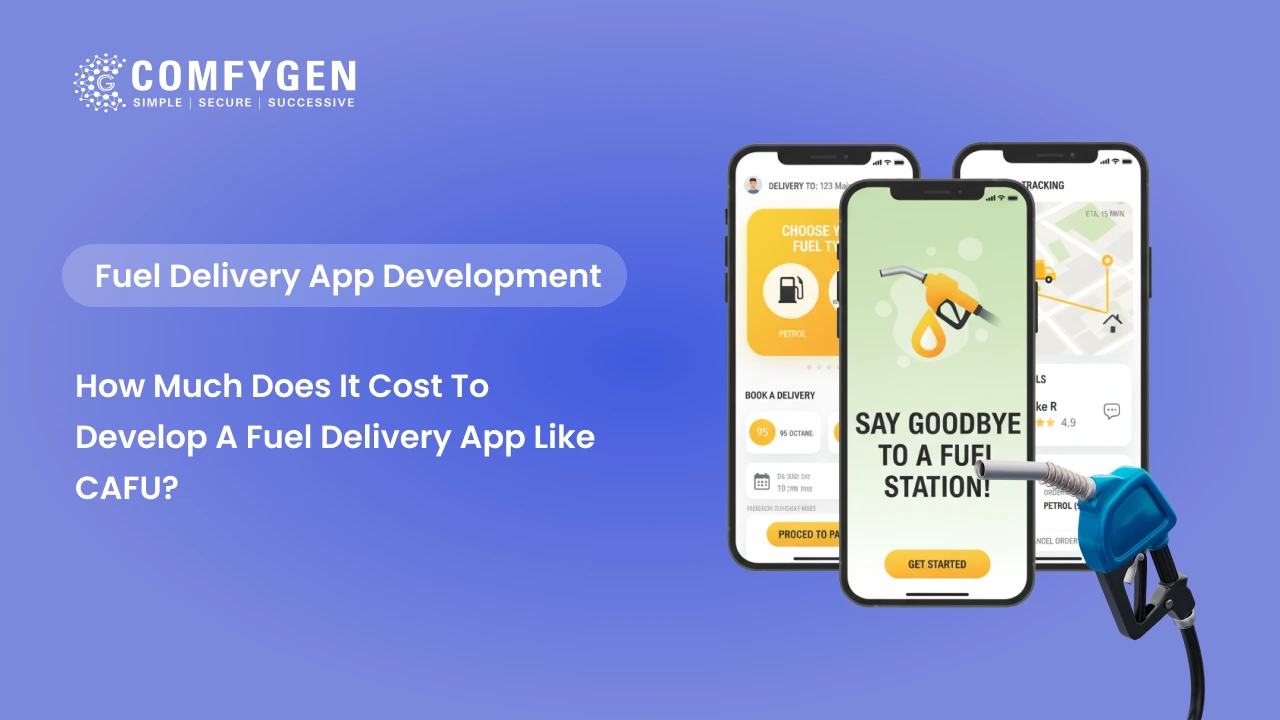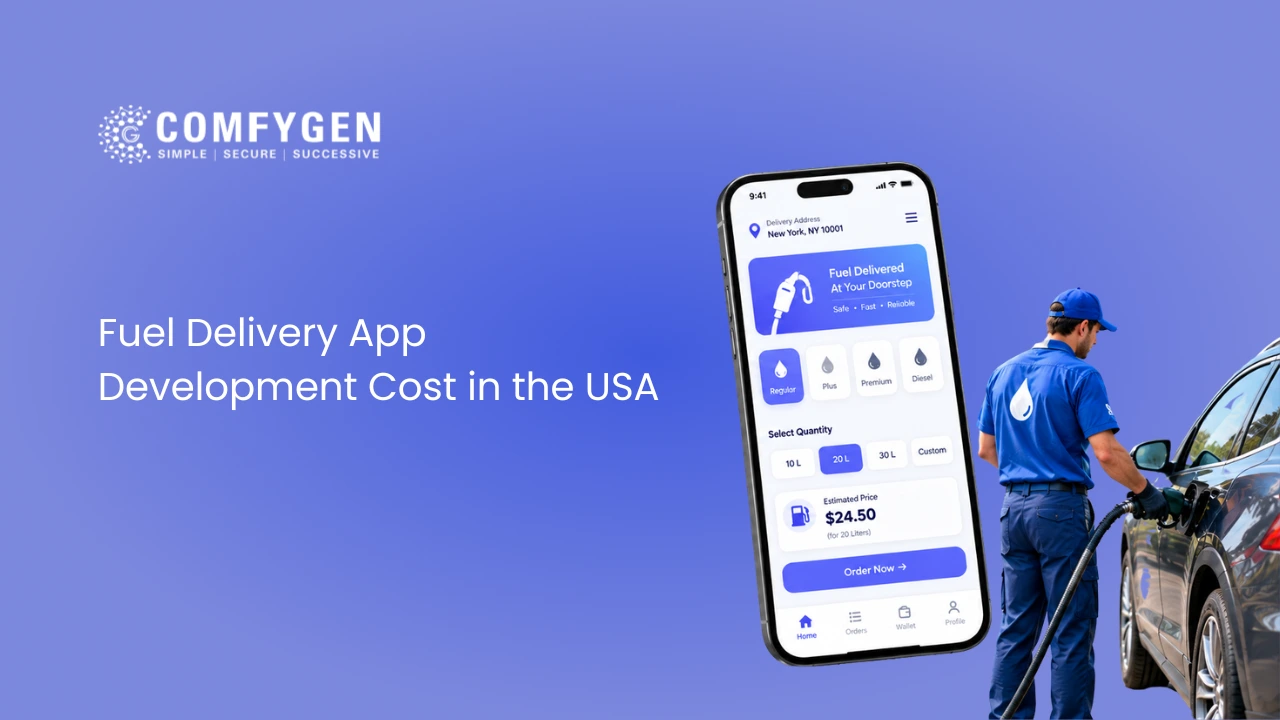





Fuel delivery app development cost runs between $25,000 and $150,000 in the United States. An MVP with a customer app, driver app, and admin panel costs $25,000 to $45,000 and takes 10 to 14 weeks. A full platform with vendor management, zone pricing, and analytics costs $60,000 to $120,000 over 16 to 24 weeks. Multi-state enterprise builds with IoT tank monitoring start at $150,000.
Most guides give you that range and stop there. However, a range on its own doesn’t help much when you’re deciding whether to sign a contract.
So this guide breaks the number down module by module. You’ll see how long each piece takes, which costs hit once, and which ones follow you every month afterward. It’s written for the US market specifically, because mobile fueling here carries permit and insurance costs that guides written for other regions skip entirely.
What You Actually Pay For in Fuel Delivery App Development
A fuel delivery app isn’t one app. That surprises most founders on the first call.
You need four connected products:
- A customer app for ordering fuel and tracking the truck
- A driver app for the person doing the delivery
- An admin panel for dispatch, pricing, and reporting
- A vendor panel if more than one supplier feeds your platform
Four products means four sets of screens, four rounds of testing, and four things that can break. That’s why a quote of “$15,000 for a complete fuel delivery app” should worry you rather than excite you. Usually it means one app, no real dispatch logic, and a rebuild within a year.
Mobile fueling also differs from food or grocery delivery in three specific ways, and each one adds cost.
You don’t know the final price at checkout. Fuel sells by the gallon, so the amount depends on what the pump actually dispenses.
Your product is a regulated hazardous material. Compliance logging isn’t optional here.
Your trucks carry limited stock. Dispatch has to know what fuel sits on which vehicle before it assigns an order.
Fuel Delivery App Development Cost by Build Tier
Here’s what each budget level buys in 2026.
| Build tier | Cost | Timeline | What’s included |
| White-label platform | $18,000 – $35,000 | 4 – 6 weeks | Existing platform rebranded, configured, and deployed |
| MVP | $25,000 – $45,000 | 10 – 14 weeks | One platform, customer and driver apps, admin panel, GPS, card payments |
| Full platform | $60,000 – $120,000 | 16 – 24 weeks | Both app stores, vendor panel, dispatch engine, zone pricing, subscriptions, analytics |
| Enterprise | $150,000+ | 24 weeks+ | Multi-state operations, IoT tank sensors, ERP integration, dynamic pricing, custom compliance |
Which Fuel Delivery App Tier Fits Your Business
Choose white-label
If you want live orders within two months. You’re renting proven architecture instead of building it. Comfygen deploys white label mobile apps with your branding, your pricing rules, and your own store listings. That said, you’ll eventually hit the platform’s limits, and migrating later costs more than building custom upfront.
Choose an MVP
If you’re a startup testing one city. Launch, run real deliveries, then find out what customers actually use. In practice, roughly two-thirds of the features founders demand before launch sit untouched six months later.
Choose a full platform
If you already run a fuel business and want to digitize it, or if you’re funded with a defined launch market. You already know your customers, so validation isn’t what you’re paying for.
Choose enterprise
If you’re crossing state lines, or if you’re serving fleet contracts where the customer’s own ERP has to talk to your system.
Module-by-Module Fuel Delivery App Development Cost Breakdown
This table shows where the money actually goes on a full build.
| Module | Cost | Time |
| Discovery and scoping | $2,000 – $5,000 | 1 – 2 weeks |
| UI/UX design, all panels | $5,000 – $12,000 | 3 – 5 weeks |
| Customer app (iOS + Android) | $12,000 – $28,000 | 6 – 10 weeks |
| Driver app | $9,000 – $20,000 | 5 – 8 weeks |
| Admin panel | $8,000 – $18,000 | 4 – 7 weeks |
| Vendor panel | $6,000 – $14,000 | 3 – 5 weeks |
| Backend and APIs | $12,000 – $32,000 | 8 – 14 weeks |
| Dispatch and routing engine | $6,000 – $15,000 | 3 – 6 weeks |
| Payments with pre-authorization | $3,000 – $8,000 | 2 – 3 weeks |
| Compliance and audit logging | $4,000 – $10,000 | 2 – 4 weeks |
| IoT tank monitoring | $6,000 – $15,000 | 3 – 6 weeks |
| QA, testing, and deployment | $5,000 – $12,000 | 3 – 5 weeks |
One important note on that table. These modules overlap on a real schedule, since design starts while discovery finishes and QA runs alongside development. As a result, calendar time for a full build lands at 16 to 24 weeks, not the sum of the column.
Build Your Fuel Delivery App With the Right Budget
Discuss your business needs with our team and determine the development approach that fits your goals and budget.
Plan Your App
Four Factors That Push Mobile Fueling App Costs Up
1. Payment Pre-Authorization Raises Your Fuel Delivery App Cost
This is the one nobody warns founders about.
Because fuel sells by the gallon, you can’t charge a card at checkout the way a food delivery app does. Instead, you place a hold for an estimated maximum, dispense the fuel, capture the real amount, then release the rest.
Building that properly takes real engineering hours. You also have to handle the messy cases, such as a hold failing mid-delivery or a customer’s bank taking four days to release the difference. Skip this work and your drivers will be reading card numbers over the phone within a month.
Then add fleet cards and net-30 invoicing for B2B customers, and this module grows again.
2. Multi-State Operations Increase Development Cost Sharply
One city under one permit stays simple. Your admin panel needs a single delivery zone and one rule set.
Cross a state line, though, and three things change at once. Zone logic has to enforce different rules per state. Driver certification tracking has to know where each driver is allowed to operate. Audit logs have to export in whatever format each state’s inspector requests.
That isn’t a settings page, it’s architecture. So if multi-state sits anywhere in your first-year plan, say so during scoping rather than after launch.
3. Dispatch Complexity Drives the Real Cost of a Fuel Delivery App
Assigning the nearest driver is easy. Assigning the nearest driver who has enough of the right fuel on board, whose certification covers this county, and who can reach the customer inside the promised window is a different problem entirely.
Most fuel delivery businesses need that second version by month three. Building it in from the start always costs less than retrofitting it later, because dispatch touches every other panel in the system.
4. IoT Tank Monitoring Adds Cost but Wins Fleet Contracts
IoT sensors trigger an automatic reorder when a fleet’s tank drops below a set level. For B2B customers, this is the single most valuable feature you can offer, since it turns a transactional relationship into an automatic one.
It’s also one of the harder things to build well. Hardware integration, sensor calibration, and false-alarm handling all take time. So it’s worth the money if fleets are your market, and worth skipping entirely if you’re launching consumer-only.
Ongoing Costs After Your Fuel Delivery App Goes Live
Founders budget carefully for the build. Then these catch them.
Maintenance: 15 to 20 percent of build cost per year. This covers hosting, operating system updates that break things, API version changes, and bug fixes.
Third-party APIs: Maps billing scales with usage and surprises almost everyone. At moderate volume, expect $200 to $2,000 a month. Payment processing runs around 2.9% plus 30 cents per transaction on standard card rates. SMS notifications also add up faster than you’d expect on a high-frequency delivery business.
App store fees: $99 a year for Apple, $25 once for Google.
Compliance renewals: Permits, vehicle inspections, and driver certifications all expire. Not a software cost, but it belongs in the same spreadsheet.
Always ask a development quote to separate build cost from running cost. A quote that bundles the two together is hiding something.
Fuel Delivery App Development Cost by Region
Where you build changes the number substantially.
| Region | Hourly rate |
| United States and Canada | $80 – $200 |
| Western Europe | $70 – $150 |
| Eastern Europe | $30 – $70 |
| Latin America | $25 – $60 |
| India and South Asia | $18 – $50 |
Here’s the honest version, though. The hourly rate isn’t what decides whether your project succeeds.
A $40-an-hour team that has shipped dispatch systems before will deliver a better fuel delivery app than a $150-an-hour team building its first one. Dispatch, live tracking, and driver payouts stay the same problems across every on-demand delivery platform, so ask any agency which ones they’ve actually launched. Ask for the platforms, not the rate card.
How to Reduce Fuel Delivery App Development Cost Without Cutting Features
Launch in one city first: Multi-city support is an architecture decision you make early and a feature you ship late.
Build cross-platform: Flutter or React Native cover both app stores from one codebase, which saves 30 to 40 percent on mobile. Native only makes sense when you’re doing something unusual with device hardware.
Drop the vendor panel from version one: If you’re running your own trucks at launch, you simply don’t need it yet.
Ship the admin panel as web only: Founders ask for an admin phone app constantly. Dispatchers never use it.
Start white-label, then migrate: This isn’t right for everyone. Even so, if your goal is proving demand rather than owning the code, it gets you to real orders for a fraction of the price. Comfygen runs both routes, and any honest fuel delivery app development company will tell you which one fits before you commit rather than after you discover the limits.
Is a Fuel Delivery App Worth the Investment in the USA?
That depends entirely on which customers you’re chasing.
Fleet and Commercial Fueling is Where the Economics Work First
A logistics company with 40 trucks refueling overnight gives you predictable volume and very low churn. Margin per gallon runs thinner, but the revenue stays steady. Acquisition cost also stays low, because you’re selling to one purchasing manager instead of running consumer ads. Most US operators that survived their first two years started right here.
Consumer Doorstep Delivery is Harder
A $5 to $10 convenience fee has to cover a truck, a certified driver, and insurance. That doesn’t leave much room. It works in dense urban markets with high order frequency, and it works considerably better as a subscription than as pay-per-fill.
In short, if you plan to serve both, build fleet management first. Fleet revenue funds the consumer side.
Frequently Asked Questions
How much does it cost to develop a fuel delivery app in the USA?
How long does it take to build a fuel delivery app?
What is the cheapest way to launch a fuel delivery app?
Why do fuel delivery apps cost more than food delivery apps?
What ongoing costs should I budget for after launch?
Do I need separate apps for customers and drivers?
Does a fuel delivery MVP need IoT tank monitoring?

Mr. Saddam Husen, (CTO)
Mr. Saddam Husen, CTO at Comfygen, is a renowned Blockchain expert and IT consultant with extensive experience in blockchain development, crypto wallets, DeFi, ICOs, and smart contracts. Passionate about digital transformation, he helps businesses harness blockchain technology’s potential, driving innovation and enhancing IT infrastructure for global success.