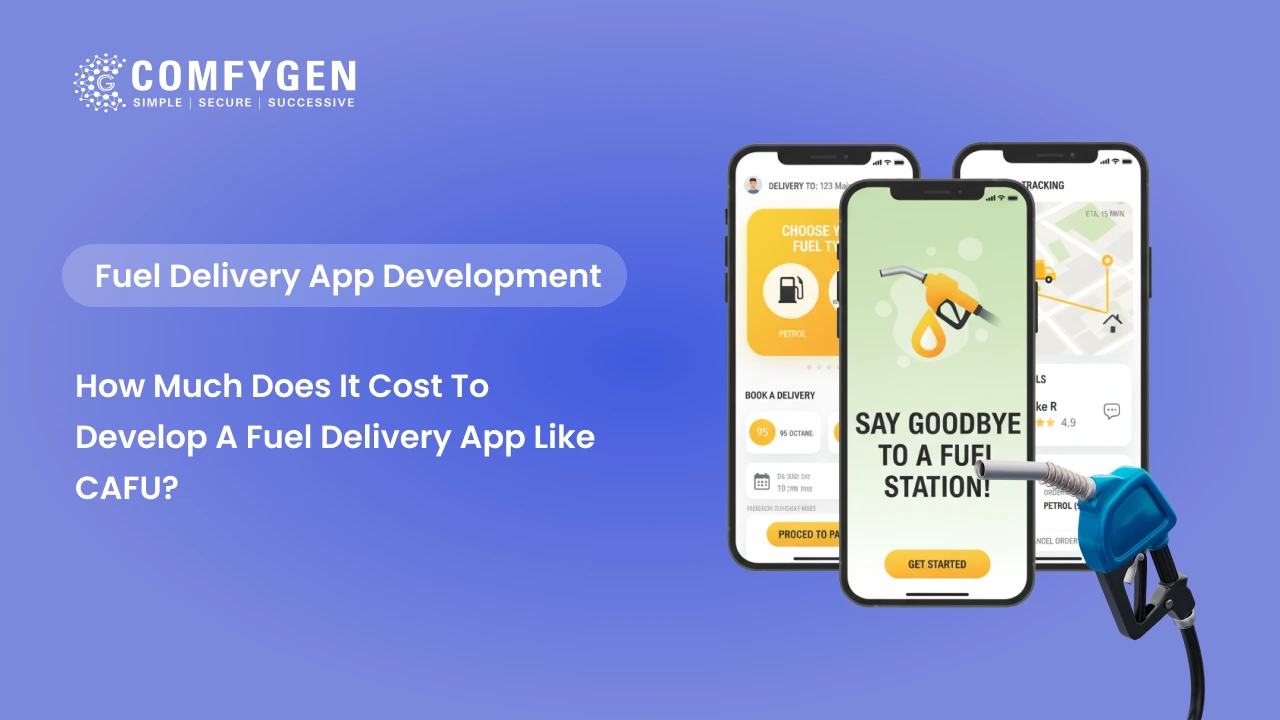





The global on-demand economy has fundamentally reshaped how we buy groceries, food, medicine, and now, fuel. The cost to develop a fuel delivery app like CAFU has become one of the most-searched questions among entrepreneurs in 2026, and for good reason. According to Business Research Insights, the global on-demand fuel delivery market is projected to reach $2.37 billion by 2033 at a CAGR of 15.97%, while Statista reports the broader fuel delivery market was valued at $5.06 billion in 2025 and is expected to cross $8.75 billion by 2032.
CAFU, the Dubai-based pioneer that crossed 300 million liters of fuel delivered since 2018, has set the global benchmark for on-demand refueling. Founded by Rashid Al Ghurair, CAFU currently serves cars, motorcycles, and boats and offers add-on services like car washes, oil changes, and battery replacements. With a 4.4/5 rating on iOS and 4.2/5 on Android, the app has become the model every fuel delivery startup wants to replicate.
If you’re an entrepreneur, fleet operator, or oil and gas company asking what it actually costs to build a similar platform, this guide walks you through every cost driver, feature decision, regional pricing variation, and budget-optimization strategy you need before signing a contract with any fuel delivery app development company.
What Is CAFU and why does it dominate on-demand refueling
CAFU is the UAE’s leading on-demand fuel delivery app, allowing users to refuel their vehicles without ever visiting a petrol station. Users open the app, drop a pin at their parked vehicle’s location, choose fuel type and quantity, and a trained CAFU pilot arrives with a certified fuel truck typically within 30 minutes.
The app’s monetization is layered and instructive for anyone planning a CAFU clone app development project:
- Per-delivery fee: AED 18 per fill-up order
- Subscription plan: AED 26–45 per month for unlimited refueling
- Add-on services: Car wash, engine oil change, battery replacement, tire service, roadside rescue
CAFU’s 2021 Gulf Sustainability Award and continued GCC expansion prove that the on-demand fuel delivery model works at scale. The question is no longer whether the model works it’s how much it costs to replicate, and how to do it profitably in your target market.
Why On-Demand Fuel Delivery Apps Are Booming in 2026
Several macro trends are driving the rapid expansion of fuel delivery app development services globally:
Time-saving convenience. Urban commuters waste an average of 15–25 minutes per refueling trip, including travel, queueing, and payment. Fuel delivery apps eliminate that friction entirely.
Fleet and corporate adoption. Logistics companies, ride-hailing fleets, and corporate motor pools are aggressively adopting bulk fuel delivery to reduce downtime. This B2B segment alone accounts for 35–40% of the on-demand fuel delivery market, according to McKinsey & Company mobility research.
Contactless and digital-first behavior. Post-pandemic, consumer preference for contactless transactions has remained sticky. Digital payments, in-app subscriptions, and zero-touch service models suit fuel delivery perfectly.
Smart city investments. The UAE, Saudi Arabia, Singapore, and parts of the US are investing heavily in smart infrastructure that supports app-driven mobility services. The UAE Smart Government initiative actively encourages the adoption of digital services across mobility.
AI and IoT maturity. AI-powered demand prediction, IoT-connected fuel tankers, and real-time GPS tracking now make sub-30-minute delivery commercially viable.
Growing EV-charging adjacency. Forward-looking fuel delivery apps are already adding mobile EV charging to their service mix, hedging against the long-term EV transition projected by the International Energy Agency.
These factors collectively explain why investment in on-demand fuel delivery app development has surged across the UAE, US, India, Southeast Asia, and parts of Latin America.
Must-Have Features That Drive Up (or Down) Fuel Delivery App Development Cost
The features you choose will determine 60–70% of your total fuel delivery app development cost. A successful fuel delivery app like CAFU is built across three panels: the customer app, the driver/tanker app, and the admin panel. Working with an experienced mobile app development team helps balance feature richness with budget efficiency.
Customer App Features
- Registration and profile management with email, phone, social, and OTP-based sign-up
- Fuel ordering and scheduling with fuel type selection, quantity input, and delivery time picker
- Real-time GPS tracking of the fuel tanker en route
- Multi-payment integration, including cards, Apple Pay, Google Pay, UPI, wallets, and subscription billing
- Subscription plans and loyalty rewards for recurring revenue
- Order history and invoice downloads
- Push notifications and SMS alerts for delivery updates and promotions
- In-app chat and call with the driver
- Rating and feedback for service quality
- Multi-vehicle support for households or fleet customers
Driver/Tanker App Features
- Identity verification and document upload for compliance
- Order acceptance and trip management
- Route optimization with turn-by-turn navigation
- Digital fuel log and metering integration
- Earnings dashboard and payout tracking
- Emergency SOS and safety checklist (critical for hazardous material transport)
- In-app training modules for safety compliance
Admin Panel Features
- Real-time dashboard with active orders, drivers, and inventory
- Fleet and tanker management with maintenance schedules
- Dynamic pricing engine with regional fuel rate updates
- Payment management, including refunds, payouts, and subscriptions
- Customer support tools with ticket management
- Advanced reporting and analytics for peak hours, popular zones, and revenue trends
- Compliance documentation manager for fuel transport licenses
- Promotional campaign manager for discounts and loyalty offers
Advanced Features That Increase Cost
- AI-powered demand prediction and dynamic dispatch
- IoT-connected smart fuel meters via IoT development
- Blockchain-based fuel supply chain tracking
- Multi-region and multi-currency support
- White-label capability for franchise expansion
- Integration with corporate ERP and expense systems
How Much Does It Cost to Develop a Fuel Delivery App Like CAFU?
The cost to develop a fuel delivery app like CAFU in 2026 typically falls into three tiers, depending on complexity, feature set, and target market.
Tier 1 – Basic MVP: $25,000 – $40,000
A minimum viable product is the smartest starting point for most founders. It includes essential features only: user registration, fuel booking, real-time GPS tracking, secure payments, and a basic admin panel. Startup app development typically takes 2–4 months and lets you validate the market before committing to a full-scale build.
Tier 2 – Mid-Range Custom App: $50,000 – $80,000
A mid-tier fuel delivery app adds subscription plans, loyalty programs, advanced admin analytics, in-app chat, push notification engines, and multi-payment gateway integration. Development typically takes 5–7 months.
Tier 3 – Enterprise / Full CAFU Clone: $100,000 – $150,000+
The top tier delivers a complete CAFU-equivalent platform with fleet management, AI-based demand prediction, multi-region and multi-language support, IoT-connected metering, blockchain ledger integration, white-label capability, and full add-on service modules (car wash, battery replacement, oil changes). This range is appropriate for fuel companies, oil retailers, and well-funded startups planning regional or global expansion.
Detailed Cost Breakdown by Module
| Module | Cost Range (USD) | Development Time |
|---|---|---|
| UI/UX Design (3 panels) | $4,000 – $10,000 | 3–4 weeks |
| Customer App (iOS + Android) | $10,000 – $25,000 | 6–10 weeks |
| Driver/Tanker App | $8,000 – $18,000 | 5–8 weeks |
| Admin Web Panel | $7,000 – $15,000 | 4–6 weeks |
| Backend & API Development | $10,000 – $30,000 | 8–12 weeks |
| Payment Gateway Integration | $1,500 – $4,000 | 1–2 weeks |
| Real-time GPS & Mapping | $2,000 – $5,000 | 1–2 weeks |
| AI Demand Prediction Module | $8,000 – $20,000 | 4–6 weeks |
| IoT Fuel Meter Integration | $5,000 – $12,000 | 3–5 weeks |
| QA, Testing & Deployment | $4,000 – $10,000 | 3–4 weeks |
| Total (Range) | $25,000 – $150,000+ | 3–9 months |
Fuel Delivery App MVP Cost vs Full Development
One of the most strategic decisions in your CAFU clone app development journey is choosing between an MVP and a full-feature build.
Why an MVP Makes Sense
An MVP includes only the essentials needed to validate the business model:
- User registration and login
- Fuel ordering with type and quantity selection
- Real-time GPS tracking
- Secure payment gateway
- Basic admin panel
Estimated MVP cost: $25,000 – $40,000 Development time: 2–4 months
The MVP approach lets you launch fast, gather real user feedback, refine the unit economics, and avoid burning capital on features users may not even want.
When Full Development Is Justified
A full-feature build is the right call if you have funding for a regional launch, an existing fuel distribution business looking to digitize, or a fleet customer pre-committed to your platform. Full development includes:
- Loyalty programs and subscription billing
- Fleet management and corporate billing
- AI-based demand prediction
- Multi-region and multi-currency support
- Add-on services (car wash, oil change, battery)
- White-label and franchise modules
- Advanced analytics and BI dashboards
Estimated full development cost: $80,000 – $150,000+ Development time: 6–9 months
MVP vs Full App – Quick Comparison
| Factor | MVP | Full App |
|---|---|---|
| Features | Core essentials only | Core + advanced features |
| Development Time | 2–4 months | 6–9 months |
| Cost | $25K – $40K | $80K – $150K+ |
| Best For | Validating idea, early-stage startups | Regional launch, existing fuel businesses |
| Risk | Low | Medium-to-high |
For 80% of founders, starting with an MVP and partnering with a flexible fuel delivery app development company like Comfygen Technologies is the smartest path.
Country-Wise Hourly Rates for Fuel Delivery App Development
Where you build matters as much as what you build. Developer hourly rates vary dramatically by region, and the right outsourcing decision can cut your fuel delivery app development cost by 40–60% without sacrificing quality.
| Region | Countries Included | Hourly Rate (USD) |
|---|---|---|
| North America | USA, Canada | $80 – $200 |
| Western Europe | UK, Germany, France, Netherlands | $70 – $150 |
| Australia & New Zealand | Australia, New Zealand | $60 – $130 |
| Eastern Europe | Poland, Ukraine, Romania, Bulgaria | $30 – $70 |
| Latin America | Brazil, Argentina, Colombia, Mexico | $25 – $60 |
| Middle East | UAE, Saudi Arabia, Qatar | $40 – $90 |
| Asia (India) | India | $18 – $50 |
| Asia (Other) | Philippines, Vietnam, Indonesia | $20 – $55 |
| Africa | South Africa, Kenya, Morocco | $20 – $50 |
For most founders, partnering with an experienced fuel delivery app development company in India offers the best balance of cost and quality. Comfygen Technologies, for example, delivers production-grade on-demand fuel delivery apps at 50–60% lower cost than US or UK agencies, while maintaining the same engineering standards.
Tech Stack Behind a Production-Grade Fuel Delivery App Like CAFU
The technology choices you make influence both upfront cost and long-term scalability. A modern fuel delivery app like CAFU typically uses:
- Frontend (Mobile): Flutter or React Native for cross-platform; Swift (iOS) and Kotlin (Android) for native
- Frontend (Web/Admin): React.js, Next.js, or Angular
- Backend: Node.js with Express, or Python with Django/FastAPI
- Database: PostgreSQL or MongoDB for transactions; Redis for caching
- Real-Time Engine: Socket.io or Firebase for live tracking and notifications
- Cloud Infrastructure: AWS, Google Cloud, or Microsoft Azure
- Maps & Navigation: Google Maps API, Mapbox, HERE Maps
- Payment Gateways: Stripe, Razorpay, PayTabs, Telr (for UAE), Apple Pay, Google Pay
- Push Notifications: Firebase Cloud Messaging, OneSignal
- AI/ML: TensorFlow, PyTorch for demand prediction
- DevOps: Docker, Kubernetes, GitHub Actions, Jenkins
- Analytics: Mixpanel, Google Analytics 4, custom BI dashboards
Regulatory and Compliance Considerations You Cannot Skip
Fuel is a hazardous material, and this single fact makes fuel delivery app development meaningfully different from food delivery or ride-hailing. Critical compliance areas include:
- Hazardous material transport licensing in each operating region (see US DOT Hazmat regulations for US operations)
- Fuel storage and transport regulations from local civil defense or environment authorities, like Dubai Civil Defence, for UAE deployments
- Driver certification and training for safe fuel handling
- Insurance for fuel cargo, vehicle, and third-party liability
- Data privacy compliance, including GDPR (Europe), CCPA (California), and PDPL (Saudi Arabia, UAE)
- Payment compliance, including PCI DSS for card transactions
- Environmental compliance for emissions, spillage prevention, and waste fuel handling per EPA guidelines
Budget-Friendly Approaches to Cut Fuel Delivery App Development Cost
Here are seven proven strategies to reduce your fuel delivery app development cost without compromising on quality.
1. Launch with an MVP
Skip nice-to-have features at launch. Focus on core booking, GPS tracking, and payments. Add advanced features after market validation. This single decision can cut initial spend by 50–70%.
2. Use Cross-Platform Development
Frameworks like Flutter and React Native let you build once and deploy on both iOS and Android, cutting development time and cost by 30–40% versus separate native builds.
3. Choose a White-Label CAFU Clone
A CAFU clone or white-label fuel delivery solution from a specialized company like Comfygen Technologies can save 60–70% of cost compared to building from scratch and launch in 6–10 weeks instead of 6–9 months.
4. Prioritize Core Features in Phase 1
Build the booking flow, GPS, and payments first. Add subscription, loyalty, and AI prediction in subsequent phases as revenue grows.
5. Outsource to Cost-Effective Regions
Hiring a fuel delivery app development company in India delivers world-class engineering at 40–60% lower cost than the US or UK without sacrificing quality. Hire dedicated mobile app developers to scale your team flexibly.
6. Use Cloud Infrastructure Pay-As-You-Grow
AWS, Google Cloud, and Azure eliminate the need for upfront server investment. You pay only as your user base grows, with built-in scalability for demand spikes.
7. Plan Iterative Releases Instead of Big Bang Launches
Instead of trying to ship everything at once, plan 2–3 week sprints with continuous deployment. This spreads cost, improves quality, and keeps you responsive to user feedback.
Top Competitors in the On-Demand Fuel Delivery Space
To understand the competitive landscape your fuel delivery app, like CAFU, will enter, here are the leading global players:
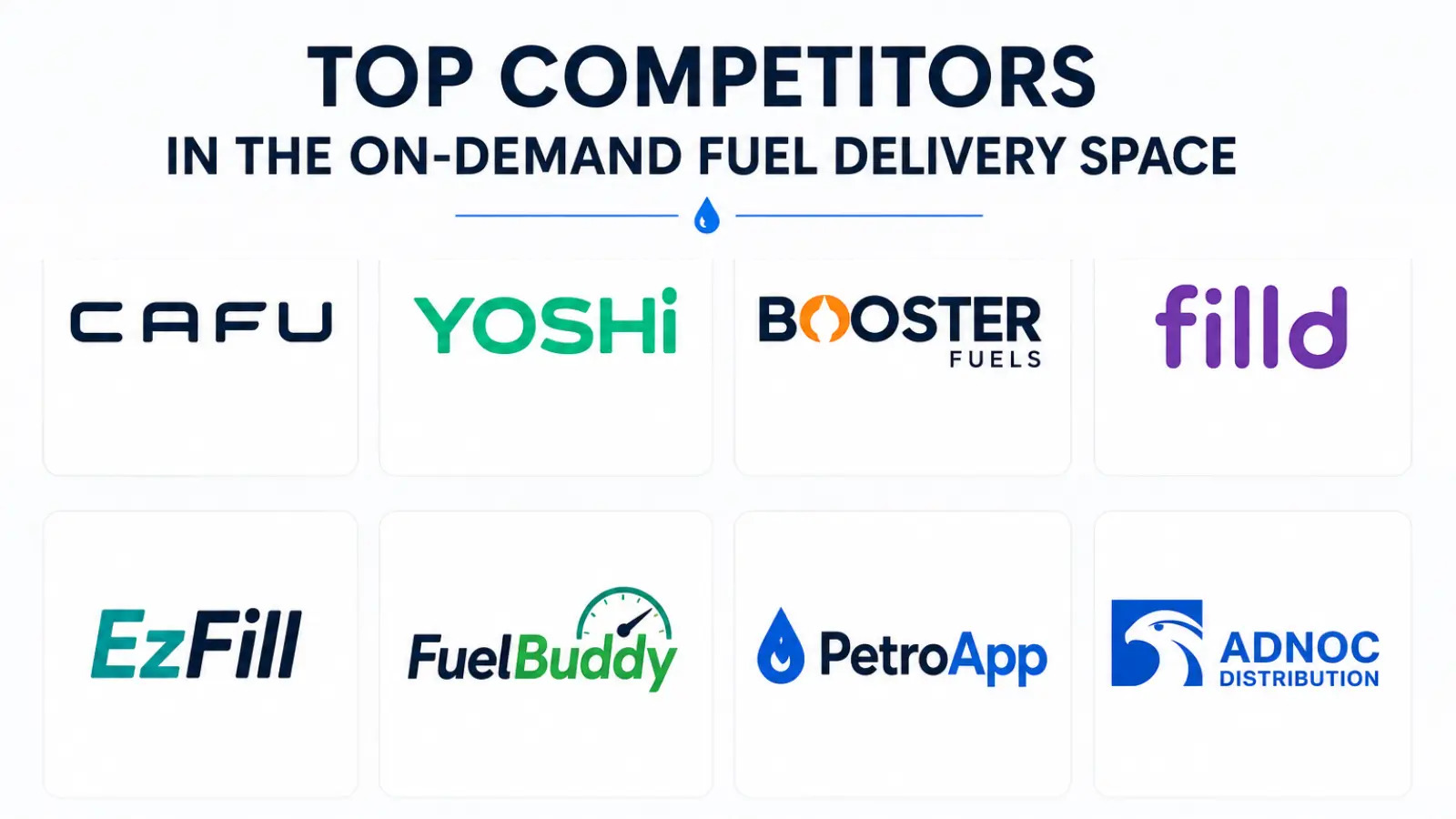
- CAFU (UAE) – Regional leader, 300M+ liters delivered, model for the industry
- Yoshi (USA) – Backed by ExxonMobil, operates across 30+ US cities
- Booster Fuels (USA) – Focused on workplace fleet refueling
- Filld (USA) – On-demand and subscription model
- EzFill (USA) – Public-listed, residential and commercial focus
- FuelBuddy (India) – India’s largest fuel delivery platform
- PetroApp (Saudi Arabia) – Strong GCC presence with fleet focus
- ADNOC Distribution (UAE) – National player with strong app capability
Why Choose Comfygen Technologies for Fuel Delivery App Development
When you choose a fuel delivery app development company, you’re choosing a long-term technology partner, not just a vendor. Comfygen Technologies brings six years of on-demand app development experience, 250+ delivered projects, and 100+ satisfied clients across India, the UAE, the US, and Europe.
Our fuel delivery app development services include:
- Custom fuel delivery apps built from the ground up for your business model
- CAFU clone app development with full white-label customization
- MVP-to-scale architecture that grows as your business grows via startup app development
- AI-powered modules for demand prediction, dynamic pricing, and route optimization
- Cross-platform development in Flutter and React Native
- Full compliance integration, including hazardous material handling, payment security, and data privacy
- Post-launch support with maintenance, updates, and feature additions
Conclusion
The cost to develop a fuel delivery app like CAFU in 2026 ranges from $25,000 for an MVP to over $150,000 for a fully featured enterprise platform, but the right approach can deliver a competitive, market-ready app at any budget.
The on-demand fuel delivery market is projected to triple by 2033, and the entrepreneurs who move now will own the categories of tomorrow. Whether you’re a startup validating an idea, a fuel retailer digitizing your distribution, or a fleet operator building a captive solution, the foundation you choose today will determine how fast and how profitably you can scale.
Partnering with an experienced fuel delivery app development company like Comfygen Technologies ensures your investment is protected, your architecture is future-proof, and your launch timeline is realistic. From MVP to full CAFU clone development, our team delivers production-grade fuel delivery apps that perform under real-world demand.
Ready to build your fuel delivery app like CAFU? Get a free, no-obligation cost estimate tailored to your business model, target market, and feature roadmap. Contact Comfygen Technologies today.
FAQ
How much does it cost to develop a fuel delivery app like CAFU in 2026?
How long does it take to build a fuel delivery app like CAFU?
Can I build a CAFU clone for under $30,000?
What are the must-have features in a fuel delivery app like CAFU?
Which is the best fuel delivery app development company?

Mr. Saddam Husen, (CTO)
Mr. Saddam Husen, CTO at Comfygen, is a renowned Blockchain expert and IT consultant with extensive experience in blockchain development, crypto wallets, DeFi, ICOs, and smart contracts. Passionate about digital transformation, he helps businesses harness blockchain technology’s potential, driving innovation and enhancing IT infrastructure for global success.