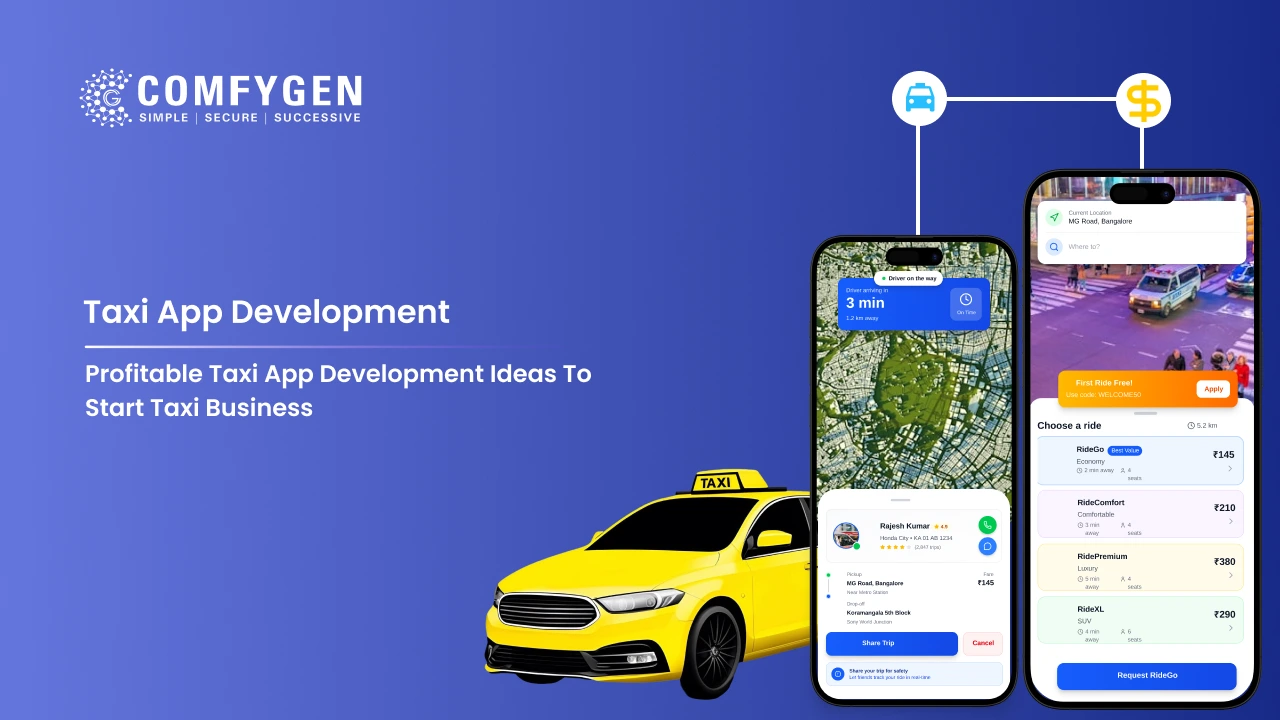





If you are looking for profitable taxi app development ideas, you are entering a market that is growing fast and still has space for smart players. According to Statista, the global ride-hailing market is projected to reach $188.60 billion in 2026 and grow to $229.98 billion by 2030. That growth is not coming from Uber alone. A large share comes from regional apps, niche services, and specialized platforms built by startups that found the right angle.
The good news for developers and entrepreneurs is that you do not need to compete head-on with Uber or Ola. The taxi app market rewards specificity. A women-only taxi service, an EV fleet app, or a corporate transport platform can build a profitable business in a city or sector where the big players are not focused.
A well-planned taxi booking app is more than just a booking platform—it’s a powerful digital asset that enables scalability, data-driven decision-making, and long-term profitability. This is why investing in taxi app development is proving to be a highly lucrative move for anyone aiming to build a sustainable taxi business in the modern on-demand economy.
Market Overview of the Taxi Booking App Development Industry
The taxi booking app development in Tier-1 cities but wide open in Tier-2 and Tier-3 markets across India, Southeast Asia, Africa, and the Middle East. Users in these regions are moving from street hailing to app-based booking. Smartphone penetration is rising, mobile payment adoption is growing, and consumer trust in app-based services has increased since 2020.
Three specific trends are driving new startup opportunities right now:
- Niche demand is growing: Women-only rides, EV taxis, and school transport are getting traction in markets where general ride-hailing already exists.
- Corporate contracts are reliable: B2B taxi services for companies generate predictable monthly revenue, making them easier to run than consumer platforms.
- Regional gaps are real: Cities with 500,000 to 2 million people often have no dominant taxi app. A well-built local platform with good driver supply can take market share quickly.
Global and Regional Market Trends
Globally, the taxi booking app industry is witnessing strong adoption due to the shift from traditional street-hailing taxis to app-based platforms. Businesses are investing heavily in technology-driven solutions such as GPS tracking, AI-based route optimization, and digital payments to improve service quality. In developing markets like India, Southeast Asia, and parts of the Middle East, the growth rate is even higher due to affordable smartphones, expanding internet access, and increasing awareness of on-demand taxi services.
Regionally, local taxi app startups are gaining traction by focusing on specific use cases such as airport transfers, corporate travel, electric taxis, and bike taxis. This localized approach allows businesses to compete effectively with global players by offering better pricing, customized features, and region-specific services.
Key Benefits of Developing a Taxi Booking App for Business Owners
Developing an AI-based taxi booking app offers significant advantages for business owners who want to build a sustainable and profitable transportation business. Unlike traditional taxi services, app-based solutions provide better control, higher efficiency, and long-term scalability. Below are the key benefits of taxi app development for a smart investment for startups, entrepreneurs, and fleet operators.
Full Control Over Pricing and Revenue
When you own the app, you set the commission rates, surge pricing rules, and promotional strategies. On a third-party aggregator, the platform takes 20-30% of every ride. Your own app removes that dependency and improves margins over time.
Customer Data and Retention
Every booking on your platform gives you rider and driver data. You can run loyalty programs, push notifications, and retention campaigns. On someone else’s platform, you do not own any of that data.
Ability to Serve a Niche
A generic platform serves everyone and no one particularly well. Your own taxi app can be built specifically for airport transfers, elderly passengers, women travelers, or corporate clients. That specificity is what wins in competitive markets.
Scalable Without Platform Risk
Aggregator platforms change their terms. Ola and Uber have changed commission structures multiple times, hurting drivers and fleet operators. Your own platform removes that risk entirely.
15 Profitable Taxi App Development Ideas to Start Your Taxi Business
Choosing the right taxi app concept is crucial for building a profitable and sustainable business. Instead of competing blindly with established players, startups can focus on specific use cases, customer segments, and regional demands. Below are some of the most profitable taxi app development ideas that offer strong revenue potential and growth opportunities.
1. Ride-Hailing App Like Uber or Ola
The most proven model in the market. A ride-hailing app connects passengers with nearby drivers using GPS, real-time matching, and digital payments. Revenue comes from a commission per ride, typically 15-25%.
What makes this profitable for startups: the key is geography. Launching in a Tier-2 or Tier-3 city where Uber and Ola have weak driver supply gives you a real opening. Namma Yatri did exactly this in Bengaluru for auto-rickshaws and grew to over 10 million users.
Best for: Entrepreneurs targeting underserved cities or specific vehicle types.
2. Women-Only Taxi App
A taxi service exclusively for women passengers, operated by verified female drivers. This model addresses a genuine safety concern in markets like India, Pakistan, Saudi Arabia, and parts of Africa.
Women account for nearly 49.6% of the global population and consistently report safety concerns as the biggest barrier to using ride-hailing apps. Apps like Shebah in Australia and Sakhi in India have built real businesses here.
Revenue model: per-ride commission plus premium pricing for verified female drivers. Safety features like SOS buttons, background checks, and trip-sharing with contacts are core to the product.
Best for: Founders in markets where women’s safety is a documented public concern.
3. Corporate Taxi Booking App
A dedicated platform for company employee transportation. Companies book rides for their staff for office commutes, airport pickups, client visits, and outstation trips. All billing goes to the company account.
This model generates stable, predictable revenue. Contracts are typically monthly or annual. A corporate client with 200 employees using the app daily creates a fixed income stream without the volatility of consumer ride-hailing.
Key features needed: admin panel for HR teams to manage bookings, monthly billing and invoicing, trip approval workflows, cost center tagging, and detailed reports by employee or department.
Best for: B2B-focused founders in metro cities with large IT parks or industrial zones.
4. Electric Taxi App (EV Ride-Hailing)
An EV-first taxi platform where all fleet vehicles are electric. This model targets environmentally conscious users and benefits from lower fuel costs for drivers.
Governments in India, the UK, the UAE, and across the EU are offering subsidies for EV adoption. In India, FAME II and state-level EV policies provide direct incentives for EV fleet operators. This reduces the startup cost for drivers joining your platform.
Operationally, EVs cost less per kilometre than petrol vehicles. That savings can be shared with passengers through lower fares or kept as higher margins. BluSmart in India built its entire business on this model and has raised over $250 million.
Best for: Founders in cities with strong EV infrastructure and government support for clean transport.
5. Bike Taxi and Auto-Rickshaw App
In dense urban markets, bike taxis and auto-rickshaws handle short-distance travel faster and cheaper than cars. Rapido in India built a 25+ million user base purely on this model.
The investment to get started is lower because two-wheelers cost less than cars. Drivers can earn more per hour because rides are shorter and quicker. For users, it is significantly cheaper than a cab.
This idea works especially well in cities where traffic congestion is severe and users need to travel 2-5 km reliably. Auto-rickshaw booking apps like Namma Yatri have shown that even non-premium segments can be highly profitable at scale.
Best for: Founders targeting Tier-2 and Tier-3 cities in South and Southeast Asia.
6. Airport Transfer App
A premium taxi service focused on airport pickups and drops. Unlike general ride-hailing, airport transfer apps offer advance scheduling, fixed pricing, flight tracking, and meet-and-greet service.
The average airport ride fare is 3-5x higher than a regular city ride. Passengers value reliability over price, which means you can charge a premium and maintain it. Fixed pricing removes the uncertainty of surge pricing, which many business travelers find frustrating.
Revenue additions: luggage assistance fees, premium vehicle upgrades, corporate account billing, and chauffeur-style service tiers.
Best for: Founders near busy international airports in tourist cities or business hubs.
7. School and Student Transport App
A route-based transport app that manages daily school pickup and drop-off for students. Parents book seats on school vans or buses, track their child’s location in real time, and receive arrival notifications.
This is a high-trust, high-retention segment. Once parents are using your app for their child’s transport, they rarely switch. Monthly subscriptions create consistent revenue, and school partnerships can give you access to hundreds of students at once.
Safety features are the product here: verified driver background checks, live GPS tracking shared with parents, SOS alerts, route adherence monitoring, and daily attendance confirmation.
Best for: Founders targeting residential areas with private schools and working-parent households.
8. Healthcare and Medical Transport App
A taxi service built specifically for hospital appointments, dialysis sessions, chemotherapy visits, and post-surgery transport. Patients need reliable, comfortable, and sometimes wheelchair-accessible vehicles at specific times.
This niche is almost untouched by mainstream ride-hailing apps. Uber Health exists in the US but the model is largely underserved in Asia, Africa, and the Middle East. Drivers on this platform can be trained in patient assistance, making it a differentiated service that commands premium pricing.
Revenue model: per-ride commission plus monthly contracts with hospitals and clinics. A hospital that refers 30-40 patients per day to your platform is effectively a distribution partner.
Best for: Founders with connections to healthcare institutions or experience in the medical sector.
9. Luxury and Chauffeur App
A high-end ride service with premium vehicles like Mercedes, BMW, and Audi driven by professional chauffeurs. Target audience is business executives, event attendees, wedding guests, and high-income users who want comfort and discretion.
Margin per ride is significantly higher than standard ride-hailing. A corporate client booking a chauffeur for a day pays 5-10x more than a regular taxi fare. Business travelers, especially those expensing the ride, are price-insensitive.
Apps like Wheely in Europe and Lyft Lux in the US have shown that a small fleet of premium vehicles can generate disproportionately high revenue per car.
Best for: Founders in major financial centers, luxury hotel corridors, or cities with high corporate travel demand.
10. Carpooling and Ride-Sharing App
A platform where passengers traveling in the same direction share a cab, splitting the fare. This reduces the per-person cost for users and increases driver utilization.
Carpooling works well for fixed-route commuters, for example, IT park employees traveling from the same residential area every morning. Once you establish popular routes, the matching algorithm improves and fill rates go up.
BlaBlaCar built a $1.6 billion business on intercity carpooling alone. Urban carpooling for daily commutes is a separate, mostly untapped category in many developing markets.
Best for: Founders targeting dense commuter corridors between residential and commercial zones.
11. Outstation and Intercity Taxi App
A cab booking app for long-distance trips between cities. Users book a driver for one-way or round-trip journeys, often ranging from 100 km to 600 km.
The average intercity ride fare in India is Rs. 8-12 per km. A 300 km trip generates Rs. 2,400-3,600 in a single booking. With a 15% commission, that is Rs. 360-540 per ride, far more than a Rs. 150-200 city ride.
Savaari and Ola Outstation are the major players in India, but regional coverage is still thin. Founders who build strong driver networks in specific state corridors can compete effectively.
Best for: Founders with strong ground operations in specific geographic corridors.
12. Pet-Friendly Taxi App
A ride service that allows passengers to travel with their pets. Standard ride-hailing apps either prohibit pets or leave it to individual driver discretion, creating a consistently frustrating experience for pet owners.
Pet ownership is growing in urban India and across Southeast Asia. A platform with guaranteed pet-friendly rides and drivers trained to handle animals fills a real gap. Premium pricing is justified and customers are loyal because alternatives are scarce.
Add-ons: pet carrier availability, vet trip discounts, regular grooming appointment transport.
Best for: Founders in large metro cities with growing middle-class pet ownership.
13. Elderly and Accessibility Transport App
A ride service designed for senior citizens and passengers with physical disabilities. Features include wheelchair-accessible vehicles, drivers trained in passenger assistance, easy-to-use app interfaces with large text and voice commands, and caregiver access to track rides.
This demographic often cannot use standard apps and is consistently underserved. In countries with aging populations, including Japan, Germany, and increasingly India, this is a growing market with real government support.
Revenue model: per-ride fares plus partnerships with senior care facilities, hospitals, and NGOs. Monthly subscription plans for regular users work well here.
Best for: Founders who want a socially impactful business with reliable B2B revenue channels.
14. Truck and Goods Transport App
An on-demand platform for booking trucks, tempos, or mini-trucks for moving goods within a city or between cities. Think of it as a taxi app but for cargo.
Dunzo, Porter, and Lalamove operate in this space and have demonstrated strong demand. The logistics sector in India alone is worth over $200 billion. Small businesses, e-commerce sellers, and households all need reliable last-mile freight transport.
Revenue model: commission per booking, subscription plans for businesses with daily transport needs, surge pricing during peak moving seasons.
Best for: Founders with logistics or fleet management experience.
15. Multi-Service Mobility App
A single platform that offers taxis, bike taxis, auto-rickshaws, intercity rides, and goods transport in one app. Users pick the service type based on their need, similar to how Grab operates across Southeast Asia.
Grab started as a taxi app in Malaysia in 2012 and expanded to 8 countries. It now handles ride-hailing, food delivery, and financial services. The multi-service model increases user lifetime value because the app becomes part of daily life, not just occasional transport.
This is a more complex build but the revenue potential is much higher. Each service category is a separate revenue stream, and cross-service promotions increase retention.
Best for: Founders with the budget for a phased build and the operational capability to manage multiple vehicle categories.
Ready to launch your own taxi booking app?
Partner with our expert taxi booking app development team and get started today.
Features for a Taxi App Development
To build a successful and revenue-generating taxi business, your application must deliver a seamless experience for passengers, drivers, and administrators. A feature-rich taxi booking app not only improves user satisfaction but also enhances operational efficiency and profitability. Below are the must-have taxi app features for each module.
1. Passenger App Features
The passenger app is the primary touchpoint for customers, so it must be intuitive, fast, and reliable. Well-designed taxi app features for users directly impact customer retention and repeat bookings.
- Real-Time Ride Tracking
Real-time GPS-based tracking allows passengers to monitor their ride from pickup to drop-off. Users can view driver location, estimated arrival time, and live route updates, which builds trust and reduces ride anxiety. This feature is essential for transparency and service reliability. - Fare Estimation
Accurate fare estimation before booking helps users make informed decisions. By calculating distance, time, and surge pricing (if applicable), passengers can see a clear price breakdown. Transparent pricing improves conversion rates and reduces booking cancellations. - Multiple Payment Options
Supporting various payment methods such as UPI, credit/debit cards, mobile wallets, and cash increases user convenience. A flexible payment system caters to a wider audience and ensures smoother checkout experiences. - Easy Booking and Ride History
One-tap booking, saved locations, and access to ride history make the app user-friendly. Passengers can rebook frequent routes quickly, improving overall engagement. - Ratings, Reviews, and Support
Passengers should be able to rate drivers and leave feedback after each trip. In-app chat, call support, and help sections enhance customer satisfaction and issue resolution.
2. Driver App Features
The driver app plays a crucial role in ensuring service availability and operational efficiency. Optimized driver app features for taxi booking apps help attract and retain quality drivers.
- Trip Management System
Drivers should be able to accept or reject ride requests, view trip details, and manage active rides easily. Automated trip status updates (arrived, started, completed) ensure smooth ride execution. - Earnings Dashboard
A transparent earnings dashboard shows daily, weekly, and monthly income, incentives, and commissions. Clear income visibility motivates drivers and builds trust with the platform. - Route Optimization and Navigation
Integrated maps and GPS navigation help drivers choose the fastest and most efficient routes. Real-time traffic updates reduce delays, fuel consumption, and trip duration, improving both driver earnings and customer experience. - Driver Availability and Status Control
Drivers can go online or offline based on their availability. This flexibility improves driver satisfaction and optimizes ride allocation. - In-App Communication
Secure in-app calling and messaging between drivers and passengers enable smooth coordination while maintaining privacy.
3. Admin Panel Features
The admin dashboard is the backbone of the taxi app ecosystem. A powerful taxi app admin panel enables complete business control, monitoring, and decision-making.
- Fleet Management System
Admins can manage drivers, vehicles, documents, and availability from a centralized dashboard. This feature ensures smooth onboarding, compliance, and efficient fleet utilization. - Commission and Pricing Control
Business owners can define commission rates, set fare rules, manage surge pricing, and create promotional offers. Flexible pricing control helps maximize revenue and stay competitive. - Analytics and Reporting
Advanced analytics provide insights into ride volume, revenue, peak hours, user behavior, and driver performance. Data-driven reports help in strategic planning and business growth. - User and Driver Management
Admins can verify accounts, handle complaints, block or approve users and drivers, and ensure platform quality. - Payment and Settlement Management
Automated payout systems, transaction tracking, and invoice generation simplify financial operations and ensure timely driver settlements.
Technology Stack for Taxi App Development
A robust and scalable taxi app tech stack is essential for performance, security, and growth. Comfygen uses modern, proven technologies to deliver enterprise-grade taxi booking solutions.
| Technology Category | Technologies & Tools |
|---|---|
| Frontend Technologies | Android (Kotlin) iOS (Swift) Web (React, Angular) |
| Backend & Database | Node.js, Laravel, Django MySQL, PostgreSQL, MongoDB RESTful & real-time APIs |
| GPS, Maps & Payment Integration | Google Maps, Mapbox Real-time GPS tracking Secure payment gateways & UPI integration |
| Cloud Hosting & Scalability | AWS, Google Cloud, Azure Auto-scaling & load balancing Data backup & disaster recovery |
Challenges in Taxi App Development and How to Overcome Them
Challenges in developing a successful taxi booking app involve more than just creating a functional platform. Businesses often face technical, operational, and market-related challenges that can impact growth and profitability. At Comfygen, we identify these challenges early and implement proven strategies to overcome them effectively.
1. Driver Onboarding and Retention
- Challenge:
Attracting qualified drivers and retaining them over time is one of the biggest challenges in taxi app development. High competition, unclear earnings, and complex onboarding processes often discourage drivers from staying active on a platform. - How Comfygen Overcomes It:
Comfygen simplifies driver onboarding with document upload, verification automation, and quick approvals. Transparent earnings dashboards, incentive management systems, and flexible commission models help drivers understand their income clearly, leading to higher satisfaction and retention.
2. Real-Time Matching and Performance Issues
- Challenge:
Taxi apps must handle real-time ride requests, GPS tracking, and driver-passenger matching without delays. Poor performance or app crashes can result in user dissatisfaction and lost revenue. - How Comfygen Overcomes It:
We use a scalable architecture with real-time APIs, optimized databases, and cloud infrastructure. Our taxi app solutions are designed to handle high traffic volumes while maintaining fast response times and smooth performance.
3. High Competition and Pricing Pressure
- Challenge:
The ride-hailing market is highly competitive, with established players offering aggressive pricing and discounts. New startups often struggle to differentiate themselves. - How Comfygen Overcomes It:
Comfygen helps businesses focus on niche markets such as corporate travel, airport transfers, EV taxis, or regional services. We also implement flexible pricing rules, loyalty programs, and localized strategies to create a strong competitive edge.
Conclusion
The taxi booking app industry offers massive opportunities for startups, entrepreneurs, and fleet owners. With the right business idea, feature strategy, and technology partner, launching and scaling a taxi business can become a practical and sustainable opportunity.
By choosing Comfygen, you gain a reliable technology partner that understands market dynamics, scalability, and revenue optimization. Whether you want to start a taxi business with an app or upgrade an existing operation, Comfygen delivers secure, scalable, and high-performance taxi booking solutions.
FAQ
Which taxi app development idea is most profitable in 2026?
How much does it cost to develop a taxi app in India?
Can a taxi startup compete with Uber and Ola?
How long does it take to build a taxi app?
Do I need to build a taxi app from scratch?

Mr. Saddam Husen, (CTO)
Mr. Saddam Husen, CTO at Comfygen, is a renowned Blockchain expert and IT consultant with extensive experience in blockchain development, crypto wallets, DeFi, ICOs, and smart contracts. Passionate about digital transformation, he helps businesses harness blockchain technology’s potential, driving innovation and enhancing IT infrastructure for global success.