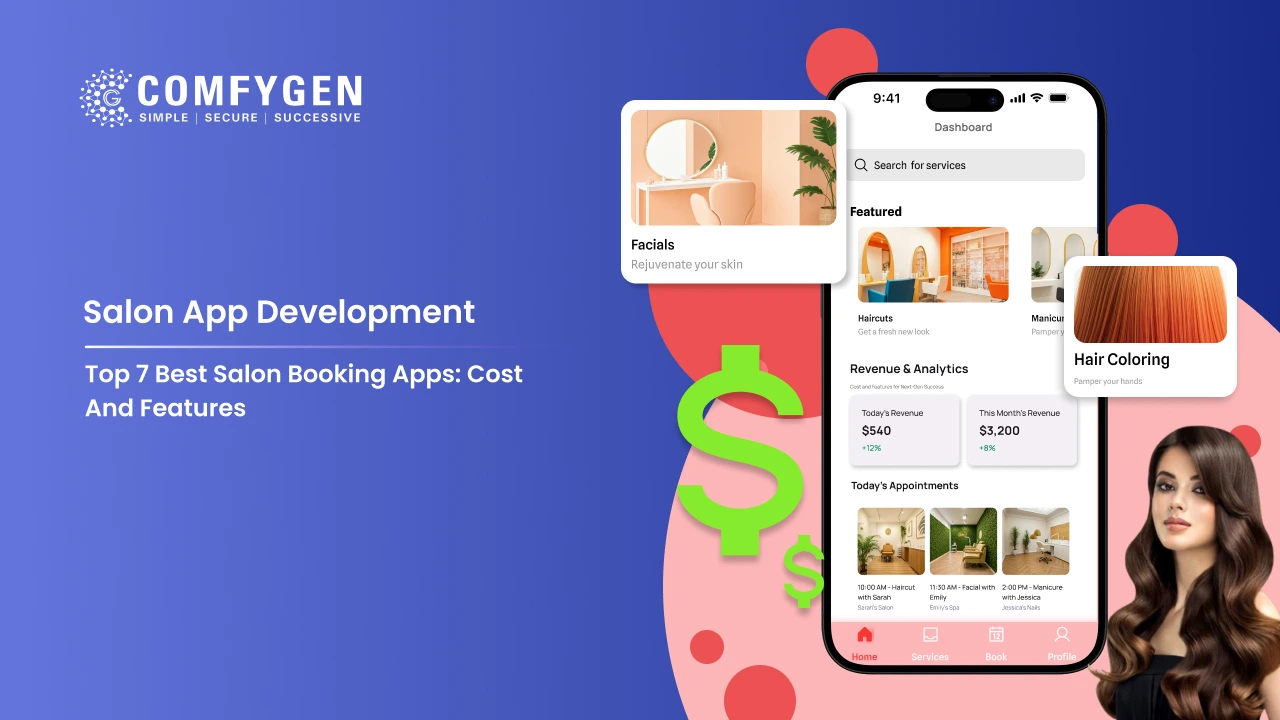
The beauty and salon industry is seeing unpredictable growth in 2026, with rising demand for personalized services, digital convenience, and smooth customer experiences. Salons, spas, and wellness centers are no longer dependent on walk-in customers alone. Today’s clients expect online appointment booking, instant confirmations, multiple payment options, and consistent service quality across every visit. With competition increasing in both local and global markets, adopting the right technology has become essential for salon businesses of all sizes.
The best salon apps help salon owners align daily operations, reduce manual work, and enhance overall efficiency. From managing appointments and staff schedules to handling billing, inventory, and customer data, modern salon management software acts as a centralized system for salon business owners that keeps everything organized.
In this blog, we’ll walk through the top 7 best salon booking apps in 2026, highlighting their key features, pros and cons, development cost, and what makes each platform stand out. We’ll compare these salon booking software solutions to help you understand which option fits your business needs best.
By the end, you’ll have a clear view of which salon booking app is right for your salon, spa, or wellness business, based on usability, features, scalability, and overall value.
What Is Beauty and Salon Booking App?
Best salon Booking apps a digital solutions designed to help salons, spas, and wellness businesses manage their day-to-day operations from one place. It simplifies tasks like online appointment booking, staff scheduling, billing, customer management, and inventory tracking, reducing manual work and errors.
What this really means is better control and better customer experience. Salon business owners can automate bookings, send reminders, track client preferences, and manage payments, while customers enjoy easy scheduling, flexible payment options, and consistent service.
In 2026, beauty and salon apps have become essential for running an organized, scalable, and customer-focused salon business.
Quick Overview of Top Beauty and Salon Apps
Before diving into the detailed comparison, this section gives a quick overview of the top 7 beauty and salon apps available in 2026. These salon booking apps are widely used by salons, spas, and wellness businesses to manage online appointments, staff schedules, payments, and customer engagement more efficiently.
| Software |
Primary Use |
Core Features |
Best For |
| Fresha |
Salon & Spa Management |
Booking, CRM, POS, Reminders, Inventory |
Small–mid salons, solo stylists |
| Vagaro |
Full Salon & Wellness Suite |
Scheduling, POS, Marketing, Reports |
Medium salons, multi-service businesses |
| Mangomint |
Simple Salon Management |
Booking, Payments, Staff Tools |
Modern salons, design-focused teams |
| Phorest |
Salon Business Platform |
Loyalty, Marketing, CRM, Reports |
Mid-large salons, chains |
| Acuity Scheduling |
Appointment Focused |
Booking, Calendar, Payments |
Solo stylists, smaller teams |
| Zenoti |
Enterprise-Level Salon Software |
Automation, Analytics, Multi-Location |
Large salons, spa chains |
| GlossGenius |
Simple Booking & Payments |
Online booking, POS, CRM |
Solo pros, small salons |
Top 7 Beauty and Salon Apps and Their Development Cost
In 2026, beauty and salon businesses can either choose a White Label salon booking app or invest in custom salon app development according to their brand and operational needs. Below is a detailed breakdown of the best salon booking apps, including their core features, usage cost, pros and cons, and the estimated development cost.
1. Fresha
Fresha is one of the most widely used beauty and salon booking platforms globally. It offers an all-in-one salon solution for appointment booking, payments, client management, and marketing, making it ideal for small to mid-sized salons.
Key Features
- Online appointment booking
- Client CRM with visit history
- POS and integrated payments
- Automated SMS/email reminders
- Inventory and staff management
Pros & Cons
| Pros |
Cons |
| Free to use with no monthly subscription |
Transaction fees may increase costs over time |
| User-friendly interface |
Limited advanced customization for large enterprises |
| Strong online booking capabilities |
Some premium features require paid add-ons |
| Reliable client management tools |
|
Usage Cost
- Free core software
- Transaction-based booking and payment fees
Estimated Development Cost
If you build a Fresha-like salon app:
- $20,000 – $60,000 for MVP
- $60,000 – $120,000+ for advanced features and mobile apps
Want to Develop a Salon
App Like Fresha
2. Vagaro
Vagaro is a feature-rich salon and wellness management platform designed for salons, spas, fitness studios, and wellness businesses.
Key Features
- Appointment scheduling
- POS and invoicing
- Marketing campaigns and promotions
- Client management and reporting
- Inventory tracking
Pros & Cons
| Pros |
Cons |
| Rich feature set for business growth |
Costs increase with add-ons |
| Built-in marketing and promotions |
It can be overwhelming for beginners |
| Robust reporting and analytics |
Some users report UI complexity |
| Works for salons and spas |
Customer support varies by region |
| Supports staff login and commission tracking |
Higher-tier pricing may be steep for small teams |
Usage Cost
- Starts at $25–$85/month depending on features
Estimated Development Cost
- $30,000 – $80,000+, depending on marketing automation and reporting complexity
3. Mangomint
Mangomint is known for its clean UI and automation-focused approach, helping salon owners reduce manual work and enhance customer experience.
Key Features
- Smart scheduling and booking
- Automated payments and tips
- Staff management tools
- Client profiles and notes
Pros & Cons
| Pros |
Cons |
| Very easy and pleasant user interface |
Higher base price than many competitors |
| Automation reduces admin time |
Limited advanced marketing tools |
| Excellent booking experience |
Fewer third-party integrations |
| Helpful client history features |
Not ideal for very large operations |
| Quick payment options |
No built-in loyalty program |
Usage Cost
Estimated Development Cost
4. Phorest
Phorest is a powerful salon management system with strong CRM and loyalty features, widely used by growing and established salons.
Key Features
- Advanced CRM and loyalty programs
- Marketing automation
- Online booking and POS
- Analytics and business reports
Pros & Cons
| Pros |
Cons |
| Exceptional loyalty program features |
More expensive than most alternatives |
| Strong CRM depth |
Learning curve for new users |
| Excellent automated marketing tools |
Some features require training |
|
Multi-location support
|
Enterprise focus may not suit tiny salons |
| High-quality analytics and reporting |
Support response can vary depending on the plan |
Usage Cost
- Custom pricing (generally $100+/month)
Estimated Development Cost
5. Acuity Scheduling
Acuity Scheduling is appointment-focused software ideal for solo beauty professionals and small teams.
Key Features
- Online appointment booking
- Calendar synchronization
- Payment processing
- Automated confirmations and reminders
Pros & Cons
| Pros |
Cons |
| Very affordable |
Limited salon-specific features |
| Clean, intuitive interface |
No built-in inventory control |
| Easy setup and syncing |
Not suited for large salons |
| Works well for individual contractors |
A few advanced marketing tools |
| Flexible scheduling options |
POS features are basic |
Usage Cost
Estimated Development Cost
6. Zenoti
Overview
Zenoti is an enterprise-level beauty and salon software designed for large salons, spas, and multi-location businesses.
Key Features
- Multi-location management
- Advanced analytics and reporting
- POS, CRM, and marketing tools
- Automation and AI insights
Pros & Cons
| Pros |
Cons |
| Highly scalable for large businesses |
Very expensive for small salons |
| Comprehensive analytics and automation |
Complex setup and onboarding |
| Excellent multi-location support |
Not ideal for basic salon needs |
| Deep feature set for enterprise needs |
Requires training to use fully |
| Centralized reporting and management |
Custom pricing can be high |
Usage Cost
- Custom enterprise pricing
Estimated Development Cost
7. GlossGenius
GlossGenius focuses on simplicity and ease of use, helping independent beauty professionals manage bookings and payments effortlessly.
Key Features
- Online booking
- Payment processing
- Client management
- Automated reminders
Pros & Cons
| Pros |
Cons |
| Affordable and easy to use |
Limited features for large teams |
| Personalized and modern UI |
No advanced inventory tools |
| Good for freelancers and small teams |
Basic reporting only |
| Integrated payments |
A few marketing automation tools |
| Simple booking process |
Not ideal for multi-location salons |
Usage Cost
Estimated Development Cost
Want to Launch Your Own Salon App
Top 7 Beauty and Salon Software & Development Cost
We’ll break down the best beauty and salon app solutions along with an estimated development cost range for each one. Whether you’re choosing an off-the-shelf salon booking app or planning a custom salon software build, understanding the cost landscape helps you make an informed decision.
Below, you’ll find a comparison that includes features, strengths, and typical price brackets, so you can easily evaluate what fits your budget and business goals before we dive into detailed pros and cons
| Software |
Usage Cost |
Estimated Development Cost |
Best For |
| Fresha |
Free + transaction fees |
$20k – $120k+ |
Small salons |
| Vagaro |
$25–$85/month |
$30k – $80k+ |
Medium salons |
| Mangomint |
~$79/month |
$35k – $90k+ |
Modern salons |
| Phorest |
Custom pricing |
$40k – $100k+ |
Growing salons |
| Acuity Scheduling |
$15–$50/month |
$20k – $60k+ |
|
| Zenoti |
Enterprise pricing |
$80k – $250k+ |
Large chains |
| GlossGenius |
$25–$70/month |
$25k – $70k+ |
|
Salon Clone App / Software Development Cost
A salon clone app is a custom-built beauty and salon software developed by replicating the core features of popular platforms like Fresha, Vagaro, or Zenoti, while adding unique branding and custom functionalities. In 2026, many salon owners and startups prefer salon clone app development to gain full control over features, data, pricing models, and scalability.
The development cost of a salon clone app depends on several factors, including app complexity, AI integration, supported platforms (Android, iOS, Web), UI/UX design, third-party integrations, and the development team’s location. Businesses can choose to build a basic MVP version or a full-featured enterprise-grade salon management system based on their budget and long-term goals.
A salon clone app typically includes features such as:
- Online appointment booking & scheduling
- Client and staff management
- Payment gateway integration
- Salon POS system
- Push notifications & reminders
- Inventory and product management
- Admin dashboard & analytics
- Multi-location support (optional)
Salon Clone App / Software Development Cost Table
| App Type |
Features Included |
Platforms |
Estimated Development Cost (USD)
|
| Basic Salon App (MVP) |
Booking, calendar, client profiles, basic admin panel |
Android / iOS |
|
| Mid-Level Salon Clone App |
Booking, CRM, payments, staff management, notifications |
Android + iOS |
|
| Advanced Salon Software |
POS, inventory, marketing, reports, automation |
Android, iOS, Web |
|
| Enterprise Salon Clone App |
Multi-location, analytics, AI, integrations, custom workflows |
Android, iOS, Web |
|
How to Choose the Right Beauty and Salon Software
Choosing the right beauty and salon software is a critical decision that directly impacts your daily operations, customer experience, and long-term business growth. With many options available in 2026, salon owners must evaluate software based on functionality, cost, scalability, and business needs rather than popularity alone.
Identify your salon size and business needs
Understand whether you run a small salon, solo practice, or multi-location business to choose suitable features.
Check essential features
- Make sure the software includes online booking, client management (CRM), POS, payments, and automated reminders.
Compare pricing and hidden costs
- Review subscription fees, transaction charges, setup costs, and future upgrade expenses.
Ensure scalability for future growth
- Choose software that can handle more staff, services, or locations as your salon grows.
Choose an easy-to-use and mobile-friendly platform
- A simple interface saves training time and allows management from mobile devices.
Check integrations, support, and data security
- Look for payment, marketing, and accounting integrations, strong customer support, and data protection compliance.
Try free demos or trials before final selection
- Testing the software helps you confirm usability and feature fit before committing.
Benefits of Using Beauty and Salon Management Software
Beauty and salon management software helps salon owners move away from manual processes and manage daily operations more efficiently. From appointment scheduling to billing and customer retention, the right salon software brings everything into one system. What this really means is fewer errors, better customer experiences, and more control over your business.
1. Streamlined Appointment Scheduling
One of the biggest benefits of using beauty and salon management software is automated appointment booking. Customers can book services online, choose preferred stylists, and receive instant confirmations. This reduces no-shows, avoids double bookings, and saves front-desk staff hours every day. Search engines also love this topic because users actively look for salon appointment scheduling software.
2. Improved Customer Experience and Retention
Salon management software stores customer profiles, service history, and preferences in one place. This allows salons to offer personalized services, loyalty programs, and targeted offers. When clients feel remembered and valued, they return more often, which directly increases repeat business and customer lifetime value.
3. Faster Billing and Secure Payments
With integrated POS and digital payment options, beauty salon software makes billing quick and error-free. Invoices are generated automatically, taxes are calculated correctly, and multiple payment methods are supported. This improves checkout speed and reduces disputes, especially during peak hours.
4. Better Staff Management and Productivity
Managing stylists, beauticians, and support staff becomes easier with built-in staff scheduling and performance tracking. Salon owners can assign shifts, monitor service completion, and track commissions without manual spreadsheets. This improves accountability and ensures better use of staff time.
5. Inventory and Product Management
Beauty and salon management software helps track product usage, stock levels, and supplier details in real time. Low-stock alerts prevent last-minute shortages, while detailed reports help reduce product wastage. This is especially useful for salons offering retail beauty products alongside services.
6. Business Insights Through Reports and Analytics
Access to real-time reports is a major advantage of salon management systems. Owners can track daily revenue, popular services, peak booking hours, and customer behavior. These insights help make smarter decisions around pricing, promotions, and staffing.
7. Marketing Automation and Promotions
Modern salon software includes tools for SMS, email campaigns, and push notifications. Salons can promote offers, remind customers about appointments, and re-engage inactive clients automatically. This reduces marketing effort while improving conversion rates.
8. Scalability for Single and Multi-Location Salons
Whether you run a single beauty salon or manage multiple branches, salon management software scales with your business. Centralized data, location-wise reports, and role-based access make expansion smoother without operational chaos.
9. Reduced Operational Costs
By automating bookings, billing, staff management, and inventory, salons significantly reduce manual work and operational overhead. Over time, the cost of salon management software is easily offset by increased efficiency and higher revenue.
10. Data Security and Compliance
Customer data, payment details, and business records are stored securely with proper access controls. This builds customer trust and ensures compliance with data protection standards, which is increasingly important for modern beauty businesses.
Conclusion
Choosing the right beauty and salon software in 2026 is essential for managing operations, meeting customer expectations, and supporting business growth. Whether you opt for ready-made platforms like Fresha, Vagaro, or Zenoti, or choose custom salon app development, the best solution depends on your salon’s size, budget, and plans.
With the right features and scalable technology in place, salon owners can improve efficiency, enhance customer experience, and boost retention. Working with an experienced development partner like Comfygen Technologies helps ensure your salon software is built for long-term success in a competitive beauty and wellness market.
FAQs
What is the best beauty and salon software in 2026?
The best beauty and salon software in 2026 depends on your business needs. Popular options include Fresha for small salons, Vagaro for growing businesses, and Zenoti for large or multi-location salons. Custom salon apps are also a good choice for businesses that need full control and branding.
How much does beauty and salon software cost?
Beauty and salon software typically costs between $15 to $100+ per month, depending on features and business size. Some platforms offer free plans with transaction fees, while enterprise solutions use custom pricing.
Is beauty and salon software suitable for small businesses?
Yes, beauty and salon software is ideal for small salons and independent professionals. Many platforms offer affordable plans with essential features like online booking, payments, and client management.
What features should I look for in the best salon software?
Key features include online appointment booking, client management (CRM), staff scheduling, POS and payments, automated reminders, inventory management, and basic reporting.
Can I build a custom beauty and salon app instead of using ready-made software?
Yes, you can develop a custom salon app to match your brand and business model. Custom development offers better flexibility, scalability, and ownership but requires a higher upfront investment.
How much does it cost to develop a beauty and salon app?
The development cost of a salon app usually ranges from $15,000 to $250,000+, depending on app complexity, platforms, features, and development region.