




Blockchain technology is no longer confined to cryptocurrencies. It has evolved into a high-security, enterprise-grade framework driving innovation across finance, healthcare, supply chain, real estate, and beyond. With its decentralized architecture, tamper-proof transparency, and cryptographic security, blockchain has become a strategic foundation for businesses that want to build trust, reduce operational friction, and stay competitive in an increasingly digital economy.
The numbers confirm the momentum:
- The global blockchain technology market was valued at $31.18 billion in 2025 and is projected to grow from $47.96 billion in 2026 to $577.36 billion by 2034, exhibiting a CAGR of 36.50%.
- According to Precedence Research (updated February 2026), the market is estimated at $41.14 billion in 2025 and predicted to reach approximately $2,379.53 billion by 2035, expanding at a CAGR of 50.04%.
- Gartner estimates that 25% of Global 2000 companies will run blockchain in production by end of 2026, up from 11% in 2024, with financial services and supply chain making up about 60% of live deployments.
- Nearly 90% of businesses surveyed have already deployed blockchain in some capacity, while blockchain’s value added to global business is projected to exceed $360 billion by 2026.
This is no longer an emerging technology — enterprise blockchain adoption in 2026 is being propelled by regulatory clarity, technological readiness, and real business outcomes. It’s no longer just about pilots — it’s about scaling systems that deliver trust, efficiency, and compliance.
For businesses, blockchain is a strategic move to streamline payments, strengthen supply chain transparency, automate operations through smart contracts, tokenize real-world assets, and unlock entirely new revenue models in the Web3 economy.
For entrepreneurs ready to build — this guide walks you through exactly how to develop a blockchain-based application in 2026, from platform selection to deployment. And while understanding the process is essential, partnering with an experienced blockchain development company in India ensures you get production-ready solutions built at competitive rates, backed by deep technical expertise.
Understand Blockchain Technology and Its Impact in 2026
Blockchain technology is a necessity to integrate into the operations of every business based on the concurrent market standards. It’s a decentralized distributed ledger that records transactions in a secure, immutable, and transparent manner.
Unlike traditional centralized systems; blockchain eliminates the intermediaries that ensure unreliable peer-to-peer transactions. It changes the game across industries seeking efficiency and data security.
By 2026, the impact of blockchain has expanded far beyond cryptocurrencies like Bitcoin and Ethereum. Enterprises are leveraging blockchain development solutions to build secure supply chains, enable faster cross-border payments, authenticate digital identities, and automate contracts through smart contracts. The shift towards blockchain is driven by its core benefits:
- Decentralization: Eliminates the need for third parties, reducing operational costs and increasing trust.
- Transparency: Every transaction is visible on the ledger, fostering accountability and traceability.
- Security: Encrypted records prevent data tampering, making blockchain ideal for sensitive data management.
- Immutability: Once data is recorded, it cannot be altered, protecting against fraud and manipulation.
Key Industries Adopting Blockchain in 2026
- Finance & Banking: Streamlined payments, faster settlements, decentralized finance (DeFi) platforms.
- Healthcare: Securing patient records, ensuring data privacy, and enabling real-time access.
- Supply Chain: Real-time tracking, reduced fraud, and improved inventory management.
- Real Estate: Transparent property records, tokenization of assets.
- Gaming & NFTs: Ownership of digital assets, transparent in-game economies.
With continuous advancements in blockchain technology, businesses across sectors are partnering with leading blockchain development companies to explore new revenue streams, enhance customer trust, and future-proof their digital infrastructure.
Why Businesses Are Jumping Into Blockchain Application Development
The buzz around blockchain application development isn’t slowing down anytime soon, and it’s easy to see why. Companies everywhere are catching on that blockchain goes way beyond Bitcoin—it’s about building secure, open, and decentralized systems that are ready for tomorrow. In 2026, more and more businesses are tapping into blockchain development services to shake up how they operate, save money, and earn the trust of their partners and customers.
Here’s why partnering with a blockchain development company is becoming a no-brainer for businesses this year:
Top-Notch Security and Privacy
With blockchain’s rock-solid encryption, sensitive info stays safe from hackers, fraudsters, and prying eyes. Whether it’s banking, healthcare, or legal firms, the best blockchain development company in India can craft solutions that lock down data like Fort Knox.
Smoother Operations, Lower Costs
Thanks to smart contracts, businesses can automate tasks, ditch middlemen, and slash overhead costs. It’s no wonder so many are turning to a blockchain development company for custom blockchain development solutions that make workflows faster and leaner.
Crystal-Clear Transparency and Trust
Every move on a blockchain is locked in stone and open for the right people to see. That kind of openness builds confidence and makes auditing a breeze—perfect for industries like supply chains, real estate, or logistics that thrive on accountability.
Fresh Ways to Make Money (Think DeFi, NFTs, and Tokenization)
Developing blockchain applications unlocks cool opportunities like decentralized finance (DeFi), Non-Fungible Tokens (NFTs), and turning assets into digital tokens. These aren’t just trends—they’re new paths to profits, and blockchain app development services are leading the charge.
Staying Legal and Keeping Records Straight
With rules around data security getting stricter worldwide, blockchain’s tamper-proof record-keeping is a game-changer. It’s a stress-free way for businesses to stay compliant, and the best blockchain development company knows how to make it happen.
“As per Gartner’s forecast, over 20% of global enterprises will deploy blockchain-based solutions to enhance their core business operations by 2026.”
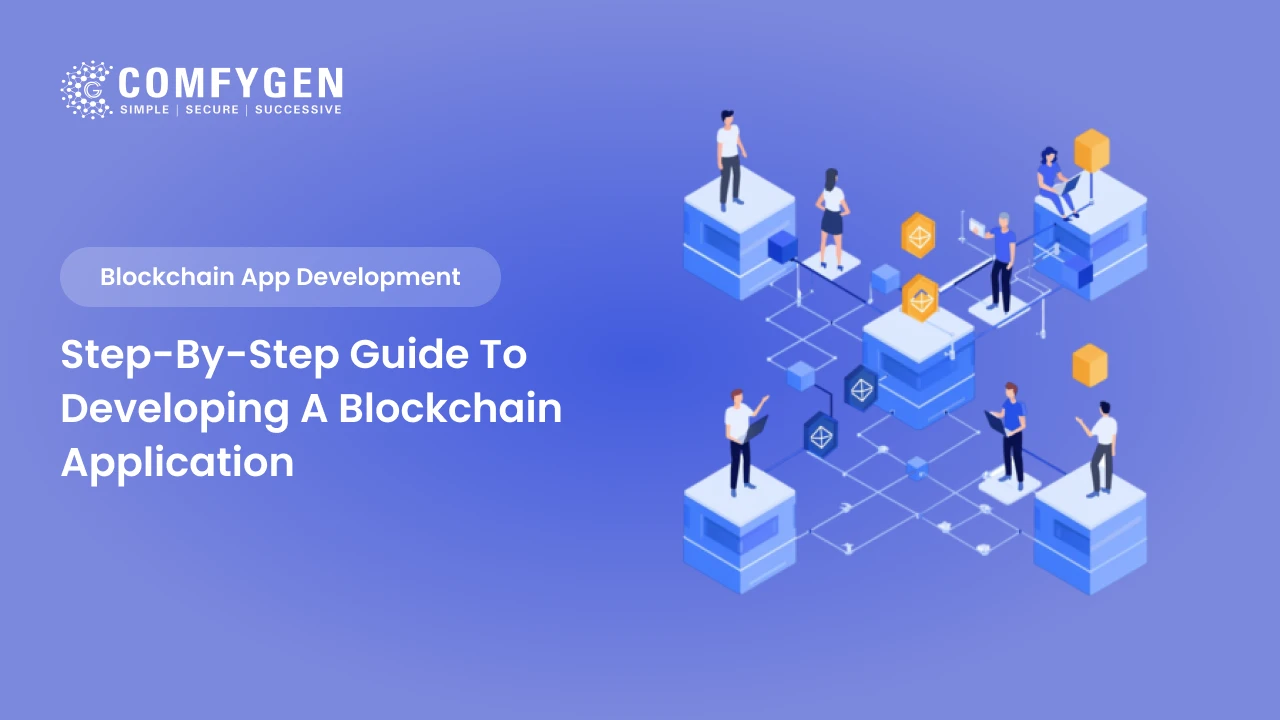
Step-By-Step Blockchain App Development Process
Creating a blockchain-based application in 2026 is an exciting journey that needs a clear roadmap, skilled hands, and the right tools. By working with a trusted blockchain development company, you can ensure your app is built to last, stays secure, and meets your business goals.
Here’s how the process breaks down into eight key steps:
Define Business Goals & Use Case
Kicking things off means figuring out what your app is all about—what problem it’s solving and why blockchain is the answer. Whether you’re aiming to boost supply chain transparency, launch a DeFi platform, or set up a decentralized marketplace, nailing down your goals is step one. Ask yourself: How does blockchain add value to my business? Which tasks need that decentralized edge? And who’s using this thing—what do they need from it? A solid blockchain app development company can help turn these questions into a game plan that sets the tone for everything else.
Choose the Right Blockchain Platform
Picking the perfect blockchain platform is a make-or-break moment in blockchain application development. It’s all about finding the one that fits your needs—think about transaction speed, scalability, and whether it supports smart contracts. In 2026, you’ve got great options: Ethereum for dApps and DeFi, Hyperledger Fabric for private business setups, Polygon for affordable scaling, Solana for blazing-fast performance, or Corda for finance-focused projects. Teaming up with blockchain development services means you’ll land on a platform that matches your vision and budget without the guesswork.
Decide the Consensus Mechanism
Next up is choosing how your blockchain keeps things legit—aka the consensus mechanism. This is the system that verifies transactions and keeps data trustworthy, and it depends on what your app prioritizes: speed, security, or something in between. You might go with Proof of Work (PoW) for heavy-duty security, Proof of Stake (PoS) for efficiency, Delegated Proof of Stake (DPoS) for quick decisions, or Practical Byzantine Fault Tolerance (PBFT) for smaller networks. A blockchain software development expert can guide you to the right call here.
UI/UX Design for Blockchain Apps
Your app’s design isn’t just about looking pretty—it’s about making a complex blockchain feel simple and welcoming. For blockchain mobile app development, that means a user-friendly interface with smooth wallet integration, clear visuals showing transaction flows, and a layout that works flawlessly on phones. A great UI/UX can make or break adoption, so leaning on blockchain app development services ensures your app hooks users from the first tap.
Smart Contract Development
Smart contracts are the heart of developing blockchain applications—they automate tasks, cut out middlemen, and kick in when conditions are met. Writing them in languages like Solidity, Rust, or Vyper takes know-how, and tools like Chain Link or OpenZeppelin can amp up their power. But here’s the catch: they need serious testing and auditing to dodge security risks. Hiring the best blockchain development company guarantees your smart contracts are tight, safe, and ready to roll.
Backend and API Development
The backend is where your app gets its backbone — handling APIs, databases, and connections to outside systems. You will need a rock-solid setup using tech like Node.js, Python, Go, or Java to keep it all running smoothly. This is the bridge between your blockchain and the real world, and a skilled blockchain development company will build it to handle whatever you throw its way.
Blockchain Integration & Testing
Before you go live, testing is non-negotiable—blockchain development solutions demand it to avoid pricey mistakes. This means checking if everything works (functional testing), if it all connects right (integration testing), if it’s fast enough (performance testing), and if it’s hacker-proof (security audits). Throw in smart contract audits and load tests to ensure it scales, and the best blockchain development company in India will have your back to get it launch-ready.
Deployment & Ongoing Maintenance
Launch time! Deployment means putting your app on the blockchain—public or private—and hosting it on cloud servers or your setup. But it doesn’t stop there; it is key to keep it secure and up-to-date with monitoring, upgrades, and new features.
Top Tools and Technologies for Blockchain Development
The success of blockchain application development hinges on picking the perfect tools, frameworks, and technologies. In 2026, as the field keeps growing, developers and businesses need to tap into cutting-edge tech stacks that speed up blockchain development, lock in strong security, and make deployment a breeze. Teaming up with a top-notch blockchain development company ensures these tools are used right, delivering high-performing blockchain development solutions customized to fit your business goals perfectly.
Popular Blockchain Platforms
| Platform | Purpose |
| Ethereum | Smart Contracts, DeFi, dApps, and NFTs |
| Hyperledger Fabric | Private Blockchain for Enterprises |
| Solana | High-Speed Apps and Scalable Solutions |
| Polygon (MATIC) | Layer 2 Scaling Solution for Ethereum |
| Cordo | Ideal for Financial Applications |
| Polkadot | Cross-Chain Compatibility and Scalability |
Smart Contract Development Tools:
Solidity, Rust, and Vyper: Popular programming languages for writing smart contracts.
Remix IDE: A browser-based tool for coding, testing, and deploying smart contracts.
Truffle Suite: Offers development environment, testing framework, and asset pipeline.
Ganache: Local Ethereum blockchain for testing dApps.
OpenZeppelin: Library of audited smart contract templates.
API and Backend Development Tools:
Node.js, Python, Go, Java: Preferred languages for blockchain backend development.
Web3.js & Ethers.js: JavaScript libraries to interact with Ethereum blockchain.
IPFS (InterPlanetary File System): For decentralized storage.
The Graph: For querying blockchain data efficiently.
Testing and Auditing Tools:
MythX & Slither: Tools for auditing and securing smart contracts.
Chai & Mocha: JavaScript testing frameworks for unit testing smart contracts and backend systems.
Wallets and Integrations:
MetaMask, Trust Wallet: Popular crypto wallets for dApp integration.
Chainlink: For integrating secure, real-world data into smart contracts.
Cost Estimation and Timeframe for Developing Blockchain Applications
Blockchain app development – is a multi-step journey packed with cutting-edge tech and the need for serious expertise. In 2026, the price tag for developing blockchain applications can shift depending on a few key factors: how tricky your project is, which platform you choose, and the know-how of the blockchain development company you partner with. Understanding these cost drivers lets businesses map out their budgets smartly while locking in top-notch blockchain development solutions that deliver the goods.
Key Factors Influencing Blockchain Development Cost
Many factors fluctuate overall blockchain app development cost; such as:
- Project Complexity: Developing basic dApps will cost less compared to enterprise-grade apps with advanced features.
- Blockchain Platform: Hyperledger or another private blockchain will cost economical, whereas Ethereum will cost more due to its gas fees.
- Smart Contract Development: Complex smart contracts will cost higher, but result in higher performance and end-to-end auditing.
- UI/UX Designs: Creating custom designs and mobile-friendly features will increase the cost but improve the user experience.
- Team Location & Expertise: Hiring the best blockchain development company in India offers cost-efficient without compromising quality.
- Integration Requirements: APIs, wallets, real-time data integration, and third-party services impact the overall cost.
- Testing & Security Audits: Smart contract audits and app security tests are mandatory tasks and add to development costs.
Estimated Cost in 2026
- Basic dApps (MVP) – $30000-$50000
- Mid-Level Blockchain App – $50000-$100000
- Enterprise Blockchain – $100000-$300000
Estimated Time Frame for Blockchain App Development
| Development Stage | Estimated Duration |
| Requirement Analysis & Planning | 2-3 Weeks |
| Design (UI/UX) | 3-4 Weeks |
| Smart Contract Development | 4-6 Weeks |
| Backend & Frontend Development | 6-8 Weeks |
| Testing QA | 3-4 Weeks |
| Deployment & Launch | 2 Weeks |
Key Challenges in Blockchain Mobile App Development
While blockchain mobile app development offers tremendous opportunities, it also comes with unique challenges that businesses must address to ensure successful implementation. Understanding these challenges helps you prepare better, avoid costly mistakes, and build scalable, future-ready blockchain applications.
Collaborating with an experienced blockchain development company can help overcome these roadblocks while ensuring performance, security, and compliance.
Scalability Issues
Blockchain networks often face limitations in handling a high volume of transactions per second. Public blockchains like Ethereum experience congestion and high gas fees, especially during peak usage, which can affect mobile app performance.
Complex User Experience (UX)
Blockchain applications involve intricate processes such as wallet creation, private key management, and transaction signing — making it challenging to deliver a seamless, intuitive user experience for mobile users. Balancing security with ease of use is crucial.
Security Risks and Smart Contract Vulnerabilities
Smart contracts are irreversible and immutable once deployed. A single coding error or loophole can lead to massive financial losses or data breaches. Regular smart contract audits and robust security testing are essential.
High Development Costs
Building blockchain apps, especially those requiring cross-platform mobile compatibility, secure wallets, and smart contracts, demands specialized skills — often increasing development costs.
Choosing the best blockchain development company in India can help businesses reduce costs without compromising on quality.
Regulatory and Legal Compliance
Blockchain operates in a highly uncertain regulatory environment. Laws regarding digital assets, data privacy, and decentralized applications vary across countries, making compliance a major challenge in global deployments.
Integration Complexity
Integrating blockchain with legacy systems, third-party APIs, payment gateways, and IoT devices adds layers of complexity that require expert handling.
AI + Blockchain: The Most Powerful Convergence of 2026
Artificial intelligence and blockchain are no longer developing on separate tracks. In 2026, they have converged into one of the most consequential technology combinations of the decade — and for developers building blockchain applications, understanding this intersection is no longer optional.
AI-Powered Smart Contract Auditing
Smart contract vulnerabilities have cost the industry billions. The $3.8 billion lost to smart contract exploits in 2024–2025 is now increasingly preventable, thanks to LLM-based auditing tools. Smart contracts concentrate value and risk, making them a prime target for AI-driven auditing. Automated vulnerability scanning is increasingly used to detect common issues like reentrancy flaws, access-control weaknesses, and unsafe external calls. What used to require weeks of manual security review by expensive auditors can now be scanned in minutes, with AI flagging potential exploits before a single line is deployed.
Autonomous AI Agents On-Chain
In the 2026 ecosystem, autonomous agents use secure smart contracts and multi-sig wallets to execute transactions, adding a layer of programmable safety. An agent can be given a strict budget and a specific set of rules — for example, only buy this asset if the price drops below a set value. Because every action an agent takes is recorded on the blockchain, there is a transparent audit trail that allows human owners to monitor activity and intervene if necessary.
This is particularly powerful in DeFi, supply chain management, and treasury automation, where AI agents can monitor market conditions, trigger payments, and rebalance portfolios without human intervention — while keeping every decision verifiably on-chain.
AI Inference on Decentralized Networks
A major development is AI inference offered through decentralized networks that provide verifiability and economic accountability. A prominent approach in 2026 is running inference as Actively Validated Services (AVS) on restaking-based security models. GPU nodes host models, stake collateral, and can be penalized for returning incorrect or non-compliant results. This brings trust guarantees to AI outputs — solving one of AI’s core problems: knowing whether you can trust the model’s answer.
Why Choose Comfygen for Your Next Blockchain Development Project?
Comfygen has extensive experience in blockchain development solutions. The team is dedicated to developing blockchain applications and software for startups & enterprises. We have acquired clients from a global demographic delivering top-notch blockchain solutions tailored to your needs.
- Proven Expertise: We are backed by years of experience in blockchain technology, providing cutting-edge blockchain solutions across industries (finance, healthcare, supply chain, etc).
- Custom Blockchain Development: Be it smart contracts to decentralized applications (dApps); Comfyfen has experience in building highly customized and secure blockchain products aligned with your dedicated business objectives.
- End-To-End Blockchain Development Services: Providing blockchain consulting, development, auditing, app development, tokenization & NFT marketplace development, wallet & exchange development.
- Agile Development Process: We are focused on developing robust blockchain solutions, ensuring transparency, prompt, timely deliveries, and continuous client collaborations to build efficient projects.
- Cost-Effective Solutions: Offering premium blockchain development services without breaking your bank balance, makes Comfygen the best blockchain development company.
Conclusion
Blockchain development solutions are extending its usage among all businesses across industries. In 2026, blockchain solutions will dominate every market with decentralized finance platforms, NFT marketplaces, supply chain systems, and more while scaling operational efficiency.
Therefore, your project success depends upon the experience & expertise level of the blockchain development company in India. Comfygen has top-tier blockchain developers who are proven experts and innovative at their development skills while targeting client-centric approaches. We promise to deliver end-to-end blockchain development services at a competitive scale meeting your business goals.
Ready to build your blockchain application?
Connect Comfygen, as we are your trusted partner for blockchain development solutions while opening new big opportunities with robust security.
FAQs
How much does blockchain application development cost in 2026?
How long does it take to develop a blockchain application?
What are the steps to develop a blockchain application?
Which blockchain platform is best for app development in 2026?
What are smart contracts and how do they work in blockchain apps?

Mr. Saddam Husen, (CTO)
Mr. Saddam Husen, CTO at Comfygen, is a renowned Blockchain expert and IT consultant with extensive experience in blockchain development, crypto wallets, DeFi, ICOs, and smart contracts. Passionate about digital transformation, he helps businesses harness blockchain technology’s potential, driving innovation and enhancing IT infrastructure for global success.