




The global blockchain market is projected to surpass $1.2 trillion by 2030, and Solana is emerging as the chain of choice for projects that demand speed, scale, and cost-efficiency. Whether you are a startup racing to validate a tokenized product or an enterprise designing a compliant digital asset infrastructure, choosing the right Solana token development service can be the single most consequential technology decision you make. This guide breaks down everything you need to know — from what a professional service delivers to how development unfolds step by step — so you can make an informed, confident choice.
What Is a Solana Token Development Service?
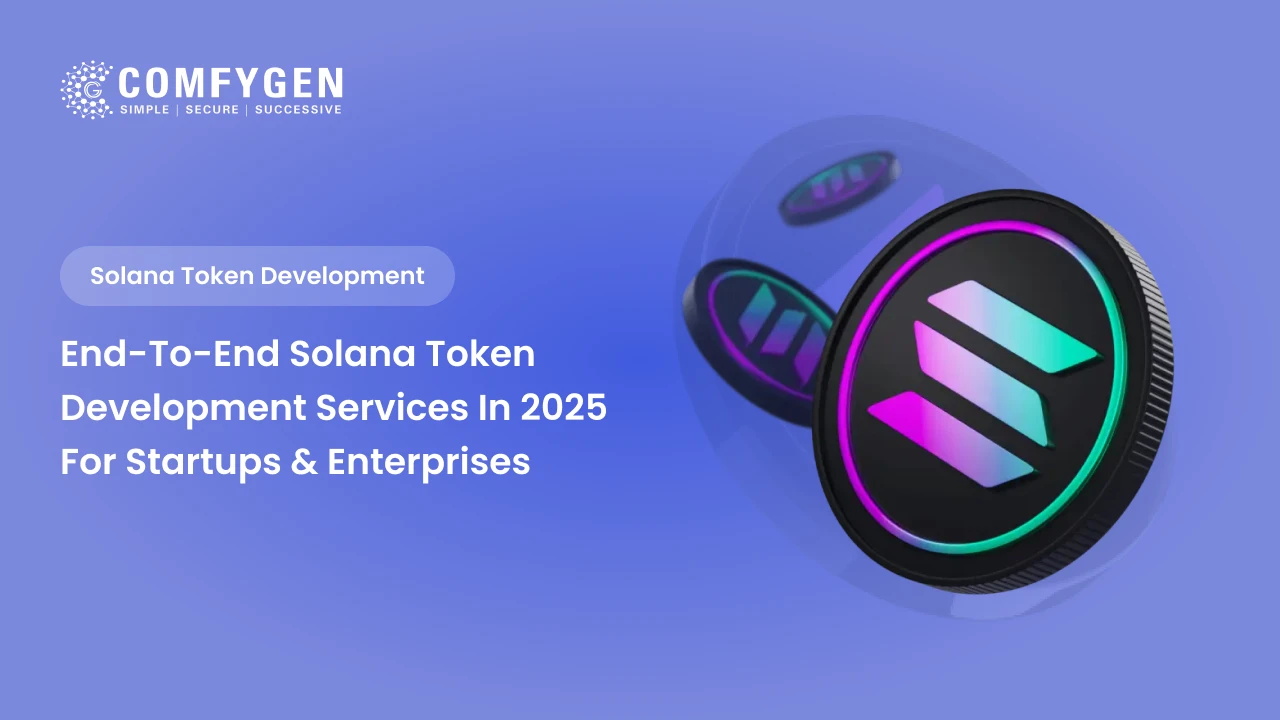
A Solana token development service is an end-to-end engagement in which a blockchain engineering team designs, builds, audits, deploys, and maintains digital tokens on the Solana network. Unlike point tools that let you mint a basic SPL token in minutes, a full-service partner handles the entire lifecycle: tokenomics modeling, Rust-based smart contract programming, multi-environment testing, third-party security auditing, mainnet deployment, liquidity strategy, and long-term maintenance.
Solana tokens are built to the SPL (Solana Program Library) standard — the Solana equivalent of Ethereum’s ERC-20 and ERC-721 standards. The newer Token-2022 extension adds programmable features such as transfer hooks, interest-bearing tokens, confidential transfers, and non-transferable tokens, making Solana one of the most versatile chains for enterprise-grade token engineering.
Why Solana? The Technical Case for Building Here
Not every blockchain is created equal. Solana’s architecture solves fundamental problems that have plagued earlier networks, and these advantages translate directly into business value for any token project.
Speed and Throughput
Solana’s Proof of History (PoH) consensus mechanism acts as a cryptographic clock, allowing validators to process transactions in parallel rather than sequentially. The result is a theoretical throughput of 65,000 transactions per second (TPS) — more than 2,000 times the base-layer capacity of Ethereum. For token projects with high transaction volume — gaming, high-frequency DeFi, loyalty programs — this is not a minor advantage; it is a fundamental requirement.
Low Transaction Costs
The average transaction fee on Solana is consistently below $0.001. For an enterprise minting millions of loyalty tokens or a game studio dropping a collection of 1 million compressed NFTs (cNFTs), this cost differential is the difference between a viable business model and one that collapses under its own gas burden.
Developer Ecosystem and Tooling
Solana’s developer tooling has matured significantly. The Anchor framework provides a structured, Rust-based development environment that reduces common smart contract vulnerabilities. Metaplex powers NFT and token metadata standards. The Solana CLI and web3.js SDK offer deep programmatic control. Any reputable Solana token development service will demonstrate fluency across all of these tools.
Solana vs Ethereum vs BNB Chain — Quick Comparison
| Metric | Solana | Ethereum | BNB Chain |
| Max TPS | 65,000+ | ~30 (L1) | ~2,000 |
| Avg Tx Fee | <$0.001 | $1–$50+ | ~$0.05 |
| Finality | ~400ms | ~12 sec | ~3 sec |
| Smart Contract | Rust / Anchor | Solidity | Solidity |
| Consensus | PoH + Tower BFT | Proof of Stake | Proof of Stake |
Core Services in a Professional Solana Token Development Package
A scalable Solana token development service is not a single deliverable — it is a portfolio of interconnected capabilities. Here is what a full-service engagement covers.
SPL Token Design and Minting
The foundation of any engagement is token design. This includes modeling token supply (fixed vs inflationary), setting mint authority and freeze authority, defining decimal precision, and determining vesting and lock-up schedules. A professional team will also stress-test tokenomics against simulated market scenarios before a single line of code is written.
Smart Contract Development and Auditing
Solana programs are written in Rust using the Anchor framework. Development teams build the on-chain logic governing token behavior — transfer restrictions, staking mechanics, governance voting — and then submit the code to a formal security audit. Leading audit firms in the Solana ecosystem include Halborn, OtterSec, and Neodyme. Skipping this step is the single most common mistake that leads to protocol exploits and investor losses.
DeFi Protocol Integration
Most token projects require some form of on-chain liquidity. A Solana token development service with DeFi capability will integrate your token with automated market makers (AMMs) such as Raydium and Orca, build staking and yield farming programs, and structure liquidity bootstrapping pools (LBPs) for fair launch mechanics. This transforms a static token into a living financial instrument.
NFT and Digital Collectible Development
Using the Metaplex standard, development teams can create fungible, semi-fungible, and non-fungible tokens on a single platform. Compressed NFTs (cNFTs) — a Solana-native innovation — allow projects to mint up to 1 million assets at a fraction of a cent each, opening entirely new business models for gaming, ticketing, and loyalty programs.
Wallet and dApp Integration
Your token needs a user-facing home. A full-service team will integrate with Solana-native wallets (Phantom, Backpack, Solflare) via the Wallet Adapter standard, build a custom decentralized application (dApp) with React/Next.js on the frontend, and — for enterprise clients — bridge wallet authentication with existing SSO and identity management systems.
Startups vs Enterprises: Two Different Development Approaches
A startup shipping a DeFi MVP and a Fortune 500 launching an employee reward token have radically different requirements. A world-class Solana token development service adapts its methodology accordingly.
| Factor | Startups | Enterprises |
| Timeline | 4–8 weeks MVP | 3–6 months full deployment |
| Token Model | Open, permissionless SPL | Permissioned with KYC/AML gating |
| Compliance | Basic audit | MiCA, SEC, VARA-ready modules |
| Treasury | Single-wallet | Multi-sig, DAO governance |
| Budget | Cost-optimised | Enterprise SLA + support retainer |
| Priority | Speed to market | Security, regulatory alignment |
Startups benefit most from lean, iterative development cycles. The goal is a production-ready token on Solana mainnet within four to eight weeks, with a tokenomics model that can evolve as the user base grows. Enterprises, by contrast, require a longer design phase focused on regulatory alignment, permissioned access controls, multi-signature treasury management, and post-launch governance infrastructure.
Ready to Launch
Your Token on Solana?
Contact Now
Key Advantages of Solana Token Development
1. High Performance
Solana offers block finality in 400ms, enabling real-time transaction capabilities suitable for exchanges, games, and payment apps.
2. Low Gas Costs
Unlike Ethereum’s gas-heavy operations, Solana’s costs remain consistently low, making it ideal for high-volume platforms.
3. Developer Ecosystem
With tools like Anchor Framework, Solana provides developers with a robust, easy-to-use Rust-based environment.
4. Growing User Base
Solana’s rising popularity ensures a strong community, higher adoption potential, and faster network effects.
5. Interoperability & Bridges
Solana supports token bridging to Ethereum, BSC, and other chains through platforms like Wormhole.
Solana Token Development Process: From Concept to Launch
- Discovery and Tokenomics Design — Define your token’s purpose, supply model, distribution schedule, and utility mechanics. Output: a tokenomics whitepaper and financial model.
- Architecture Selection — Choose between standard SPL and Token-2022 extensions. For enterprise use cases requiring compliance hooks or confidential transfers, Token-2022 is almost always the right choice.
- Smart Contract Development — Engineers write Rust/Anchor programs encoding your token’s on-chain behavior. Code is version-controlled, peer-reviewed, and documented.
- Internal Testing on Devnet / Testnet — All programs are deployed to Solana Devnet and subjected to unit testing, integration testing, and economic simulation before any external review.
- Third-Party Security Audit — An independent firm reviews the code for vulnerabilities, including reentrancy patterns, signer verification errors, arithmetic overflows, and access control issues. All critical and high findings must be resolved before mainnet.
- Mainnet Deployment and Liquidity Bootstrapping — Token is deployed to the Solana mainnet. Liquidity pools are seeded on Raydium or Orca. Treasury wallets are secured using multi-sig.
- Post-Launch Monitoring and Governance — Ongoing program upgrades, validator-set management, community governance integration, and compliance reporting are handled under a retainer or SLA agreement.
Use Cases: Who Needs Solana Token Development Services?
Startups
- Launch MVPs with fast go-to-market strategies
- Fundraise through token sales or IDOs
Enterprises
- Tokenize real-world assets
- Loyalty and incentive systems
DeFi Platforms
- Staking tokens
- Governance models
GameFi & Metaverse Projects
- In-game currency
- Player rewards
NFT Marketplaces
- Custom minting contracts
- Royalty logic
DAOs
- Voting power through governance tokens
Why Choose Comfygen for Solana Token Development in 2025?
Certified Solana Developers
Our blockchain engineers are skilled in Rust, Anchor, Solana CLI, and Serum frameworks.
Security-First Development
We follow rigorous auditing practices to minimize vulnerabilities.
Agile Delivery
Depending on the scope, your project can go live within 2-4 weeks.
Tailored Solutions
From simple tokens to full ecosystems with staking, DeFi, NFTs, and more.
24/7 Global Support
We serve clients from India, the USA, the UAE, the UK, Canada, and beyond.
Solana Token Development Cost Breakdown
| Service | Estimated Cost (USD) |
|---|---|
| Basic SPL Token | $1,000 – $3,000 |
| Custom Token + Tokenomics | $3,000 – $6,000 |
| Smart Contracts & Integration | $5,000 – $10,000 |
| Audit & Mainnet Launch | $2,000 – $4,000 |
Factors Affecting Cost:
- Token complexity
- Number of smart contracts
- Integration requirements
- Security auditing depth
Talk to a
Solana Expert Now!
Contact Now
Security and Compliance: Non-Negotiables in Token Development
Security is where token projects most frequently fail. Common vulnerability classes in Solana programs include missing signer verification (allowing unauthorized callers to execute privileged instructions), arithmetic overflow errors that distort token balances, and account confusion attacks that substitute malicious accounts for legitimate ones. A professional Solana token development service eliminates these risks through disciplined use of the Anchor framework’s built-in constraints, mandatory pre-deployment auditing, and program upgrade governance controls.
On the regulatory front, the landscape is evolving rapidly. The EU’s Markets in Crypto-Assets (MiCA) regulation requires issuers of significant tokens to maintain reserves, publish whitepapers, and implement AML controls. The UAE’s Virtual Asset Regulatory Authority (VARA) has established a comprehensive licensing regime for digital asset businesses. In the US, the SEC’s ongoing classification of tokens as securities requires careful legal structuring before launch. The Token-2022 standard’s transfer hook and confidential transfer extensions allow compliance logic to be built directly into the on-chain program, reducing reliance on off-chain enforcement mechanisms.
Ready to Launch Your Token on Solana?
In 2025, Solana continues to redefine blockchain scalability and efficiency. Whether you’re a startup looking to tokenize your idea or an enterprise aiming to transform operations through decentralized systems, Solana token development services offer the foundation you need.
Contact Comfygen today and leverage our end-to-end Solana token development solutions to bring your vision to life.
Frequently Asked Questions (FAQs)
How much does a Solana token development service cost?
How long does it take to launch a Solana token?
What is the difference between SPL tokens and Ethereum ERC-20 tokens?
Do I need a smart contract audit before going live on Solana mainnet?
Can a Solana token be modified after deployment?

Mr. Saddam Husen, (CTO)
Mr. Saddam Husen, CTO at Comfygen, is a renowned Blockchain expert and IT consultant with extensive experience in blockchain development, crypto wallets, DeFi, ICOs, and smart contracts. Passionate about digital transformation, he helps businesses harness blockchain technology’s potential, driving innovation and enhancing IT infrastructure for global success.