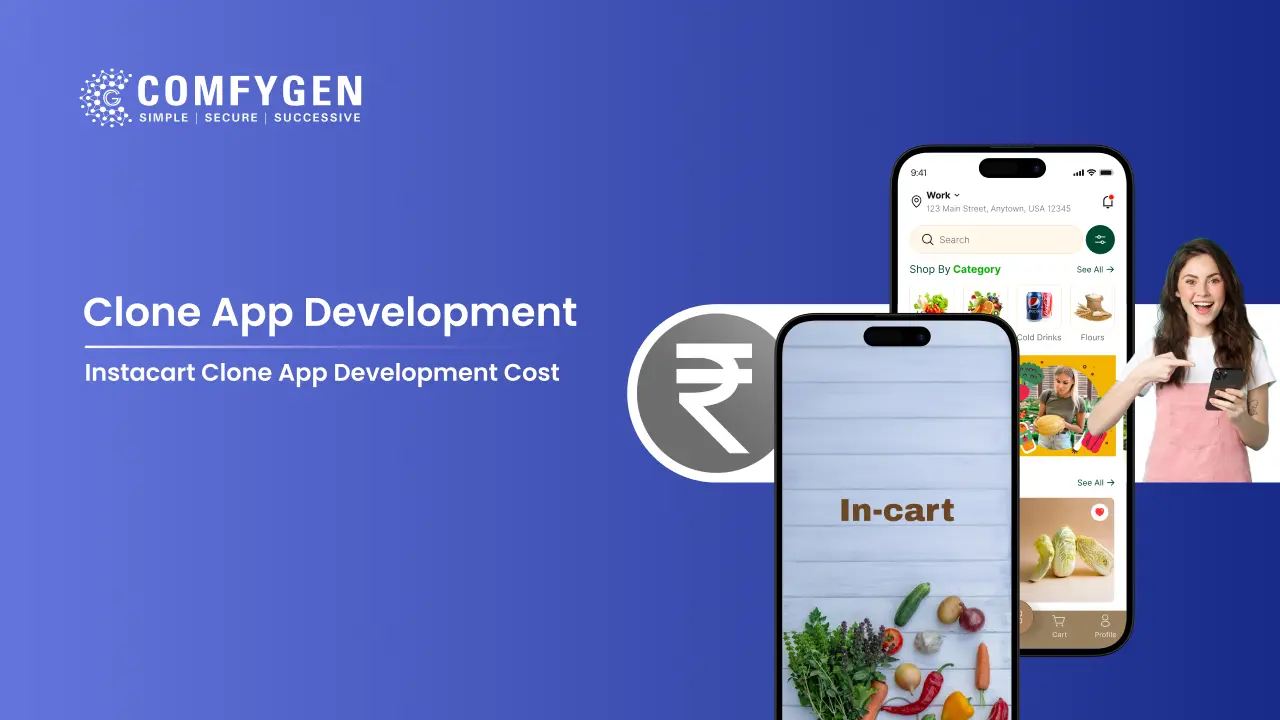





Building an app like Instacart costs between $15,000 and $120,000 or more. A simple version with core features lands around $15,000 to $30,000, while a full-scale platform with real-time tracking, multiple panels, and advanced logic runs $60,000 to $120,000+. Your final number depends on the features you pick, the platforms you launch on, and where your development team sits.
This guide breaks down every cost factor, gives you a stage-by-stage budget, and shows you where you can trim spending without hurting the product. Read it before you request a single quote, and you will know exactly what you are paying for.
What an Instacart Clone Costs
| App version | What you get | Estimated cost | Timeline |
| Simple (MVP) | Core customer app, basic shopper app, single store, standard checkout | $15,000 – $30,000 | 3 – 4 months |
| Moderate | Customer + shopper + store panel, live tracking, wallet, ratings | $30,000 – $60,000 | 4 – 7 months |
| Advanced | Multi-store marketplace, AI recommendations, advanced admin, analytics | $60,000 – $120,000+ | 8 – 12 months |
These ranges hold across the rest of this article. Every table below uses the same three tiers, so you can plan against one consistent budget instead of guessing.
What is an Instacart Clone App?
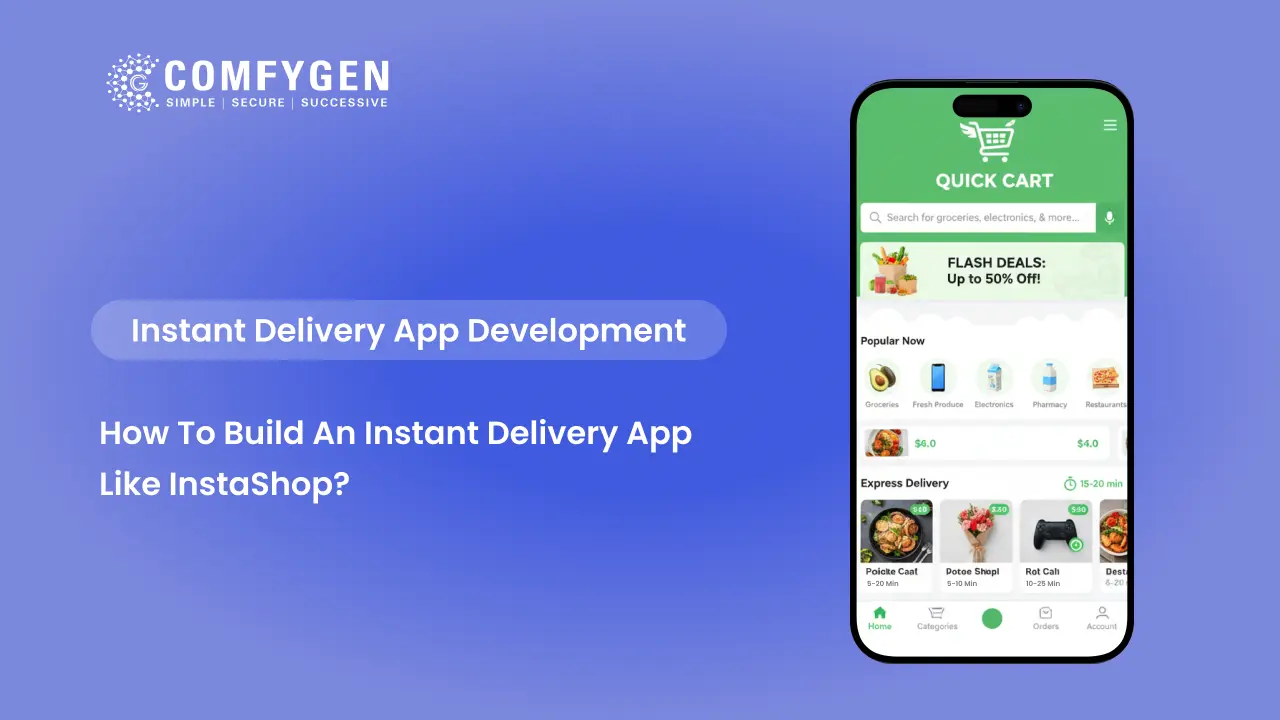
An Instacart clone is a grocery delivery platform built on the same model that made Instacart work: customers order groceries from nearby stores, a shopper picks and packs the items, and a driver delivers them to the door. The word “clone” points to the proven business model, not a copy of Instacart’s brand or code. You get a custom platform shaped around your market, your stores, and your rules.
A complete build usually ships as four connected products:
- A customer app for browsing, ordering, and tracking
- A shopper app for picking, packing, and updating orders
- A store panel for managing catalog, stock, and pricing
- An admin panel for running the whole operation
The number of these you build, and how deep each one goes, is the single biggest driver of your cost.
Factors That Decide Your Instacart Clone Cost
Two apps with the same idea can cost three times apart. Here is what moves the number.
1. App Complexity and Feature Depth
A basic ordering flow costs far less than a marketplace with subscriptions, promo engines, and AI-driven suggestions. Every extra feature adds design, development, and testing hours. Start with the features your first customers actually need, then grow.
3. Platform Choice
Launching on Android and iOS together costs more than one platform. A cross-platform build with Flutter or React Native lets you cover both from a shared codebase, which brings the price down while keeping near-native performance. Going fully native (separate Swift and Kotlin builds) costs more but suits apps that push hardware limits.
4. UI/UX Design
A clean, tested interface keeps users ordering and shoppers moving fast. Custom design with user research, wireframes, and prototypes costs more upfront and pays back in retention. Template-based design saves money early but often needs a redo once you scale.
5. Developer Location and Hourly Rate
Where your team sits changes the bill more than almost anything else. The same 1,000 hours of work cost wildly different amounts by region.
| Region | Typical hourly rate |
| North America | $100 – $250 |
| Western Europe | $80 – $180 |
| Eastern Europe | $40 – $90 |
| India and South Asia | $25 – $50 |
Many founders in the US, UK, and UAE hire experienced teams in India to get the same quality at a fraction of the rate. That single choice can cut a project budget in half.
6. Third-Party Integrations
Payment gateways, maps, SMS, push notifications, and analytics tools often carry setup work plus ongoing fees. Each integration you add brings a small development cost now and a running cost later. Plan the list early so nothing surprises you post-launch.
Detailed Cost Breakdown by Stage
Here is roughly how the budget splits across a full project. The percentages stay steady across tiers, so you can apply them to your own target number.
| Stage | Share of budget | Simple | Moderate | Advanced |
| Discovery and planning | 8% | $1,200 – $2,400 | $2,400 – $4,800 | $4,800 – $9,600+ |
| UI/UX design | 12% | $1,800 – $3,600 | $3,600 – $7,200 | $7,200 – $14,400+ |
| Frontend and backend development | 50% | $7,500 – $15,000 | $15,000 – $30,000 | $30,000 – $60,000+ |
| Third-party integrations | 10% | $1,500 – $3,000 | $3,000 – $6,000 | $6,000 – $12,000+ |
| Testing and QA | 12% | $1,800 – $3,600 | $3,600 – $7,200 | $7,200 – $14,400+ |
| Deployment and launch | 8% | $1,200 – $2,400 | $2,400 – $4,800 | $4,800 – $9,600+ |
Post-launch support, updates, and server costs sit on top of this and usually run 15% to 20% of the build cost each year.
Must-Have Features and How They Affect Cost
Features decide both your price and your product. Here is what each panel needs, grouped so you can see where the budget goes.
- Customer app: registration and login, store and product browsing, search and filters, cart and checkout, multiple payment options, live order tracking, order history, ratings and reviews, in-app chat, push notifications.
- Shopper app: order alerts, item picking checklist, replacement suggestions, barcode scanning, route navigation, earnings dashboard, availability toggle, customer chat.
- Store panel: catalog management, stock and pricing control, order queue, promotions, sales reports.
- Admin panel: user and store management, commission control, dispatch and delivery oversight, content management, reporting and analytics, dispute handling.
The customer and shopper apps carry most of the cost because they hold the real-time logic. The store and admin panels are lighter but essential for running the business.
Advanced Features That Raise The Cost
Add these once your core app proves itself. Each one lifts the budget and, done right, lifts revenue too.
| Feature | What it adds | Cost impact |
| AI product recommendations | Higher basket size, repeat orders | High |
| Subscription plans | Predictable recurring revenue | Medium |
| Multi-store marketplace | Many vendors on one platform | High |
| Real-time route optimization | Faster delivery, lower fuel cost | Medium |
| Loyalty and referral engine | Cheaper customer acquisition | Medium |
| Multi-language and multi-currency | Ready for global markets | Medium |
Want to Build a Unique Grocery Delivery App with AI-Powered Features?
Launch a custom grocery delivery app with real-time tracking, smart recommendations, secure payments, and scalable architecture.
Get Free Consultation
Tech Stack for an Instacart Clone
Your technology choices affect performance, scaling, and long-term cost. Here is a modern, dependable stack used for grocery delivery builds in 2026.
| Layer | Common choices |
| Frontend (mobile) | Flutter, React Native, Swift, Kotlin |
| Frontend (web/panels) | React, Next.js, Angular |
| Backend | Node.js, Python (Django), Laravel |
| Database | PostgreSQL, MongoDB, MySQL |
| Real-time and maps | Google Maps, Mapbox, Socket.io, Firebase |
| Payments | Stripe, Razorpay, PayPal, Braintree |
| Cloud and hosting | AWS, Google Cloud, Azure |
| Notifications | Firebase Cloud Messaging, Twilio |
A cross-platform mobile stack plus a Node.js or Python backend gives you strong performance and keeps future maintenance affordable. Your development partner should pick the stack around your growth plan, not the other way round.
Development Process and Timeline
A grocery delivery build moves through clear stages. Knowing the flow helps you plan cash and expectations.
- Discovery and planning (2 – 3 weeks): goals, market, feature list, and project scope get locked.
- Design (3 – 5 weeks): wireframes, prototypes, and the full interface take shape.
- Development (8 – 24 weeks): frontend, backend, and integrations get built in sprints.
- Testing and QA (runs alongside development): every feature gets checked for bugs, speed, and security.
- Deployment (1 – 2 weeks): the app goes live on the stores and your servers.
- Support and updates (ongoing): fixes, new features, and scaling as you grow.
A simple MVP reaches launch in 3 to 4 months. A moderate build takes 4 to 7 months. A full marketplace runs 8 to 12 months. Building in stages, MVP first, lets you launch sooner and fund later phases from early revenue.
Ready-Made Clone vs Custom Build
You have two routes, and the right one depends on your goals and budget.
| Key Factor | Ready-made clone | Custom build |
| Upfront cost | Lower | Higher |
| Launch speed | Fast (weeks) | Slower (months) |
| Flexibility | Limited | Full |
| Scaling | Can hit limits | Built to grow |
| Best for | Testing a market fast | Long-term, branded product |
A ready-made solution gets you to market quickly and cheaply. A custom build costs more but gives you a product that grows with you and stands apart from competitors. Many founders start with a strong base solution, then invest in custom work as they scale.
How to Reduce Instacart Clone Development Cost
You can cut spending without cutting quality. Here is how smart founders do it.
- Start with an MVP. Launch the core ordering and delivery flow first, then add advanced features from real user feedback and early revenue.
- Go cross-platform. One codebase for Android and iOS saves a large share of the mobile budget.
- Hire an experienced offshore team. A skilled team in India delivers the same quality as a US team at a lower rate, which is why so many US, UK, and UAE founders build this way.
- Reuse proven modules. A partner with ready grocery components skips work you would otherwise pay to rebuild.
- Lock your scope early. Mid-project changes are the most expensive kind. A clear feature list keeps the budget on track.
- Plan integrations upfront. Choosing your payment, maps, and messaging tools early avoids costly rework later.
For a wider view of grocery pricing, the cost to develop an app like Zepto covers the quick-commerce model, and the features of a grocery delivery app guide help you decide what to include first.
How Instacart Clone Apps Make Money
Your app should earn from day one. These models work well for grocery delivery.
- Delivery fees charged per order
- Commission from stores on each sale
- Subscription plans for free or faster delivery
- Surge pricing during peak demand
- In-app advertising and featured product placements
- Markup on product prices
Most successful platforms combine three or four of these. A mix keeps revenue steady even when one stream dips.
Why Build your Instacart Clone with Comfygen
Comfygen has built on-demand delivery platforms since 2019, with 7+ years of hands-on grocery and delivery work behind every project. The track record covers 550+ projects delivered for 400+ clients across 30+ countries, with a 97% client retention rate and ISO 9001, ISO/IEC 20000-1, and ISO 27001 certifications.
Your build gets a full team: product strategy, design, development, QA, and post-launch support under one roof. Whether you want a fast MVP or a full marketplace, you get a product shaped around your market and your budget. Explore the full grocery delivery app development services to see how a complete build comes together.
Conclusion
An app like Instacart costs $15,000 to $120,000 or more, and the exact figure comes down to features, platforms, and team. Start with an MVP, choose a cross-platform build, and work with an experienced partner, and you get a strong product at a fair price. When you are ready for a precise quote, list your must-have features first, then match them to the tiers above so every dollar has a job.
If you want to see how grocery apps perform in the biggest market, the roundup of top food delivery apps in the USA is a useful next read.
FAQs
How much does it cost to develop an Instacart clone app?
Can I build an Instacart clone with a limited budget?
How long does Instacart clone app development take?
Which country offers the lowest development cost?
Is an Instacart clone profitable?

Mr. Saddam Husen, (CTO)
Mr. Saddam Husen, CTO at Comfygen, is a renowned Blockchain expert and IT consultant with extensive experience in blockchain development, crypto wallets, DeFi, ICOs, and smart contracts. Passionate about digital transformation, he helps businesses harness blockchain technology’s potential, driving innovation and enhancing IT infrastructure for global success.