




Scams through mobile apps are common, and this has become a huge concern. In 2015, about $33 million worth of romance scams were filed with the FTC . Blockchain has been a huge help in preventing scamming and profile authentication frauds.
To prevent such scams, the booming dating app industry is using blockchain security in their apps. In this blog, we will explain how Blockchain technology is transforming dating apps, what extra security we have, and how the advanced tech is useful to the industry.
If you are planning to build a blockchain dating mobile application, read this blog thoroughly. You will get knowledge about how you can create a safe & secure space for individuals to date strangers. Besides the knowledge you will receive; ensure you find a reliable and good custom dating app development company to assist you throughout the journey.
Build a reliable online dating application to gain vast traction and trust from the users.
Why Dating Apps Are Looking at Blockchain
the Online Dating market revenue is projected to reach US$3.25bn in 2026.
The online dating market crossed $10 billion in global revenue in 2025, and growth has slowed compared to the 2018-2021 boom. User trust is the reason. Match Group, which owns Tinder, Hinge, and OkCupid, reported flat to declining paid subscriber counts across several quarters, and company earnings calls have repeatedly cited “user fatigue” and “trust concerns” as factors.
At the same time, dating app fraud has become organised. Romance scam networks operating out of Southeast Asia (often tied to broader “pig butchering” crypto fraud operations) use dating apps as the first point of contact before moving victims to fake investment platforms. The FBI’s IC3 report attributed over $650 million in annual losses to romance scams originating on dating platforms.
This is the actual business case for blockchain: it’s a tool for proving identity and building portable trust signals, not a marketing gimmick. Apps that get this right can differentiate on safety, which has become a real purchase driver, especially for women and users over 35, who cite safety concerns as their top reason for leaving dating apps according to multiple industry surveys.
Build the Future of Secure Dating App with Blockchain
Launch a transparent, secure, and fraud-resistant dating app powered by innovative blockchain technology and expert development.
Get a Free Consultation
The Core Problems Blockchain Actually Solves
Before looking at features, it helps to separate three distinct problems that get lumped together under “blockchain dating apps”:
Identity Fraud
Someone creates a profile using stolen photos or a false identity. Centralized ID verification (uploading a passport photo to Tinder’s servers) works but creates a new centralized honeypot of sensitive documents.
Data Portability and Ownership
Your match history, preferences, and behavioral data live entirely on the platform’s servers. If you leave the app, that data is gone, and the platform can use it however its terms of service allow.
Payment and Incentive Friction
International users face card decline issues, currency conversion fees, and subscription billing problems, particularly across markets with limited card infrastructure.
Blockchain, specifically decentralized identity (DID) standards, zero-knowledge proofs, and smart contracts, addresses each of these differently. It’s not a single feature. It’s three separate architectural decisions, and most companies only need one or two of them, not all three.
How Blockchain Dating dApps Work?
Decentralized dating apps work around the secured system to connect with likewise people with transparency and prevention from fraudulent activities. Know how blockchain dating apps work:
- Setting Preferences: The user explains to the app what they are looking for in their partners; such as values, beliefs, hobbies, favorite music or fav tastes, etc.
- Profile-Matching Algorithm: The online dating application uses the input information and blockchain special codes to find compatible profile matches for you.
- Chatting: Once the profiles are matched, later the partners get a secure & private space to chat and take the relationship further.
What Does Blockchain Do in Dating Apps?
Blockchain can support dating apps in areas where trust, privacy, data integrity, and secure transactions matter. Instead of replacing the entire app infrastructure, it can be integrated for specific functions such as identity verification, data ownership, smart contracts, and token-based payments. Here are some practical ways blockchain can be used in dating apps:
Profile Authentication Verification
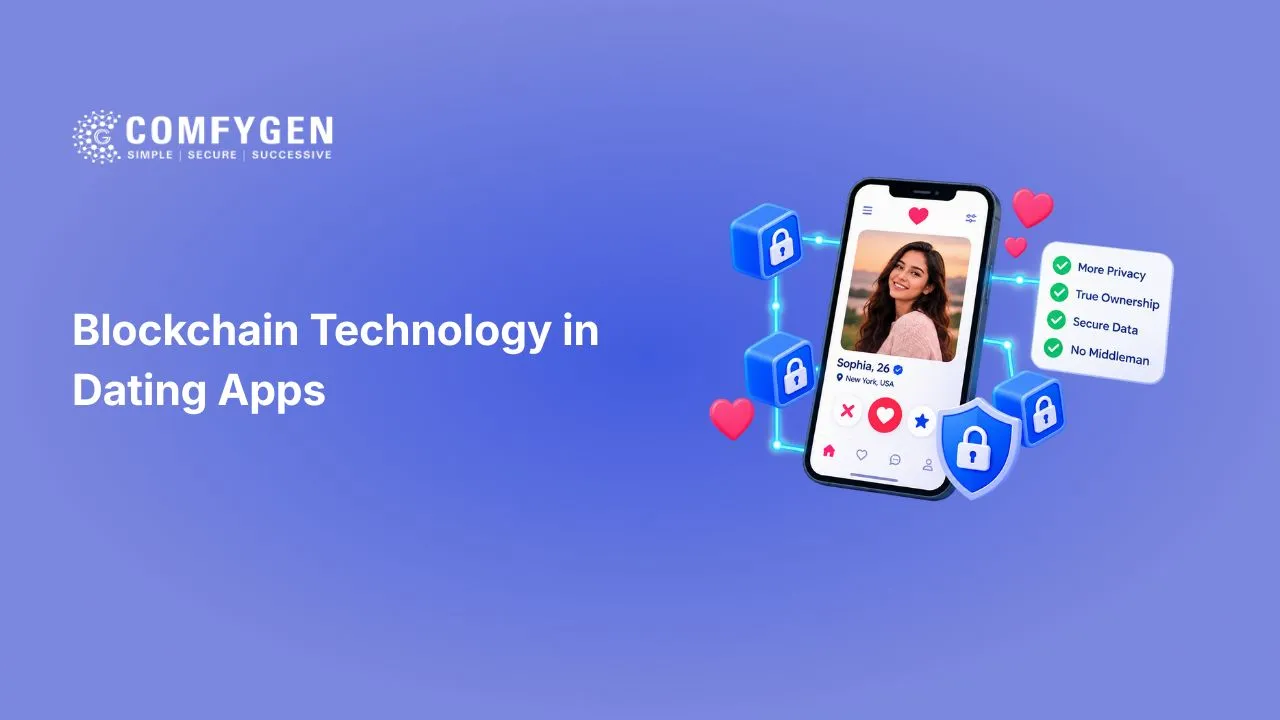
Blockchain assists in profile authentication verification. When any profile is registered; the blockchain does a full background check and saves all data in its blocks.
This is how users will get their profiles verified and kept on the blockchain. It ensures the identity of identifying the fake profile and prevents catfishing.
Privacy and Control
Users can set private keys to restrict access to their data in order to maintain privacy and control. It ensures users get better privacy; because here the users can decide who can see their profile data and how much of their data should be visible.
Data Ownership and Security
Blockchain grants users complete ownership of their data, stored in an immutable and decentralized manner. This ensures data is tamper-proof and secure from unauthorized access.
Users can control how their data is shared, eliminating reliance on centralized platforms and significantly reducing risks of breaches or misuse.
Transparency with Profile-Matching
Blockchain-based algorithms ensure transparency in matchmaking by storing criteria and matching processes on the ledger. Users can verify how matches are made without exposing their personal preferences, fostering trust and fairness in the process.
This eliminates biases often associated with traditional centralized matchmaking systems.
Trustworthy Ratings & Reviews
Blockchain records user ratings and reviews immutably, preventing tampering or manipulation. This creates a transparent and trustworthy system where users can rely on genuine feedback to make informed decisions about potential matches, fostering a secure and honest community.
Decentralized Messaging
Messaging systems built on blockchain allow users to communicate securely without intermediaries. Messages are encrypted, and delivery is decentralized, ensuring privacy and preventing data interception.
This approach safeguards conversations from unauthorized access or breaches.
Smart Contract Escrow for Safety Deposits
Some dating platforms, mostly in the niche/premium segment, use smart contracts to hold a refundable deposit from users, which gets returned after a set number of days if the user hasn’t been reported for harassment or fraud. This creates a small financial disincentive against bad behavior, since bad actors lose their deposit if reported and verified.
This model works better for platforms targeting a specific problem, like reducing ghosting or no-shows for in-person meetups, than as a general anti-fraud tool. It also adds friction at signup, which most mass-market dating apps will not accept. If you’re building a premium, safety-focused, or matchmaking-adjacent product, this is worth considering. If you’re building a mainstream swipe app, it’s likely to hurt conversion more than it helps trust.
Secured Transactions
Blockchain enables secure financial transactions within dating apps using cryptocurrencies or tokenized payments. Transactions are transparent, tamper-proof, and processed instantly without intermediaries.
This ensures user trust and eliminates the risk of fraud or hidden charges during in-app purchases.
Authenticity and Consent
Blockchain records user consent and authentication for interactions immutably. Users can verify agreements, like sharing data or participating in activities, securely.
This fosters accountability, minimizes exploitation, and strengthens user confidence by ensuring all actions are consensual.
Futuristic Adaptations
Blockchain enables dating apps to adopt cutting-edge features like AI-driven matchmaking, token rewards, or virtual reality dating environments.
This integration enhances user experiences, fosters innovation, and ensures the platform remains scalable, adaptable, and future-ready.
Benefits of Blockchain Dating Apps
There are a number of benefits of integrating blockchain development in dating apps. We have listed some of the advantages:
- No Data Breaches: Blockchain integration in dating mobile applications ensures user data security; such as personal information, chat histories, etc. The data is encrypted with blockchain, which protects from data breaches and unauthorized access.
- No Privacy Invaded: Users can set private keys to control over the data ensuring confidentiality and minimizing misuse of personal information.
- Cost-Effective Transactions: The advanced blockchain technology eliminates intermediaries in payments, and reduces transaction fees for users & operational costs.
- Fraud Prevention: The tamper-proof blockchain structure ensures no fraud in transactions and guarantees for legitimacy of payments & agreements.
Empower Your Dating Platform with Blockchain Innovation
Partner with our blockchain experts to build secure, scalable dating applications that users confidently trust worldwide.
Schedule a Consultation
Cost to Build a Blockchain Dating App
| Component | Basic (Identity + Payments) | Mid-Tier (+ Reputation) | Full-Featured |
|---|---|---|---|
| Core dating app (profiles, matching, chat) | $25,000 – $40,000 | $35,000 – $55,000 | $50,000 – $80,000 |
| DID/identity integration | $5,000 – $8,000 | $6,000 – $10,000 | $8,000 – $12,000 |
| Smart contract development | – | $8,000 – $15,000 | $18,000 – $30,000 |
| Smart contract audit | – | $5,000 – $10,000 | $10,000 – $20,000 |
| Stablecoin payment integration | $3,000 – $5,000 | $3,000 – $5,000 | $3,000 – $5,000 |
| QA, security testing, launch | $8,000 – $12,000 | $10,000 – $15,000 | $15,000 – $25,000 |
| Total estimated range | $41,000 – $65,000 | $67,000 – $100,000 | $104,000 – $172,000 |
These ranges assume an offshore or India-based development team; U.S. or Western Europe-based agencies typically run 2x to 3x higher for comparable scope. The audit line item is not optional if any smart contract holds user funds, skipping it to save cost has caused real exploits on other consumer crypto products.
Ongoing costs to plan for: blockchain node/RPC access (Alchemy or Infura, roughly $50-$500/month depending on volume), gas fee subsidization if you’re covering user transaction costs, and identity verification per-user fees ($0.50-$3 per verification).
Compliance: GDPR, DPDP Act, and Crypto Regulations
Building a dating app that touches crypto payments or identity data means navigating multiple regulatory layers at once.
GDPR (EU users)
Right to erasure applies regardless of where data is stored. If you use decentralized storage, you need a technical plan for how deletion requests are honored, since data written to some blockchains or IPFS can be difficult or impossible to truly remove. This is a real legal risk if not architected correctly from day one.
India’s DPDP Act 2023
Requires consent management, data localization considerations for certain categories, and breach notification. Identity verification data, even when processed through a DID provider, still counts as personal data under the Act and needs to be handled accordingly.
Crypto payment regulations
Vary significantly by country. The U.S. and EU (under MiCA) have specific requirements for stablecoin processors. India’s crypto tax rules (30% flat tax plus 1% TDS on transactions) affect how you structure any in-app crypto payment flow for Indian users specifically. Work with a payment processor that handles compliance in each target market rather than building this in-house.
App store policies
Apple and Google both restrict how crypto payments and NFTs can be presented in apps, particularly around whether crypto purchases must go through their in-app payment systems (and cut). Review current App Store and Play Store guidelines before finalizing your payment architecture, since this has changed multiple times and affects your entire monetization model.
Final Verdict
Based on the information shared above, we ensure that the integration of blockchain in dating apps will be proven beneficial. The advanced technology ensures more transparency, security, and user authentication, and redefines the whole online dating experience. However, the success of blockchain dating dApps depends upon the adoption and trust.
If you plan for blockchain based dating app development, then ensure hiring the best dating app development company. They have experienced and expert app developers who can build exciting dating applications integrating trending technologies; which adapt the future demands as well.
FAQs
Do I need blockchain to build a trustworthy dating app?
No. Strong AI-based photo verification, human moderation, and clear reporting flows solve most trust problems without blockchain. Blockchain adds value specifically around decentralized identity verification and cross-border payments, not as a general trust fix.
What's the difference between a Web3 dating app and a dating app with blockchain features?
A Web3 dating app requires a crypto wallet and treats blockchain as core infrastructure for matching and payments. A dating app with blockchain features uses it selectively (for identity verification or optional crypto payments) while keeping the core product accessible to non-crypto users. The second approach reaches a much larger audience.
Which blockchain should I use for a dating app?
How much does it cost to add blockchain identity verification to an existing dating app?
Typically $5,000 to $12,000 for the integration itself, plus per-verification fees from your DID or KYC provider ranging from $0.50 to $3 per user, depending on region and verification depth.
Is crypto payment acceptance legal for dating apps?
Yes, in most jurisdictions, but requirements vary. The EU's MiCA framework, India's crypto tax rules, and U.S. state-level money transmission laws all affect how you structure this. Work with a compliant payment processor rather than building crypto payment rails from scratch.
Can blockchain stop catfishing completely?
No single technology stops catfishing completely. Decentralized identity verification raises the cost and difficulty of creating fake profiles at scale, but a determined bad actor with a real stolen identity can still pass verification. Combine it with AI photo matching and behavioral fraud detection for stronger protection.
What is a soulbound token and why would a dating app use one?
A soulbound token is a non-transferable NFT tied permanently to a user's wallet or identity. Dating apps can use it to record verified status or reputation history in a way that can't be sold, transferred, or faked by creating a new account, since the token itself proves account history.
Does using blockchain make my dating app GDPR non-compliant?
Not automatically, but it requires careful architecture. Data written to public blockchains is generally permanent, which conflicts with the right to erasure. Most compliant designs store only identity proofs and reputation scores on-chain, keeping personal data in a traditional database where deletion requests can be honored properly.

Mr. Saddam Husen, (CTO)
Mr. Saddam Husen, CTO at Comfygen, is a renowned Blockchain expert and IT consultant with extensive experience in blockchain development, crypto wallets, DeFi, ICOs, and smart contracts. Passionate about digital transformation, he helps businesses harness blockchain technology’s potential, driving innovation and enhancing IT infrastructure for global success.