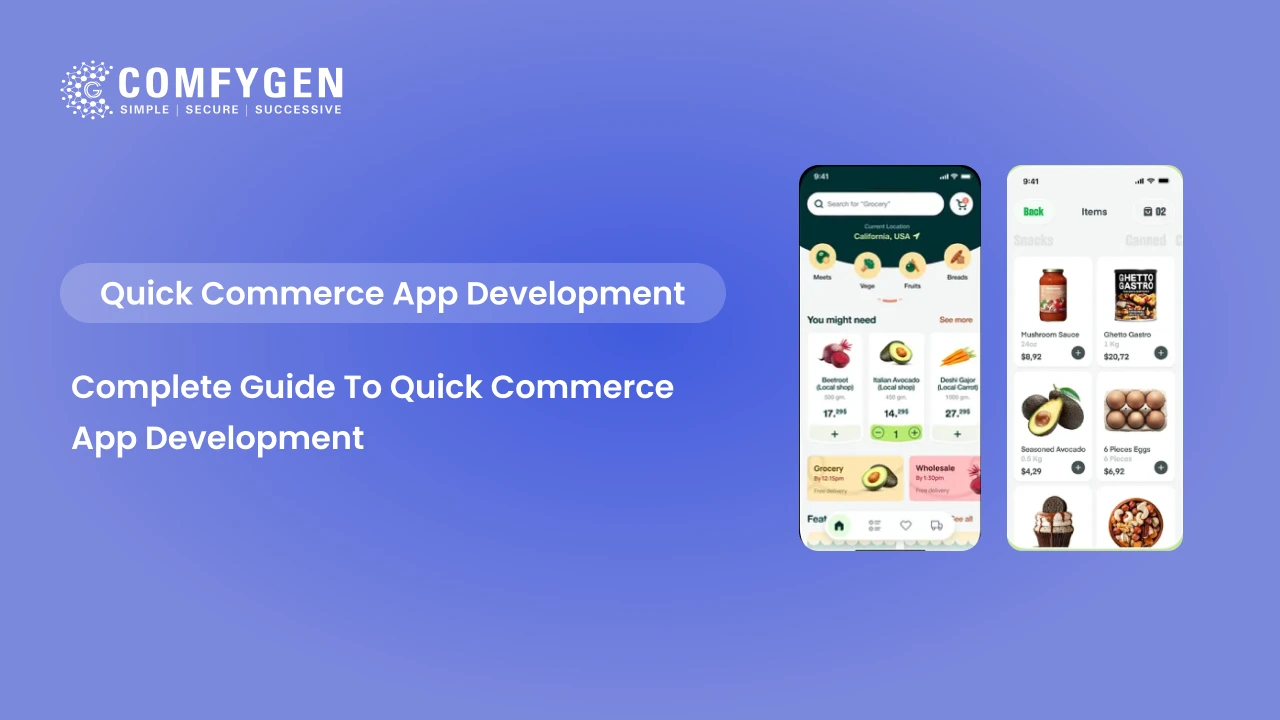





Quick commerce app development is transforming the future of online shopping with ultra-fast delivery within 10–15 minutes. Today, users expect instant access to groceries, medicines, and everyday essentials with real-time delivery tracking and frictionless ordering. This major shift has opened huge opportunities for startups, retailers, and entrepreneurs to build scalable Q-commerce mobile apps and grow digital commerce revenue rapidly.
In this complete guide, we will explore how Quick Commerce works, its market potential, must-have features, the cost to develop a Q-commerce app, and how companies like Comfygen can help you build a powerful on-demand quick commerce app.
What is Quick Commerce (Q-Commerce)?
Quick Commerce, also called Q-Commerce, is a super-fast delivery model that brings daily essentials to your doorstep in just 10 to 15 minutes using hyperlocal logistics, dark stores, and real-time technology. Unlike traditional online shopping, where delivery takes hours or days, Quick Commerce mobile apps offer instant access to daily-need items with seamless digital experiences.
Examples: Zepto, Blinkit, Dunzo, Swiggy Instamart, Getir, Gorillas.
- Hyperlocal fulfillment centers
- Small-basket size orders
- Real-time inventory and delivery tracking
- Rapid logistics infrastructure
Popular Q-Commerce Apps Examples
- Zepto (India) – 10-minute grocery delivery
- Getir (Turkey) – Rapid delivery of everyday essentials
- Blinkit (India) – Fast grocery and household delivery
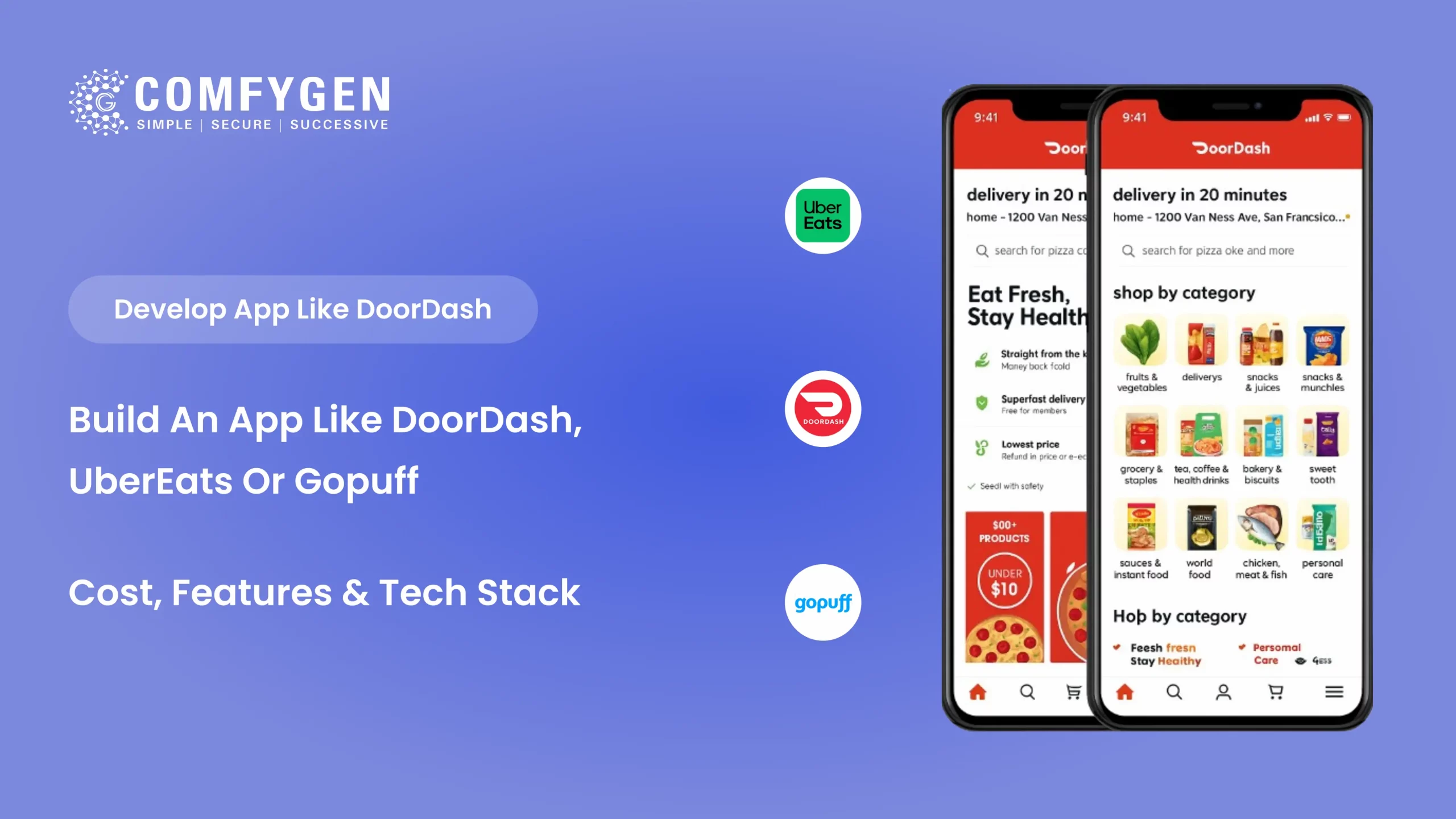
- Gopuff (United States) – Instantly delivers Groceries, Snacks, Alcohol & More
Why Quick Commerce is Booming in 2025
The Q-commerce industry has experienced a meteoric rise in the past few years. Here are some reasons why:
- Consumer Behavior Shift: Increasing demand for instant gratification
- Urban Lifestyle: People prefer convenience over cost
- Technological Advancements: Better GPS tracking, AI, and predictive analytics
- Investment Surge: Q-commerce startups raised over $10 billion globally by end of 2024
According to a report by Statista, the global quick commerce market is expected to reach $72 billion by 2027, growing at a CAGR of 17.5%.
Why Businesses Should Invest in Quick Commerce App Development
Investing in the Quick Commerce app for startups has become a profitable opportunity for startups, retailers, and enterprise businesses. With the rising demand for 10–15 minute delivery, users expect faster and more convenient shopping experiences. A customized Q-commerce mobile app helps businesses deliver instant service, increase customer satisfaction, and scale rapidly in a competitive market.
A professionally built quick commerce app development company enables brands to manage orders, delivery, inventory, and customer engagement from a single digital platform. This improves operational control and increases business growth through automation and real-time analytics.
Key Benefits of Investing in Quick Commerce App Development
-
Boost Sales & Revenue Growth: Quick delivery encourages impulse buying and repeat orders, helping businesses achieve higher conversions and more daily transactions.
-
High Customer Retention: Users prefer apps that deliver essentials instantly. Faster delivery builds strong loyalty and maintains long-term customer relationships.
-
Faster Go-to-Market Entry: With white-label Q-Commerce app development solutions, businesses can launch within weeks and start generating revenue quickly.
-
Operational Efficiency & Automation: Advanced features like AI-based forecasting, route optimization, and real-time tracking reduce operational costs and improve delivery performance.
-
Competitive Market Advantage: Businesses offering instant delivery stay ahead of traditional eCommerce and attract more customers in urban locations.
-
Better Inventory & Supply Chain Control: Smart stock management reduces wastage and ensures continuous product availability.
-
Scalable Business Model: Q-commerce apps support future expansion into grocery, pharmacy, food delivery, and multiple product categories.
Types of Quick Commerce Apps
| Type | Purpose |
|---|---|
| Grocery Q-Commerce App | Instant grocery delivery |
| Food & Beverage Delivery | Snacks, beverages, kitchen essentials |
| Pharmacy Quick Delivery App | Medicines & healthcare products |
| Multipurpose Hyperlocal Delivery App | All-category express delivery |
Essential Features of Quick Commerce Delivery Apps
To build a competitive quick commerce app in 2025, focus on these must-have features:
Real-Time Inventory Management
A key feature of any Q-commerce app is real-time inventory syncing. It ensures that customers only see products that are actually available, minimizing cart abandonment. By connecting your app to warehouse or store stock data, users get accurate product availability, which builds trust and helps avoid frustration caused by out-of-stock items.
Hyperlocal Delivery System
To fulfill 10–15-minute deliveries, your app must support a hyperlocal delivery model. Use AI and GPS tracking to assign nearby delivery agents and map the fastest routes. This reduces delivery time, improves efficiency, and ensures customers receive their orders fresh and on time, especially in busy metro areas or dense local zones.
Instant Order Tracking
Modern users expect full visibility of their delivery status. With live tracking and real-time notifications, customers can follow their order from the store to their doorstep. This feature not only boosts transparency but also enhances user satisfaction and reduces inbound support queries related to order status or delivery delays.
Intuitive UX/UI
Your Q-commerce app must be extremely easy to use. Clean layouts, fast navigation, quick reorder buttons, and smooth search options—including voice input—make the shopping experience seamless.
An intuitive design helps users complete orders quickly, increasing conversion rates and encouraging repeat purchases, which is crucial in a highly competitive market.
Multiple Payment Options
Offer your users flexibility at checkout by integrating multiple secure payment methods like UPI, debit/credit cards, digital wallets, and cash on delivery.
Easy, fast, and trustworthy payment experiences encourage users to complete purchases without hesitation, ultimately reducing cart drop-offs and catering to diverse customer preferences in different regions.
Admin and Vendor Dashboards
Powerful backend dashboards allow admins and vendors to manage inventory, pricing, promotions, and orders efficiently.
These panels provide full control over operations, helping streamline workflows and respond to customer demands quickly.
Real-time insights and analytics from the dashboard also support better decision-making and performance tracking across locations or stores.
Advanced Features for Competitive Q-Commerce App Solutions
The Q-commerce industry is rapidly evolving. If you’re planning to build a quick commerce app in 2025, staying ahead of tech and consumer trends is crucial. Below are five powerful innovations shaping the future of quick commerce app development.
AI-Powered Recommendations
AI will transform how users interact with your Q-commerce app. Smart algorithms can analyze customer behavior, past purchases, and real-time trends to deliver personalized product suggestions.
AI-powered quick commerce app development helps increase average order value and improve user satisfaction. Personalized shopping builds loyalty and makes the app feel tailored to each individual’s needs.
Drone & EV-Based Deliveries
With rising demand for faster and eco-friendly deliveries, drones and electric vehicles (EVs) are becoming game changers. Companies are testing drones for hyperlocal deliveries, reducing traffic delays and operational costs.
If you’re serious about sustainable Q-commerce app development, consider future integration with drone delivery APIs and EV tracking for smarter logistics.
Real-Time Route Optimization
Route optimization uses GPS tracking, traffic monitoring, and geolocation algorithms to assign the fastest delivery routes.
This helps delivery partners reduce travel time and fuel cost while improving order accuracy and timely deliveries.
It plays a crucial role in ensuring ultra-fast delivery within 10–15 minutes and enhancing logistics efficiency.
Voice-Based Ordering
Voice search and ordering are gaining popularity, especially among mobile users. Adding voice-enabled features to your app allows customers to search and order products without typing, enhancing speed and accessibility.
Startups that develop a quick commerce app with voice support will appeal to tech-savvy users and improve the overall user experience with hands-free convenience.
Predictive Demand Planning
Predictive analytics allows Q-commerce platforms to forecast demand, manage inventory, and plan delivery routes more efficiently. AI can analyze seasonal trends, local events, and user behavior to optimize operations.
For startup founders investing in quick commerce app development, predictive demand planning reduces waste, cuts costs, and ensures popular products are always available.
Live Customer Chat Support
Integrated chat support allows customers to take instant help regarding product queries, order tracking, or delivery issues.
Real-time communication improves customer trust, enhances user experience, and reduces order cancellations, boosting overall service quality in Quick Commerce mobile apps.
Automated Warehouse Operations
Automation technologies such as smart inventory management, barcode scanning, and digital stock mapping support faster order picking, packing, and dispatching.
This feature improves fulfillment speed and reduces human errors in dark stores, enabling businesses to handle thousands of daily orders efficiently.
Driver Performance Management
Delivery rider performance management provides real-time metrics on delivery timing, customer rating, travel speed, and successful delivery count.
It helps app administrators monitor rider productivity, provide incentives, and improve service quality. A high-performing fleet ensures strong customer satisfaction and brand reliability.
Dark Store Management System
Dark stores form the backbone of quick commerce app development solutions. A digital system for managing dark stores enhances inventory coordination, location-based stock distribution, resource planning, and order prioritization. This make sure that products are delivered instantly within small delivery zones.
Geofencing for Delivery Zones
Geofencing technology automatically detects service areas and delivery availability based on the customer’s location. It helps businesses control delivery radius, optimize resource allocation, and avoid service delays. It also improves delivery success accuracy in hyperlocal Q-commerce delivery apps.
Ready to Build Your
Fast Delivery Business App?
Let’s Connect
Step-by-Step Quick Commerce App Development Process
A successful Ultra-fast delivery app development project requires a structured and strategic approach to ensure speed, performance, and scalability. Below is a step-by-step process followed by leading Quick Commerce app development companies to build high-quality Q-commerce delivery applications.
1. Define Your Niche and Market
The first step to develop a quick commerce app like Zepto, Gopuff is identifying your niche and target audience. Will you focus on grocery delivery, medicine delivery, or multi-category Q-commerce? Your niche defines everything—from features to delivery strategy.
Thorough market research helps refine your Q-commerce app development plan. Study competitors, customer pain points, and geographic delivery zones to design an app that solves real problems and fits your local demand.
2. Choose a Q-Commerce Business Model That Scales
Choosing the right model is critical for sustainable quick commerce app development. Common models include dark store setups for inventory control, aggregator platforms that connect nearby vendors, or hybrid models that combine both.
Your business model should align with your resources and target audience. A well-defined model gives your Q-commerce app development efforts a clear structure and guides decisions on logistics, pricing, and scaling.
3. Technology Stack for Quick Commerce Mobile App Development
To build a Q-commerce app like Zepto, Blinkit, or Dunzo, you must choose a tech stack that supports real-time updates and scalability.
| Component | Technology |
|---|---|
| Frontend | React Native, Flutter, Swift, Kotlin |
| Backend | Node.js, Laravel, Python |
| Database | MongoDB, PostgreSQL |
| Cloud | AWS, Google Cloud, Firebase |
| Maps | Google Maps API, Mapbox |
| Authentication | OTP, OAuth |
| Push Notifications | Firebase, Twilio |
4. Why You Should Hire a Q-Commerce App Development Company
If you want to create a q-commerce app efficiently, working with an experienced grocery quick commerce app development company is essential. Look for a team that understands the unique needs of Q-commerce platforms, including fast delivery, inventory syncing, and order tracking.
An expert in Q-commerce app development brings ready-to-use modules, proven strategies, and industry knowledge, saving time, reducing cost, and increasing your chances of success.
5. Core Modules You Need to Build a 10-Minute Delivery App
Effective Q-commerce app development depends on integrating essential modules. Your platform should include a user app for orders and tracking, a delivery agent app for logistics, a vendor panel for inventory, and an admin dashboard for operations.
These modules must work together in real time. A seamless backend architecture ensures the quick commerce app runs smoothly under high demand and fast turnaround times.
6. Test and Launch Your Quick Commerce App for Success
Before full-scale release, your Q-commerce app needs rigorous testing. From stress tests to beta rollouts, every aspect must be validated to ensure performance, stability, and user satisfaction.
Launching in a smaller region allows you to gather feedback, fix bugs, and improve features. Continuous testing and updates are essential parts of smart quick commerce app development in 2025.
How Much Does Quick Commerce App Development Cost in 2025?
The cost to develop a quick commerce app in 2025 depends on several factors like app complexity, platform choice, feature set, and development location. For a basic MVP (Minimum Viable Product) with core features like user login, product listings, cart, and delivery tracking, the estimated cost ranges from $15,000 to $30,000.
If you’re aiming for a full-featured Q-commerce app with real-time inventory, AI-based delivery routing, vendor dashboards, and advanced analytics, the development cost can go up to $40,000 to $100,000 or more.
Hiring a top-rated custom quick commerce app development agency may cost more upfront, but it provides scalability, speed, and a better chance at long-term success.
Key cost factors include:
- Platforms: iOS, Android, or both
- Backend and third-party integrations
- UI/UX design complexity
- Location and experience of your development team
- Post-launch maintenance and updates
Startups can control costs by launching with an MVP first and then iterating based on user feedback and market needs. A smart investment in startup Q-commerce app development today can open doors to rapid growth and strong customer loyalty.
Estimated Pricing
| App Type | Estimated Cost |
|---|---|
| Basic Q-Commerce App | $15,000 – $30,000 |
| Advanced App | $40,000 – $80,000 |
| Multi-vendor Enterprise App | $80,000 – $150,000 |
Common Challenges in Quick Commerce App Development
Building a successful Quick Commerce app requires advanced technology, efficient logistics, and strong operational planning.
While demand for Q-commerce mobile apps is rising globally, businesses face several challenges during development and implementation.
Solving these challenges with modern technologies and smart automation is the key to achieving ultra-fast delivery and long-term business growth.
Delivery Logistics & Last-Mile Fulfillment
Fast and accurate delivery is the heart of every Q-commerce app. But managing last-mile logistics is a real challenge—especially in traffic-heavy cities or remote areas. Poor route planning or delivery delays can hurt user experience.
To overcome this, integrate smart dispatching algorithms and real-time GPS tracking. AI-based routing ensures delivery agents follow the fastest, most efficient routes, helping you develop a quick commerce app that delivers on time, every time.
Real-Time Stock and Inventory Management
In Q-commerce, users expect everything they see to be in stock. However, syncing inventory across multiple warehouses or partner stores in real time is complex and error-prone.
During quick commerce app development, focus on integrating live inventory APIs and warehouse management systems. Automation tools can reduce stockouts, update product status instantly, and improve operational accuracy without manual intervention.
Secure and Scalable Data Handling
Q-commerce apps deal with sensitive customer data, real-time orders, and high transaction volumes. Without a secure and scalable backend, your app could suffer from crashes, slowdowns, or even data breaches.
To build a reliable Q-commerce application, use encrypted APIs, secure cloud platforms like AWS, and auto-scaling servers. Data speed and safety should be a core part of your grocery delivery app architecture from day one.
Customer Retention and Loyalty
Attracting users is one thing, keeping them loyal is another. Without personalized offers or consistent service quality, many customers won’t return after their first order.
Include loyalty programs, cashback offers, and push notifications in your rapid delivery mobile app development plan. A great user experience—combined with fast delivery—creates emotional loyalty and long-term business growth.
Want to Launch Your Own
Q-commerce App like Gopuff?
Contact Now
Why Choose Comfygen as Your Quick Commerce App Development Company?
Comfygen is a top-tier grocery delivery app development company delivering scalable, secure, and high-performance Q-commerce solutions. We have expert Quick Commerce mobile app developers who build custom, white-label applications with advanced technology and real-time delivery features.
Why Clients Trust Us
-
Tailor-made end-to-end app development
-
AI-powered smart delivery automation
-
On-time delivery with 24/7 support
-
Strong portfolio in on-demand delivery apps
-
Affordable pricing & rapid deployment
Final Thoughts
If you’re looking to tap into the future of digital commerce, Q-commerce app development is your golden opportunity. Customers want speed. You can deliver it—literally.
To develop a quick commerce app that competes with similar of Zepto, Blinkit, and Getir, focus on speed, simplicity, and smart tech.
Need help bringing your Q-commerce app idea to life? At Comfygen, we help startups like yours build scalable, fast, and feature-rich apps that win markets.
FAQs
How long does it take to build a quick commerce app in 2025?
Can a startup afford to build a Q-commerce app?
Should I launch my Q-commerce app on Android or iOS first?

Mr. Saddam Husen, (CTO)
Mr. Saddam Husen, CTO at Comfygen, is a renowned Blockchain expert and IT consultant with extensive experience in blockchain development, crypto wallets, DeFi, ICOs, and smart contracts. Passionate about digital transformation, he helps businesses harness blockchain technology’s potential, driving innovation and enhancing IT infrastructure for global success.