




The transportation industry has undergone a massive digital transformation over the past few years, and taxi app businesses are at the center of this shift. With the rapid growth of on-demand services, users now expect instant, reliable, and app-based taxi solutions for their daily commuting needs. This change in consumer behavior has made taxi app development one of the most profitable and scalable business opportunities for entrepreneurs, startups, and fleet owners.
One of the biggest drivers behind this growth is the increasing demand for on-demand transportation services. People prefer booking taxis through mobile apps because they offer convenience, transparency in pricing, real-time tracking, and multiple payment options. Whether it’s daily office travel, airport transfers, or last-mile connectivity, taxi booking apps have become an essential part of urban mobility.
Another major factor contributing to profitability is the widespread adoption of smartphones and digital payment systems. With affordable smartphones and high-speed internet access, users from metro cities to tier-2 and tier-3 regions can easily access taxi booking apps. The rise of UPI, mobile wallets, and cashless payments has further simplified the booking and payment process, making it easier for businesses to acquire and retain customers at scale.
For entrepreneurs looking to start a taxi business, launching a mobile app is a smart and future-ready investment. Unlike traditional taxi operations that rely heavily on manual processes, a taxi booking app automates ride management, driver allocation, payments, and reporting. This not only reduces operational costs but also improves efficiency and customer satisfaction. Moreover, owning a custom taxi app enables businesses to maintain complete control over branding, pricing strategies, and revenue models, rather than relying on third-party aggregators.
A well-planned taxi booking app is more than just a booking platform—it’s a powerful digital asset that enables scalability, data-driven decision-making, and long-term profitability. This is why investing in taxi app development is proving to be a highly lucrative move for anyone aiming to build a sustainable taxi business in the modern on-demand economy.
Market Overview of the Taxi Booking App Development Industry
The taxi booking app development market has experienced growth over the past few years, driven by the increasing demand for convenience, real-time services, and digital-first transportation solutions. The global on-demand taxi industry continues to expand as urbanization, traffic congestion, and changing lifestyles push users toward on-demand mobility options. From large metropolitan cities to emerging tier-2 and tier-3 regions, taxi booking apps have become a preferred mode of transportation for millions of users.
Global and Regional Market Trends
Globally, the taxi booking app industry is witnessing strong adoption due to the shift from traditional street-hailing taxis to app-based platforms. Businesses are investing heavily in technology-driven solutions such as GPS tracking, AI-based route optimization, and digital payments to improve service quality. In developing markets like India, Southeast Asia, and parts of the Middle East, the growth rate is even higher due to affordable smartphones, expanding internet access, and increasing awareness of on-demand taxi services.
Regionally, local taxi app startups are gaining traction by focusing on specific use cases such as airport transfers, corporate travel, electric taxis, and bike taxis. This localized approach allows businesses to compete effectively with global players by offering better pricing, customized features, and region-specific services.
Key Benefits of Developing a Taxi Booking App for Business Owners
Developing an AI-based taxi booking app offers significant advantages for business owners who want to build a sustainable and profitable transportation business. Unlike traditional taxi services, app-based solutions provide better control, higher efficiency, and long-term scalability. Below are the key benefits of taxi app development for a smart investment for startups, entrepreneurs, and fleet operators.
Scalable Business Model
One of the biggest advantages of a taxi app is its scalable business model. A well-built taxi booking app allows business owners to start operations in a single city or region and expand to multiple locations without major infrastructure changes. As user demand grows, new drivers, vehicles, and service areas can be added easily through the admin panel. This scalability makes the taxi app business model ideal for startups aiming for gradual yet consistent growth.
Automated Operations and Cost Reduction
A taxi booking app automates almost every core business operation, including ride requests, driver allocation, fare calculation, payments, and reporting. Automation reduces the need for manual coordination, call centers, and paperwork, which significantly lowers operational costs. Real-time analytics and performance tracking also help business owners optimize routes, manage fleets efficiently, and reduce idle time, resulting in higher profit margins. For startups, these benefits of a taxi booking app translate into faster break-even and better operational efficiency.
Complete Brand Ownership and Business Control
Unlike aggregator platforms where businesses operate under third-party branding and strict commission structures, owning a custom taxi booking app provides full brand ownership. Business owners have complete control over pricing, commissions, offers, and customer engagement strategies. This independence allows companies to build brand loyalty, customize the user experience, and implement unique features tailored to their target market. For startups, having a branded app strengthens market presence and reduces dependency on external platforms.
Data-Driven Decision Making
A taxi app collects valuable data related to user behavior, ride patterns, peak hours, and driver performance. Business owners can leverage these insights to make informed decisions about pricing strategies, service improvements, and expansion plans. This data-centric approach enhances efficiency and supports long-term business growth.
Profitable Taxi App Development Ideas for Startups
Choosing the right taxi app concept is crucial for building a profitable and sustainable business. Instead of competing blindly with established players, startups can focus on specific use cases, customer segments, and regional demands. Below are some of the most profitable taxi app development ideas that offer strong revenue potential and growth opportunities.
1. Ride-Hailing App Like Uber or Ola
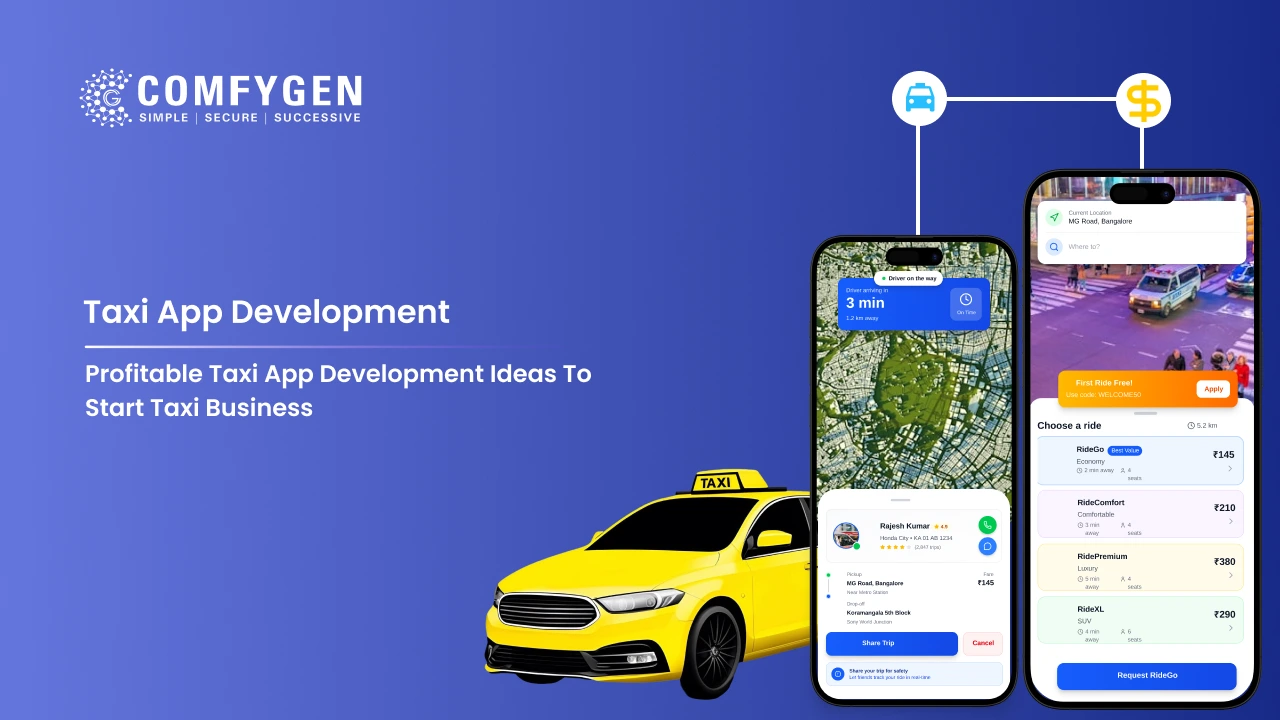
A ride-hailing app solution similar to Uber or Ola remains one of the most popular and scalable taxi business models. These apps connect passengers with nearby drivers in real time, offering convenience, transparency, and quick service.
One of the key advantages of this model is multi-city operations. Startups can launch in a single city, validate demand, and then expand to other locations without changing the core platform. Another major revenue driver is the dynamic pricing model, which adjusts fares based on demand, traffic conditions, and peak hours. This helps maximize earnings during high-demand periods.
With features like live tracking, multiple vehicle options, digital payments, and driver ratings, Careem-like taxi app development is ideal for startups targeting mass-market users and long-term scalability.
2. Corporate Taxi Booking App
A corporate taxi booking app focuses on office commutes, employee transportation, and business travel. Unlike consumer-focused ride-hailing apps, this model offers stable and predictable revenue.
Companies prefer dedicated transportation solutions for their employees to ensure safety, punctuality, and compliance. Startups can generate consistent income through monthly or yearly subscription models, long-term contracts, and fixed-route services. Advanced features like trip reports, billing dashboards, and centralized admin controls make this model highly attractive to enterprises.
This idea is especially profitable in metro cities and IT hubs where demand for employee transportation software is consistently high.
3. Electric Taxi Booking App
With growing environmental awareness and government support, electric taxi app development is emerging as a future-ready business idea. EV-based ride-hailing apps focus on sustainability, lower operational costs, and eco-friendly transportation.
Electric vehicles significantly reduce fuel expenses and maintenance costs, improving profit margins over time. In many regions, governments offer incentives such as tax benefits, subsidies, and charging infrastructure support, making this model even more viable. Users are also increasingly willing to choose green transportation options.
An EV ride-hailing app not only supports long-term profitability but also positions the brand as innovative and environmentally responsible.
4. Bike Taxi & Auto-Rickshaw Booking App
In densely populated cities and emerging urban areas, bike taxi and auto-rickshaw booking apps are gaining massive popularity. These services offer fast, affordable, and efficient transportation for short-distance travel.
This model is particularly successful in tier-2 and tier-3 cities, where users seek low-cost commuting options and traffic congestion is a major concern. Bike taxis require lower investment compared to car-based services, making them ideal for startups with limited budgets.
With high daily usage and quick ride turnover, bike taxi app development and auto rickshaw booking apps can generate strong returns in price-sensitive markets.
5. Taxi App for Airport Transfers
An airport taxi booking app targets travelers who value reliability, comfort, and fixed pricing. Unlike regular ride-hailing services, airport transfer apps focus on pre-scheduled rides, premium vehicles, and professional drivers.
Features like advance booking, flight tracking, fixed fares, and luggage assistance make this model attractive to both domestic and international travelers. Since airport rides usually have higher ticket values, startups can earn better margins per trip.
This model works especially well in tourist cities and metro areas with busy airports, making airport transfer app development a profitable niche within the taxi app ecosystem.
Ready to launch your own taxi booking app?
Partner with our expert taxi booking app development team and get started today.
Features for a Taxi App Development
To build a successful and revenue-generating taxi business, your application must deliver a seamless experience for passengers, drivers, and administrators. A feature-rich taxi booking app not only improves user satisfaction but also enhances operational efficiency and profitability. Below are the must-have taxi app features for each module.
1. Passenger App Features
The passenger app is the primary touchpoint for customers, so it must be intuitive, fast, and reliable. Well-designed taxi app features for users directly impact customer retention and repeat bookings.
- Real-Time Ride Tracking
Real-time GPS-based tracking allows passengers to monitor their ride from pickup to drop-off. Users can view driver location, estimated arrival time, and live route updates, which builds trust and reduces ride anxiety. This feature is essential for transparency and service reliability. - Fare Estimation
Accurate fare estimation before booking helps users make informed decisions. By calculating distance, time, and surge pricing (if applicable), passengers can see a clear price breakdown. Transparent pricing improves conversion rates and reduces booking cancellations. - Multiple Payment Options
Supporting various payment methods such as UPI, credit/debit cards, mobile wallets, and cash increases user convenience. A flexible payment system caters to a wider audience and ensures smoother checkout experiences. - Easy Booking and Ride History
One-tap booking, saved locations, and access to ride history make the app user-friendly. Passengers can rebook frequent routes quickly, improving overall engagement. - Ratings, Reviews, and Support
Passengers should be able to rate drivers and leave feedback after each trip. In-app chat, call support, and help sections enhance customer satisfaction and issue resolution.
2. Driver App Features
The driver app plays a crucial role in ensuring service availability and operational efficiency. Optimized driver app features for taxi booking apps help attract and retain quality drivers.
- Trip Management System
Drivers should be able to accept or reject ride requests, view trip details, and manage active rides easily. Automated trip status updates (arrived, started, completed) ensure smooth ride execution. - Earnings Dashboard
A transparent earnings dashboard shows daily, weekly, and monthly income, incentives, and commissions. Clear income visibility motivates drivers and builds trust with the platform. - Route Optimization and Navigation
Integrated maps and GPS navigation help drivers choose the fastest and most efficient routes. Real-time traffic updates reduce delays, fuel consumption, and trip duration, improving both driver earnings and customer experience. - Driver Availability and Status Control
Drivers can go online or offline based on their availability. This flexibility improves driver satisfaction and optimizes ride allocation. - In-App Communication
Secure in-app calling and messaging between drivers and passengers enable smooth coordination while maintaining privacy.
3. Admin Panel Features
The admin dashboard is the backbone of the taxi app ecosystem. A powerful taxi app admin panel enables complete business control, monitoring, and decision-making.
- Fleet Management System
Admins can manage drivers, vehicles, documents, and availability from a centralized dashboard. This feature ensures smooth onboarding, compliance, and efficient fleet utilization. - Commission and Pricing Control
Business owners can define commission rates, set fare rules, manage surge pricing, and create promotional offers. Flexible pricing control helps maximize revenue and stay competitive. - Analytics and Reporting
Advanced analytics provide insights into ride volume, revenue, peak hours, user behavior, and driver performance. Data-driven reports help in strategic planning and business growth. - User and Driver Management
Admins can verify accounts, handle complaints, block or approve users and drivers, and ensure platform quality. - Payment and Settlement Management
Automated payout systems, transaction tracking, and invoice generation simplify financial operations and ensure timely driver settlements.
Technology Stack for Taxi App Development
A robust and scalable taxi app tech stack is essential for performance, security, and growth. Comfygen uses modern, proven technologies to deliver enterprise-grade taxi booking solutions.
| Technology Category | Technologies & Tools |
|---|---|
| Frontend Technologies | Android (Kotlin) iOS (Swift) Web (React, Angular) |
| Backend & Database | Node.js, Laravel, Django MySQL, PostgreSQL, MongoDB RESTful & real-time APIs |
| GPS, Maps & Payment Integration | Google Maps, Mapbox Real-time GPS tracking Secure payment gateways & UPI integration |
| Cloud Hosting & Scalability | AWS, Google Cloud, Azure Auto-scaling & load balancing Data backup & disaster recovery |
Challenges in Taxi App Development and How to Overcome Them
Challenges in developing a successful taxi booking app involve more than just creating a functional platform. Businesses often face technical, operational, and market-related challenges that can impact growth and profitability. At Comfygen, we identify these challenges early and implement proven strategies to overcome them effectively.
1. Driver Onboarding and Retention
- Challenge:
Attracting qualified drivers and retaining them over time is one of the biggest challenges in taxi app development. High competition, unclear earnings, and complex onboarding processes often discourage drivers from staying active on a platform. - How Comfygen Overcomes It:
Comfygen simplifies driver onboarding with document upload, verification automation, and quick approvals. Transparent earnings dashboards, incentive management systems, and flexible commission models help drivers understand their income clearly, leading to higher satisfaction and retention.
2. Real-Time Matching and Performance Issues
- Challenge:
Taxi apps must handle real-time ride requests, GPS tracking, and driver-passenger matching without delays. Poor performance or app crashes can result in user dissatisfaction and lost revenue. - How Comfygen Overcomes It:
We use a scalable architecture with real-time APIs, optimized databases, and cloud infrastructure. Our taxi app solutions are designed to handle high traffic volumes while maintaining fast response times and smooth performance.
3. High Competition and Pricing Pressure
- Challenge:
The ride-hailing market is highly competitive, with established players offering aggressive pricing and discounts. New startups often struggle to differentiate themselves. - How Comfygen Overcomes It:
Comfygen helps businesses focus on niche markets such as corporate travel, airport transfers, EV taxis, or regional services. We also implement flexible pricing rules, loyalty programs, and localized strategies to create a strong competitive edge.
Conclusion
The taxi booking app industry offers massive opportunities for startups, entrepreneurs, and fleet owners. With the Taxi App Development Ideas, features, and technology partner, building a taxi business is highly achievable.
By choosing Comfygen, you gain a reliable technology partner that understands market dynamics, scalability, and revenue optimization. Whether you want to start a taxi business with an app or upgrade an existing operation, Comfygen delivers secure, scalable, and high-performance taxi booking solutions.

Mr. Saddam Husen, (CTO)
Mr. Saddam Husen, CTO at Comfygen, is a renowned Blockchain expert and IT consultant with extensive experience in blockchain development, crypto wallets, DeFi, ICOs, and smart contracts. Passionate about digital transformation, he helps businesses harness blockchain technology’s potential, driving innovation and enhancing IT infrastructure for global success.