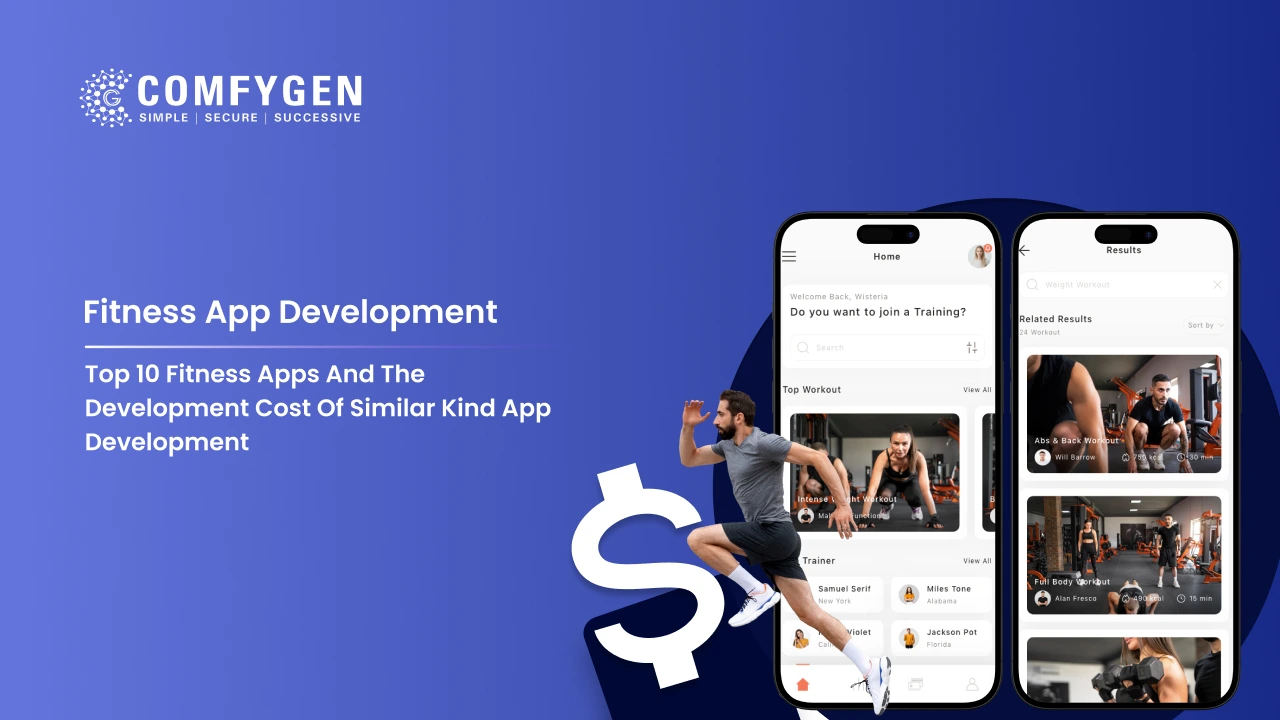





Fitness is no longer limited to a gym or a fixed routine. With modern fitness apps, users get the flexibility, personalization, and real-time results they need. These apps provide guided workouts, calorie tracking, AI-powered coaching, and habit-building tools, allowing you to stay active anytime, anywhere. Beyond workouts, the best fitness apps also support nutrition tracking, mental wellness, and sleep monitoring, and help users achieve their long-term health goals.
The growing demand for fitness solutions has drawn startups, fitness brands, and healthcare companies into the market. Today, creating a fitness app goes beyond offering workouts—it’s about building a scalable digital product with subscription models, in-app purchases, and premium features.
In this blog, we’ll explore the top fitness apps dominating the industry and provide insights into the cost of developing a fitness app like them.
What Is a Fitness App and How Does It Work?
A fitness app is a mobile application designed to help users stay active, healthy, and consistent with their fitness goals. It acts like a digital fitness companion. Sometimes a fitness app replaces a personal trainer, sometimes it supports one. Either way, it provides structure, guidance, and personalized support, all conveniently accessible from a smartphone.
At its core, the best fitness app integrates workouts, tracking, and feedback into a seamless experience. Users sign up, set their goals, and the app adapts to their individual needs. Whether the aim is weight loss, muscle gain, flexibility, or mental wellness, the app creates a structured plan and keeps users progressing.
-
Setup & Goals: Users enter age, weight, fitness level, and goals to get a personalized plan.
-
Activity Tracking: Apps monitor steps, workouts, heart rate, sleep, and GPS-based activities.
-
Workouts: Provides guided exercises, videos, and adaptive routines.
-
Nutrition: Logs meals, counts calories, and suggests diet plans.
-
Motivation: Uses gamification, challenges, and community features.
-
Insights: Tracks progress, trends, and offers feedback for improvement.
-
AI Recommendations: Suggests workouts, rest, and meal plans based on user data.
Types of Best Workout & Fitness Apps in the Market
Not all workout apps are designed for the same user or business goal. Some people want guided workouts. while others prioritize step counting, calorie tracking, or mental wellness. This diversity has led to distinct categories in the fitness app market, with each type addressing a specific need and offering targeted solutions for different users.
- Activity Trackers – Track steps, distance, calories, heart rate (think pedometer and basic fitness metrics).
- Workout Apps – Provide guided workouts, routines, and exercise libraries (bodyweight, HIIT, strength training).
- Running & Cycling Apps – GPS‑based tracking for outdoor workouts with pace, route, and performance stats.
- Nutrition & Diet Apps – Meal logging, calorie counting, macros tracking, and diet plans.
- Personal Training Apps – Customized coaching plans with progress adjustments and sometimes live trainer support.
- Yoga & Mind‑Body Apps – Focused on yoga sessions, flexibility, meditation, and stress management.
- Gym Companion Apps – Designed for weightlifting and gym routines with rep/weight tracking and progress logging.
- Habit & Wellness Apps – Broader health focus covering sleep, water intake, mindfulness, and habit tracking.
- Wearable‑Integrated Apps – Sync with smartwatches and fitness bands for real‑time biometrics and insights.
- Community & Challenge Apps – Social groups, challenges, leaderboards, and motivation features.
Top 10 Best Fitness Apps Dominating the Market
The fitness app industry is booming as users seek convenience, personalization, and measurable results. The best fitness app combine workouts, nutrition tracking, AI coaching, and community support to help users achieve their fitness goals. They cater to various objectives, from weight loss and muscle building to mental wellness and overall health.
Here’s a look at the top 10 fitness apps dominating the market and why they’ve become essential for millions of users worldwide.
1. MyFitnessPal
MyFitnessPal is a nutrition and fitness tracking app designed to help users manage their diet, track calories, and maintain healthy eating habits. The app allows users to log meals, monitor macronutrients, and understand their daily nutritional intake. It is widely used by individuals focused on weight loss, muscle gain, and long-term lifestyle improvement.
Main Features
- Calorie and macronutrient tracking
- Large food database with barcode scanning
- Meal logging and daily food journals
- Custom nutrition goals and diet preferences
- Progress tracking and visual reports
- Integration with fitness and activity apps
- Water intake and habit tracking
- Personalized insights based on user data
- Premium subscription management
- Cloud-based data storage and sync
Price & Development Time Range
Developing an app similar to MyFitnessPal typically costs between $30,000 and $90,000, depending on database size, tracking accuracy, and feature depth. The development timeline usually ranges from 3 to 6 months for a scalable, production-ready version with nutrition tracking and subscription support.
2. Nike Training Club
Nike Training Club is a workout-focused fitness app designed to help users train smarter through guided exercise programs. The app offers a wide range of workouts led by professional trainers, covering strength training, cardio, HIIT, yoga, mobility, and recovery. It is built for users at every fitness level, from beginners to advanced athletes, and works well for both home and gym workouts.
Main Features
- User profiles and fitness level assessment
- Trainer-led workout programs and plans
- On-demand workout video library
- Strength, cardio, HIIT, yoga, and mobility sessions
- Workout scheduling and progress tracking
- Equipment-based and equipment-free workouts
- Personalized training recommendations
- Push notifications and workout reminders
- Subscription and premium content access
- Offline workout access
Price & Development Time Range
Developing an app similar to Nike Training Club typically costs between $35,000 and $100,000, depending on video content volume, trainer programs, and personalization features. The development timeline usually ranges from 4 to 7 months, including workout library setup, UI design, backend development, and testing.
3. Fitbit App
The Fitbit App is a health and fitness tracking platform designed to work seamlessly with Fitbit wearable devices. It focuses on real-time monitoring of physical activity, heart health, sleep patterns, and overall wellness. Unlike workout-only apps, Fitbit positions itself as a complete health tracking solution that helps users understand their daily habits and long-term health trends.
Main Features
- Seamless integration with wearable fitness devices
- Real-time tracking of steps, distance, and calories
- Continuous heart rate monitoring
- Sleep tracking and sleep quality analysis
- Activity recognition and workout detection
- Health trends and long-term wellness reports
- Stress monitoring and recovery insights
- Goal setting and daily activity reminders
- Cloud-based data sync across devices
- Premium subscription for advanced health analytics
Price & Development Time Range
Developing an app similar to the Fitbit App typically costs between $40,000 and $120,000, depending on wearable integrations, health data accuracy, and analytics complexity. The development timeline usually ranges from 4 to 8 months, including device connectivity, data processing, dashboards, and compliance testing.
4. Strava
Strava is a social fitness app built primarily for runners and cyclists who want to track performance and stay motivated through community engagement. The app records outdoor activities using GPS and turns workouts into shareable performance data. Strava stands out by combining fitness tracking with social networking, making workouts more competitive and engaging.
Main Features
- GPS-based activity tracking for running and cycling
- Social fitness networking and user feeds
- Friend following and activity sharing
- Leaderboards and competitive challenges
- Detailed performance analytics (pace, distance, elevation)
- Route mapping and history tracking
- Segment-based performance comparison
- Goal setting and training progress reports
- Push notifications for challenges and activity updates
- Premium subscription for advanced analytics
Price & Development Time Range
Developing an app similar to Strava typically costs between $35,000 and $110,000, depending on GPS accuracy, social features, and analytics depth. The development timeline usually ranges from 4 to 7 months, covering activity tracking, social networking, performance analytics, and scalable backend infrastructure.
5. Freeletics
Freeletics is an AI-powered app for health and fitness designed to deliver personalized workout experiences based on individual fitness levels and goals. The app focuses mainly on bodyweight and minimal-equipment workouts, making it ideal for users who prefer training at home or on the go. What sets Freeletics apart is its adaptive coaching system that evolves with the user’s performance and consistency.
Main Features
- AI-based personalized training plans
- Adaptive workouts based on user feedback and performance
- Bodyweight and minimal-equipment workout programs
- Home and outdoor workout support
- Short, time-efficient training sessions
- Progress tracking and performance analytics
- Workout reminders and consistency tracking
- Goal-based fitness plans
- Subscription-based premium coaching
- Cloud-based user data management
Price & Development Time Range
Developing an app similar to Freeletics typically costs between $30,000 and $95,000, depending on AI logic, personalization depth, and workout content volume. The development timeline usually ranges from 3 to 6 months, including AI model integration, workout engine development, and user experience optimization.
6. Calm
Calm is a mental fitness and wellness app focused on meditation, stress reduction, sleep improvement, and emotional well-being. The app offers guided meditations, breathing exercises, sleep stories, and relaxation programs designed to help users manage daily stress and improve mental health. Calm is widely used by individuals looking to balance mental wellness alongside physical fitness.
Main Features
- Guided meditation programs for different goals
- Breathing exercises and stress management tools
- Sleep stories and relaxation audio content
- Daily mindfulness reminders and streak tracking
- Personalized content recommendations
- Offline access to downloaded sessions
- User progress and session history tracking
- Subscription-based premium content access
- Multi-device sync and cloud storage
- Secure payment and subscription management
Price & Development Time Range
Developing an app similar to Calm typically costs between $25,000 and $80,000, depending on content volume, audio quality, and personalization features. The development timeline usually ranges from 3 to 6 months, including content management setup, audio streaming, user experience design, and subscription integration.
7. Headspace
Headspace is a mindfulness and mental wellness app designed to help users improve focus, reduce stress, and build healthier sleep habits. The app offers structured meditation programs, guided mindfulness exercises, sleep support, and focus tools that fit easily into everyday routines. Headspace is used by individuals as well as organizations looking to support mental well-being at scale.
Main Features
- Structured meditation programs for beginners and advanced users
- Sleep support with guided sessions and calming audio
- Focus and productivity tools for daily routines
- Personalized mindfulness recommendations
- Session tracking and progress insights
- Daily reminders and habit-building tools
- Offline access to downloaded content
- Subscription-based premium plans
- Corporate wellness and team access modules
- Secure user data and account management
Price & Development Time Range
Developing an app similar to Headspace typically costs between $25,000 and $85,000, depending on content depth, personalization logic, and enterprise features. The development timeline usually ranges from 3 to 6 months, including meditation content management, sleep modules, user experience design, and subscription setup.
8. 7 Minute Workout
7 Minute Workout is a fitness app built around the idea of short, high-intensity workouts that deliver results in minimal time. The app is based on science-backed training principles, using bodyweight exercises that can be done anywhere without equipment. It’s designed for users who want to stay active despite busy schedules.
Main Features
- Short, time-based workout sessions
- Science-backed bodyweight exercise routines
- Built-in workout timers and interval tracking
- Step-by-step visual and audio instructions
- Minimalist and distraction-free user interface
- Daily workout reminders and streak tracking
- Progress history and completion reports
- Custom workout intensity settings
- Offline workout access
- Subscription or one-time premium unlock
Price & Development Time Range
Developing an app similar to 7 Minute Workout typically costs between $20,000 and $60,000, depending on workout logic, UI simplicity, and platform support. The development timeline usually ranges from 2 to 4 months, making it one of the fastest fitness apps to build and launch.
9. Centr
Centr is a celebrity-driven fitness app founded by Chris Hemsworth, designed to offer a complete health and wellness solution. The app combines personalized workout programs, nutrition plans, and mindfulness routines to provide a holistic approach to fitness. It targets users who want professional guidance paired with celebrity inspiration.
Main Features
- Celebrity-endorsed workout programs
- Personalized fitness plans based on user goals
- Nutrition and meal planning with recipes
- Mindfulness exercises and meditation sessions
- Progress tracking and analytics dashboards
- Video-based guided workouts
- Daily reminders and habit tracking
- Subscription management for premium content
- Integration with wearables and fitness devices
- Cloud-based content delivery and storage
Price & Development Time Range
Developing an app similar to Centr typically costs between $40,000 and $120,000, depending on workout variety, nutrition content, and mindfulness integration. The development timeline usually ranges from 4 to 7 months, including content creation, AI-based personalization, and subscription management.
10. Adidas Training (Runtastic)
Adidas Training, formerly known as Runtastic, is a fitness app focused on running and overall training performance. It provides users with structured workout plans, GPS-based activity tracking, and detailed analytics to help improve endurance, speed, and overall fitness. The app is suitable for beginners as well as advanced runners and athletes looking for data-driven insights.
Main Features
- GPS-based running and cycling tracking
- Structured workout and training plans
- Performance analytics (distance, pace, elevation, speed)
- Route mapping and history tracking
- Progress dashboards and goal tracking
- Real-time pace and distance notifications
- Personalized workout recommendations
- Social sharing and community challenges
- Subscription management for premium features
- Integration with wearables and smart devices
Price & Development Time Range
Developing an app similar to Adidas Training (Runtastic) typically costs between $35,000 and $110,000, depending on GPS tracking precision, training plan variety, and analytics depth. The development timeline usually ranges from 4 to 7 months, covering workout plan setup, GPS integration, real-time tracking, and user dashboards.
Ready to build a fitness app like the top performers?
Talk to our app development experts and get a clear cost estimate today.
Must-Have Features in a Fitness App Like Top Players
If you want your fitness app to compete with the top players in the market, it needs a set of core features of a fitness app that deliver value, engagement, and personalization. Here’s a breakdown of the must-have elements:
| Feature | Description |
| User Registration and Profiles | Create accounts, set goals, and maintain personal profiles for tailored recommendations and progress tracking. |
| Workout Plans and Video Library | Offer guided workouts and training plans with clear videos for proper form and motivation. |
| Activity Tracking and Analytics | Track workouts, steps, calories, and performance over time with visual dashboards. |
| Diet and Calorie Tracking | Log meals, track calories, and manage nutrition alongside workouts. |
| AI-Based Recommendations | Provide personalized workout and meal suggestions based on user habits and progress. |
| Wearable and Device Integration | Sync with smartwatches and fitness devices for accurate tracking and insights. |
| Push Notifications and Reminders | Send timely prompts to keep users motivated and consistent. |
| In-App Payments and Subscriptions | Enable access to premium features, personalized programs, and subscriptions. |
Estimated Cost to Build an App Like Top Fitness Apps
Developing a fitness and workout app clone depends on key factors such as app features, complexity, and the platforms you choose (iOS, Android, or both). Here’s a realistic cost estimate for building a fitness app clone similar to top players in the market:
| App Name | Development Cost (USD) | Development Time |
| MyFitnessPal | $30,000 – $90,000 | 3 – 6 months |
| Nike Training Club | $35,000 – $100,000 | 4 – 7 months |
| Fitbit App | $40,000 – $120,000 | 4 – 8 months |
| Strava | $35,000 – $110,000 | 4 – 7 months |
| Freeletics | $30,000 – $95,000 | 3 – 6 months |
| Calm | $25,000 – $80,000 | 3 – 6 months |
| Headspace | $25,000 – $85,000 | 3 – 6 months |
| 7 Minute Workout | $20,000 – $60,000 | 2 – 4 months |
| Centr | $40,000 – $120,000 | 4 – 7 months |
| Adidas Training (Runtastic) | $35,000 – $110,000 | 4 – 7 months |
How to Choose the Right Fitness App Development Company
When planning a fitness app, choosing the right mobile app development partner is essential for success. At Comfygen Technologies, we deliver high-quality, scalable fitness app development solutions designed to meet both user expectations and business objectives.
Here’s what to look for in a top fitness app development company:
- Expertise in Fitness App Development: Proven experience building apps with workout tracking, nutrition logging, and wearable integration.
- User-Centered Design: Intuitive interfaces that enhance engagement and retention.
- Scalable Architecture: Apps that can handle growing user bases and new features over time.
- AI and Smart Features: Personalized recommendations, progress tracking, and AI-powered insights.
- End-to-End Support: From concept and design to launch and ongoing maintenance.
Conclusion
Creating the best fitness app requires combining effective workout plans, activity tracking, and personalized recommendations to keep users motivated. Integrating AI features in fitness apps enhances user experience by offering smart workout suggestions, personalized nutrition tracking, and seamless wearable integration. Focusing on simplicity and user-friendly design ensures long-term engagement and higher retention rates. By leveraging AI-powered insights and personalized fitness plans, your app can stand out in the competitive fitness app market.
At Comfygen Technologies, we specialize in mobile app development, scalable, user-focused fitness apps that deliver real results. Our fitness app development services focus on integrating essential features, smart design, and AI-powered fitness app personalization to boost user engagement and retention. By building apps that are intuitive, efficient, and tailored to user goals, we help businesses attract more users, enhance app performance, and generate lasting value in the competitive fitness app market.

Mr. Saddam Husen, (CTO)
Mr. Saddam Husen, CTO at Comfygen, is a renowned Blockchain expert and IT consultant with extensive experience in blockchain development, crypto wallets, DeFi, ICOs, and smart contracts. Passionate about digital transformation, he helps businesses harness blockchain technology’s potential, driving innovation and enhancing IT infrastructure for global success.