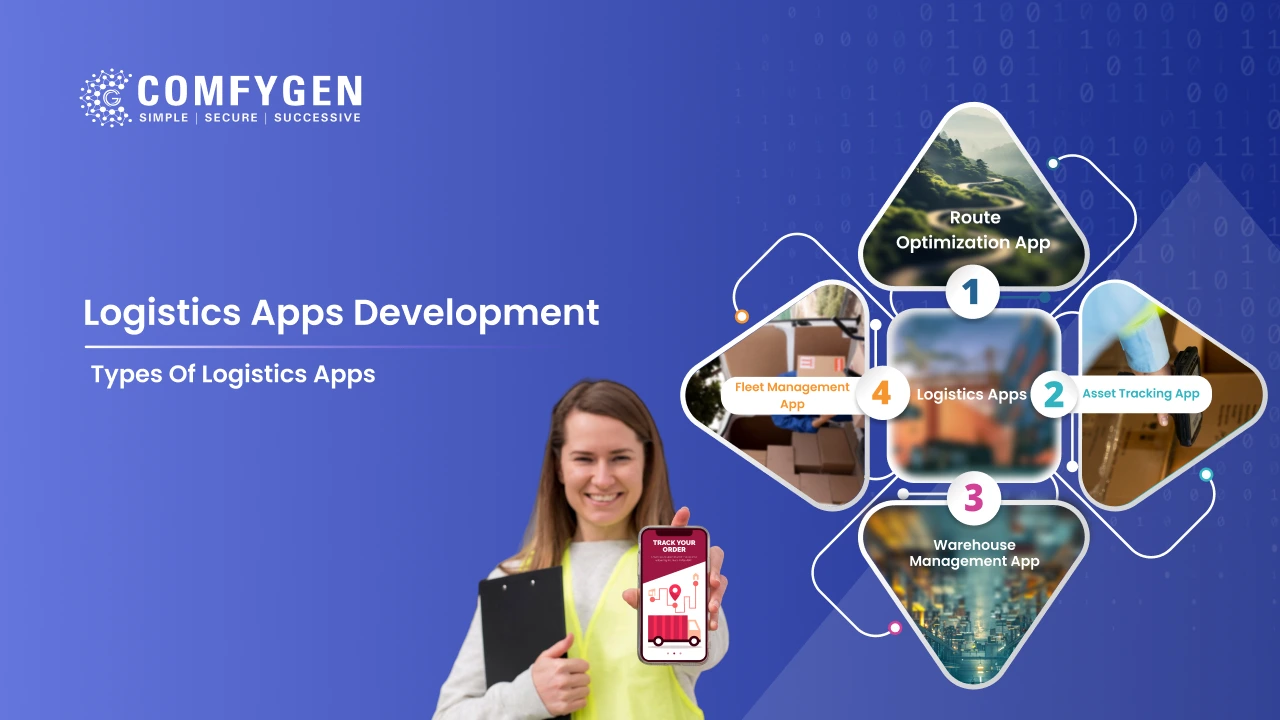





The logistics industry is rapidly adopting digital solutions to meet growing delivery demands and operational challenges. Logistics apps development solution helps businesses in managing shipments, fleets, warehouses, and supply chains more efficiently while improving real-time visibility and customer experience. With the rise of e-commerce and on-demand delivery services, logistics mobile apps have become essential tools for faster, smarter, and more reliable logistics business owners.
What Is a Logistics App?
A logistics app is a digital platform that helps businesses manage and optimize the movement of goods from one place to another. It automates key tasks like order management, shipment tracking, route planning, and inventory control, allowing businesses to monitor all logistics operations in real time from a single platform.
Logistics app development service provides fleet tracking, warehouse management, and delivery coordination, helping reduce delays and improve efficiency. For businesses, logistics mobile apps simplify operations, lower costs, and enhance customer satisfaction through better visibility and faster deliveries.
Types of Logistics Apps
Logistics apps are designed to handle different parts of the supply chain, depending on business needs and operational scale. Each type of logistics app focuses on solving problems and challenges in the logistics sector, like transportation, storage, delivery, or returns, making logistics operations more efficient and transparent.
Fleet Management Apps
Fleet Apps are used to monitor and manage vehicles in real time. These apps help track vehicle locations, optimize routes, reduce fuel costs, and improve driver performance, making them essential for transportation and delivery businesses.
Benefits of the Fleet Management app
Fleet management apps help businesses operate more efficiently by reducing delivery delays, cutting fuel and maintenance costs, and minimizing vehicle downtime. They also improve customer satisfaction through timely deliveries and provide useful insights into driver behavior and fleet performance for better decision-making.
Main Features
- GPS tracking for real-time vehicle monitoring
- Route optimization algorithms
- Two-way communication tools
- Driver performance monitoring metrics
- Vehicle maintenance reminders
- Fuel consumption monitoring
- Idle time tracking
- Incident reporting and analysis
- Compliance management (e.g., hours of service)
- Asset utilization monitoring
Most Popular Fleet Management Apps
- Fleetio:- Headquarters in Birmingham, Alabama, USA — Fleetio operates as a cloud‑based fleet management platform helping businesses track and optimize vehicle operations, maintenance, fuel, inspections, and more.
- Verizon Connect:- Main offices in Atlanta, Georgia, USA, with additional regional offices across North America and globally. Verizon Connect offers telematics and fleet management solutions, including GPS tracking, route optimization, safety monitoring, and analytics.
- KeepTruckin:- Head office in San Francisco, California, USA — Motive (formerly known as KeepTruckin) provides fleet telematics software, including GPS tracking, hours‑of‑service compliance, dash cams, and fleet analytics for trucking and logistics businesses.
Price & Development Time Range
Fleet management app development typically costs between $20,000 and $100,000, depending on features and complexity. The development timeline usually ranges from 2 to 7 months.
Warehouse Management Apps
Warehouse management apps focus on inventory and storage operations. These apps help businesses track stock levels, manage inbound and outbound goods, automate warehouse tasks, and reduce errors in order fulfillment, making them essential for retail, eCommerce, and logistics companies.
Benefits of the Warehouse Management App
Warehouse management apps help businesses streamline storage and inventory operations by improving accuracy, reducing manual errors, and optimizing stock levels. They enhance operational efficiency, minimize product misplacement, accelerate order fulfillment, and provide actionable insights into warehouse performance, helping businesses make informed decisions.
Main Features
- Inventory tracking and management
- Barcode and QR code scanning
- Automated order processing
- Real-time stock level monitoring
- Warehouse layout optimization
- Inbound and outbound shipment management
- Alerts for low stock or overstock situations
- Reporting and analytics
- Integration with ERP and supply chain systems
- Multi-warehouse support
Most Popular Warehouse Management Apps
- Fishbowl Inventory: Headquarters in Orem, Utah, USA — Provides comprehensive inventory control and warehouse management software for small and medium-sized businesses, including barcode tracking, order management, and reporting.
- NetSuite WMS: Main offices in San Mateo, California, USA — Offers cloud-based warehouse management solutions, helping businesses optimize inventory, automate processes, and improve warehouse efficiency.
- Zoho Inventory: Headquarters in Pleasanton, California, USA — Cloud-based inventory and warehouse management app for SMBs, with features like stock management, order fulfillment, multi-channel selling, and reporting.
Price & Development Time Range
Warehouse management app development typically costs between $25,000 and $120,000, depending on features and complexity. The development timeline usually ranges from 3 to 8 months.
On-Demand Delivery Apps
On-demand delivery apps enable quick, flexible, and real-time delivery services. These apps allow users to place orders instantly, track deliveries live, and receive timely updates, making them ideal for food delivery, grocery delivery, medicine delivery, and courier services.
Benefits of the On-Demand Delivery App
On-demand delivery apps help businesses increase order volume, reduce delivery turnaround time, and improve overall operational efficiency. They enhance customer satisfaction through real-time tracking and instant notifications while enabling businesses to manage drivers, orders, and deliveries seamlessly from a centralized system.
Main Features
- Real-time order placement and management
- Live GPS tracking of delivery agents
- Route optimization for faster deliveries
- Push notifications and alerts
- In-app chat or call between customers and drivers
- Multiple payment gateway integration
- Order history and delivery status updates
- Admin dashboard for order and driver management
- Rating and review system
- Delivery time estimation
Most Popular On-Demand Delivery Apps
- Uber Eats: Headquarters in San Francisco, California, USA — A leading on-demand food delivery platform offering real-time tracking, fast delivery, and seamless user experience across multiple regions.
- DoorDash: Based in San Francisco, California, USA — Provides on-demand food and grocery delivery services with strong logistics management, driver coordination, and real-time order tracking.
- Instacart: Headquarters in San Francisco, California, USA — An on-demand grocery delivery app that connects customers with personal shoppers for quick and convenient deliveries.
Price & Development Time Range
On-demand delivery app development typically costs between $25,000 and $150,000, depending on features, scalability, and integrations. The development timeline usually ranges from 3 to 8 months.
Freight Management Apps
Freight management apps are designed to handle large-scale shipments and complex freight operations. These apps help logistics and freight-forwarding companies manage freight booking, shipment scheduling, carrier selection, and transportation costs while ensuring smooth coordination across multiple stakeholders.
Benefits of the Freight Management App
Freight management apps help businesses improve shipment planning, reduce transportation costs, and minimize delays in freight movement. They enhance operational visibility, simplify carrier management, and provide better control over freight expenses. By automating manual processes, these apps also reduce errors and support data-driven decision-making for logistics managers.
Main Features
- Freight booking and load management
- Shipment scheduling and tracking
- Carrier selection and rate comparison
- Real-time freight status updates
- Cost calculation and freight billing
- Documentation management (BOL, invoices)
- Route and transit time optimization
- Analytics and reporting dashboards
- Multi-carrier and multi-mode support
- Integration with ERP and logistics systems
Most Popular Freight Management Apps
- FreightPOP: Headquarters in Lake Forest, California, USA — A cloud-based freight management platform that helps businesses manage LTL, FTL, parcel, and international shipping with rate comparison and carrier management.
- CargoWise: Based in Sydney, Australia — A comprehensive logistics platform widely used by freight forwarders for shipment management, customs compliance, and global supply chain operations.
- Oracle Transportation Management (OTM): Headquarters in Austin, Texas, USA — Provides advanced freight and transportation management solutions for enterprises, focusing on optimization, analytics, and cost control.
Price & Development Time Range
Freight management app development typically costs between $30,000 and $120,000, depending on features, integrations, and scalability. The development timeline usually ranges from 4 to 9 months.
Supply Chain Management Apps
Supply chain management apps provide end-to-end visibility across the entire supply chain. These apps help businesses manage procurement, vendor relationships, inventory control, production planning, and distribution from a single digital platform, making them ideal for manufacturers, retailers, and large logistics enterprises.
Benefits of the Supply Chain Management App
Supply chain management apps help businesses improve coordination across multiple supply chain stages, reduce operational inefficiencies, and minimize delays. They enhance demand forecasting, optimize inventory levels, and improve collaboration with suppliers and distributors. By offering real-time insights and analytics, these apps support smarter planning and data-driven decision-making.
Main Features
- End-to-end supply chain visibility
- Procurement and purchase order management
- Vendor and supplier management
- Inventory and demand forecasting
- Order and distribution management
- Real-time tracking and status updates
- Data analytics and performance reporting
- Workflow automation
- Integration with ERP and logistics systems
- Risk and compliance management
Most Popular Supply Chain Management Apps
- SAP Integrated Business Planning: Headquarters in Walldorf, Germany — Offers advanced supply chain planning solutions, including demand forecasting, inventory optimization, and real-time analytics for enterprises.
- Oracle SCM Cloud: Based in Austin, Texas, USA — A cloud-based supply chain management platform that helps businesses manage procurement, manufacturing, inventory, and logistics operations efficiently.
- Blue Yonder: Headquarters in Scottsdale, Arizona, USA — Provides AI-driven supply chain solutions focused on demand planning, inventory optimization, and supply chain visibility.
Price & Development Time Range
Supply chain management app development typically costs between $35,000 and $150,000, depending on functionality, integrations, and scalability requirements. The development timeline usually ranges from 4 to 10 months.
Looking to develop a logistics app?
Expert logistics app development services and turn your idea into a high-performance digital solution.
Courier and Parcel Delivery Apps
Courier and parcel delivery apps are designed specifically for last-mile delivery operations. These apps help courier companies and logistics providers manage parcel pickups, deliveries, and tracking efficiently while ensuring fast, accurate, and reliable delivery services.
Benefits of the Courier and Parcel Delivery App
Courier and parcel delivery apps help businesses reduce last-mile delivery delays, improve delivery accuracy, and enhance customer satisfaction. They provide real-time visibility into parcel movement, streamline driver coordination, and minimize operational errors. These apps also help businesses scale delivery operations while maintaining service quality.
Main Features
- Real-time parcel tracking
- Proof of delivery (signature, photo, OTP)
- Route optimization for last-mile delivery
- Delivery status updates and notifications
- Driver and courier management
- Parcel pickup and drop scheduling
- In-app communication between driver and customer
- Digital invoices and delivery receipts
- Failed delivery and reattempt management
- Performance reports and analytics
Most Popular Courier and Parcel Delivery Apps
- Bringg: Headquarters in Chicago, Illinois, USA — A leading last-mile delivery platform that helps courier and logistics companies optimize delivery workflows, real-time tracking, and customer communication.
- Onfleet: Based in San Francisco, California, USA — Provides last-mile delivery management software with features like route optimization, proof of delivery, and real-time driver tracking.
- Shipday: Headquarters in Los Angeles, California, USA — A delivery management platform focused on small and medium courier businesses, offering real-time tracking, driver management, and customer notifications.
Price & Development Time Range
Courier and parcel delivery app development typically costs between $20,000 and $120,000, depending on features and integrations. The development timeline usually ranges from 3 to 8 months.
Transportation Management Apps (TMS)
Transportation Management Apps (TMS) help businesses plan, execute, and analyze transportation operations efficiently. These apps focus on route planning, shipment execution, carrier coordination, and performance monitoring, making them essential for logistics providers, manufacturers, and enterprises managing complex transportation networks.
Benefits of the Transportation Management App
Transportation management apps help businesses reduce transportation costs, improve delivery timelines, and enhance operational visibility. They optimize route planning, simplify carrier management, and provide real-time insights into transportation performance. By automating transportation workflows, TMS solutions support better decision-making and improve overall logistics efficiency.
Main Features
- Route planning and optimization
- Shipment scheduling and execution
- Carrier and contract management
- Real-time shipment tracking
- Freight cost calculation and optimization
- Performance monitoring and analytics
- Delivery time and exception management
- Integration with ERP, WMS, and SCM systems
- Multi-modal transportation support
- Compliance and documentation management
Most Popular Transportation Management Apps
- Oracle Transportation Management (OTM): Headquarters in Austin, Texas, USA — A widely used enterprise TMS offering advanced transportation planning, freight optimization, and analytics.
- SAP Transportation Management: Based in Walldorf, Germany — Provides end-to-end transportation planning and execution solutions with deep integration into SAP supply chain systems.
- MercuryGate TMS: Headquarters in Cary, North Carolina, USA — A cloud-based TMS platform designed for shippers and logistics service providers, offering multi-modal support and real-time visibility.
Price & Development Time Range
Transportation management app development typically costs between $30,000 and $150,000, depending on features, integrations, and scalability. The development timeline usually ranges from 4 to 9 months.
Reverse Logistics Apps
Reverse logistics apps are designed to manage product returns, exchanges, refunds, repairs, and recycling processes efficiently. These apps help businesses handle reverse supply chain operations smoothly while reducing operational losses and supporting sustainable logistics practices. They are commonly used by eCommerce, retail, manufacturing, and logistics companies.
Benefits of the Reverse Logistics App
Reverse logistics apps help businesses simplify and speed up the return process, improving customer satisfaction and trust. They reduce return-related costs, minimize product wastage, and provide better visibility into returned inventory. By streamlining returns and refurbishing workflows, these apps also support sustainability goals and data-driven inventory planning.
Main Features
- Return and exchange request management
- Automated return approvals and workflows
- Real-time return tracking
- Refund and replacement processing
- Condition assessment and inspection tracking
- Inventory restocking and refurbishing management
- Waste reduction and recycling tracking
- Customer notifications and return status updates
- Analytics and return performance reports
- Integration with inventory and order management systems
Most Popular Reverse Logistics Apps
- Optoro: Headquarters in Washington, D.C., USA — A reverse logistics platform that helps businesses manage returns, optimize resale, and reduce waste using data-driven insights.
- Happy Returns: Based in Santa Monica, California, USA — Provides return management solutions focused on fast, in-person and mail-in returns with seamless customer experiences.
- Returnly: Headquarters in San Francisco, California, USA — A returns and exchanges platform designed to simplify refund processing and improve customer retention for eCommerce brands.
Price & Development Time Range
Reverse logistics app development typically costs between $25,000 and $120,000, depending on features and integrations. The development timeline usually ranges from 3 to 8 months.
How to Select the Best Logistics App for Your Business
Selecting the right logistics app starts with a clear understanding of your business operations and goals. The right application development solution can streamline processes, improve delivery performance, and support long-term growth.
- Understand Your Business Requirements
Analyze your business type, daily logistics activities, and industry demands. Startups and local delivery services often need on-demand or courier apps, while larger organizations may require fleet, warehouse, or supply chain management solutions to handle complex operations efficiently. - Plan for Budget and Future Growth
Consider both your current budget and future expansion plans. While basic logistics apps work well for limited operations, advanced apps with automation, tracking, and analytics offer better scalability. Choosing a solution that grows with your business helps avoid frequent upgrades or replacements. - Choose Between Custom and White-Label Solutions
Custom logistics apps provide tailored functionality and greater control, making them suitable for businesses with specific workflows. White-label logistics apps are quicker to deploy and more cost-effective, ideal for businesses looking for a fast market entry with standard features.
Conclusion
The logistics industry offers various app types to manage fleets, warehouses, deliveries, freight, and supply chains more efficiently. Choosing the right logistics app helps businesses reduce costs, improve delivery speed, and gain better operational visibility.
For businesses looking to build a reliable and scalable solution, Comfygen is one of the best logistics app development companies. With expertise in custom, feature-rich logistics apps, Comfygen helps businesses streamline operations and stay competitive in a fast-growing digital logistics market.

Mr. Saddam Husen, (CTO)
Mr. Saddam Husen, CTO at Comfygen, is a renowned Blockchain expert and IT consultant with extensive experience in blockchain development, crypto wallets, DeFi, ICOs, and smart contracts. Passionate about digital transformation, he helps businesses harness blockchain technology’s potential, driving innovation and enhancing IT infrastructure for global success.