




Grocery delivery inventory management apps are different from traditional retail inventory management. The stock management is not about tracking stock levels, but about determining order fulfillment accuracy, delivery speed, customer satisfaction, and overall unit economics. Even the minor mismatch between actual stock and app availability can result in order cancellation, forced substitutions, negative reviews, and long-term customer churn.
The demand for online grocery delivery apps and quick-commerce apps is consistently growing, which leads to increased pressure to maintain real-time inventory visibility, synchronize stock from multiple locations, and handle dynamic order flows without errors. Therefore, grocery delivery inventory management software is necessary for the back-office operations, management, and improved efficiency.
This blog will guide you through how inventory management works in grocery delivery apps, what the challenges of grocery delivery apps are, what grocery inventory management software is, how it works, its features, and its business benefits. Till the end of this blog, you will understand why it is necessary to integrate an inventory management app and how it leads to scaling your business.
Why Inventory Management Is Critical for Grocery Delivery Apps?
Inventory management is the backbone of operational efficiency in grocery delivery apps. The traditional way of manual inventory inspection cannot stand alone with the modern, rapid market needs. If you want to scale your grocery delivery business, it is necessary to prepare a well-prepared, analyzed, and structured inventory management system for a grocery delivery platform to ensure customer satisfaction without any stock wastage or expiration. Know the reasons why paying attention to inventory management is exclusively important:
-
Prevents Order Cancellation and Overselling
Grocery delivery apps might struggle to accept all orders if stock is not available. Therefore, you need accurate inventory tracking for grocery delivery apps prevents from overselling, order cancellations, and improve customer experience.
-
Real-Time Stock Visibility Across Locations
Grocery delivery platforms operate from multiple stores. Which is why the delivery application need grocery delivery inventory system that provides real-time visibility to procure the right amount of stock behind for consistent order fulfillment.
-
Improves Substitutions and Fulfillment Accuracy
When the products are not available, it hampers the order fulfillment. The inventory management systems help determine suitable substitutes based on the stock availability. The dedicatedly designed grocery delivery stock management minimizes no-pick scenarios and ensures consistent order-fulfillment.
-
Reduces Inventory Waste and Shrinkage
Not just order fulfillment, but also struggle with stock wastage if the products are not sold out before the shelf life ends. If the businesses use online grocery inventory management software, it does not lead to stock wastage and shrinkage through demand forecasting, expiry tracking, and stock rotation.
-
Supports Scalability and Business Growth
As order volumes increase, manual or disconnected systems quickly become bottlenecks. Robust grocery app inventory management allows grocery delivery platforms to scale operations, add new locations, and handle peak demand without operational breakdowns.
What is Grocery Inventory Management Software?
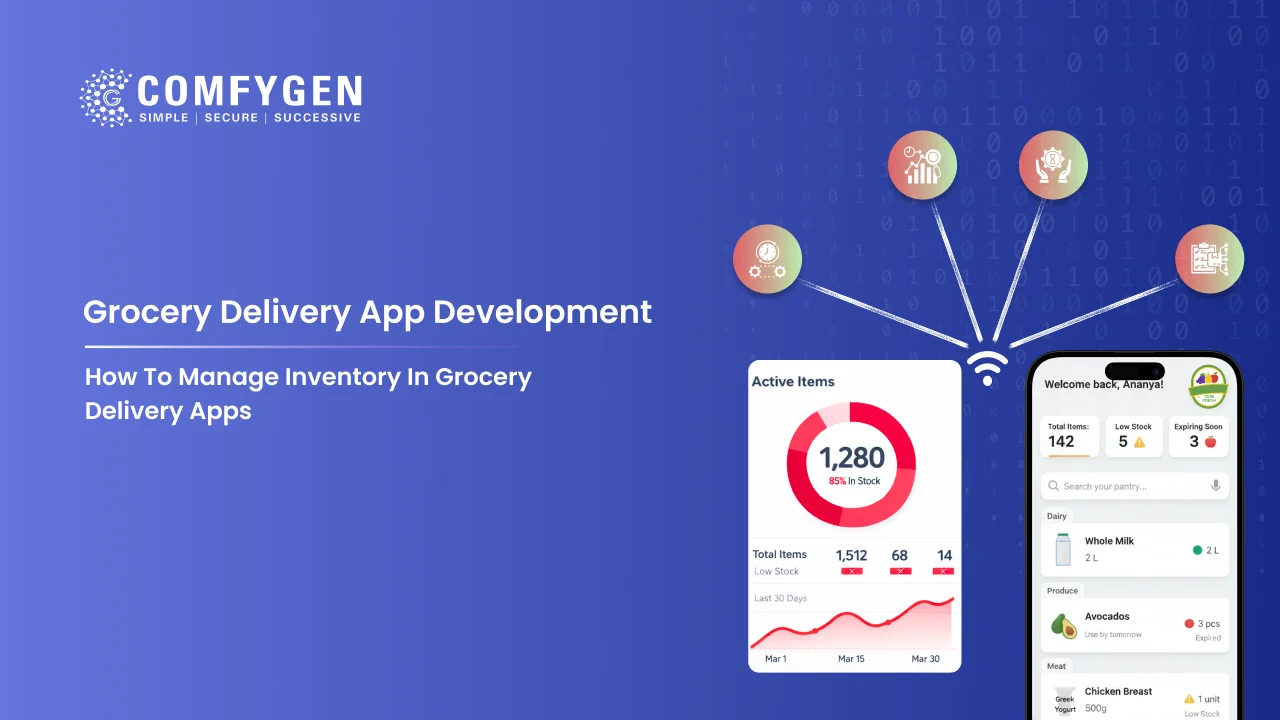
Grocery inventory management software is a centralized system that is designed to track, control, and synchronize stock levels across multiple stores, warehouses, and delivery apps in real-time. The grocery delivery inventory management acts as a dashboard that determines what products are available for customers to order, what can be fulfilled immediately, and requirement for substitutions or replenishment.
A well-designed Grocery delivery inventory system is a revenue-protection mechanism. It reduces order failures, controls wastage, improves fulfillment accuracy, and enables businesses to scale without losing inventory control. When implemented correctly, online grocery inventory management software becomes a core enabler of customer trust and operational efficiency.
How Does the Grocery Inventory Management System Work?
The grocery inventory management system works in real-time manage with the interconnected workflows. The primary function of software is to keep accurate inventory data, synchronize, and give actionable insights to gain operational efficiency.
-
Inventory Data Synchronization
Regular synchronization of stock information with all stores, retail POS Billing systems, suppliers, and grocery delivery applications to ensure accurate item availability.
-
Real-Time Stock Updates During Ordering
Reserve inventory when you add an item to your cart and automatically update to the verified status after receiving an order to avoid overselling.
-
Order Level Inventory Allocation
Automatically assign orders to the best fulfilment location based on stock availability, distance from the customer, and time frame for delivery.
-
Picking, Substitutions, and Adjustments
Manage all no-picks, substitutions, and altered quantities during picking through the use of a real-time inventory update.
-
Replenishment & Reporting
Using real-time sales trends, stock threshold data, and stock expiry data to trigger a replenishment of stock, and providing actionable inventory reports.
Leverage AI-powered grocery inventory software to automate stock tracking,
minimize wastage, and ensure accurate deliveries.
Features of Grocery Stock Management App
A high-performing grocery delivery stock management app combines essential operational features in a grocery delivery app with advanced, AI-driven capabilities. Below is a structured view of both.
Common Features in Grocery Inventory Management Apps
| Features | Descriptions |
| Real-Time Inventory Tracking | Continuously updates stock levels across stores and the delivery app to prevent overselling. |
| Multi-Store Inventory Management | Manages inventory across multiple grocery stores or dark stores from a single dashboard. |
| POS and ERP Integration | Syncs inventory data with existing POS, ERP, and accounting systems. |
| Order-Based Stock Allocation | Reserves and deducts inventory at the order level for accurate fulfillment. |
| Substitution Management | Handles product substitutions based on availability and predefined rules. |
| Expiry and Batch Tracking | Tracks perishable goods by batch and expiry date to reduce wastage. |
| Low-Stock Alerts | Notifies operators when inventory falls below predefined thresholds. |
| Inventory Reports and Dashboards | Provides visibility into stock movement, fast-selling items, and losses. |
AI-Driven Advanced Features in Grocery Inventory Management Apps
| AI Features | Descriptions |
| Demand Forecasting | Predicts future demand based on historical sales, seasonality, and trends. |
| Smart Replenishment | Automatically recommends reorder quantities and timing to avoid stockouts or overstocking. |
| Inventory Anomaly Detection | Identifies unusual stock movements, shrinkage patterns, or data inconsistencies. |
| Intelligent Substitution Suggestions | Recommends the best substitute products based on availability and customer preferences. |
| Expiry Risk Prediction | Flags items at risk of expiry and suggests markdowns or prioritization strategies. |
| Order Routing Optimization | Selects the optimal fulfillment location based on stock, distance, and delivery time. |
Business Benefits of Integrating Grocery Delivery Inventory Management App
Grocery Delivery Inventory Management apps maintain stock to improve order accuracy, operational efficiency, and customer satisfaction. It is a strategic investment that strengthens control over stock, reduces revenue leakage, and supports scalable growth.
- Reduces Order Cancellations
Real-time and accurate inventory visibility eliminates overselling and reduces the need for last-minute cancellations due to not having enough stock available.
- Improves Fulfillment Accuracy
By using order-levelling allocation and providing real-time stock updates, customers will receive exactly what they ordered.
- Lowers Inventory Waste
By providing better tracking of perishable products, spoilage, dead inventory, and excess inventory can be reduced.
- Enhances Customer Trust and Retention
Products being readily available with fewer substitutes create a better delivery experience overall.
- Optimizes Operational Efficiency
Automating inventory workflows provides fewer manual touches, reducing the burden of repetitive activities and bottlenecks within the fulfillment teams.
- Supports Scalable Growth
A centralized inventory management for grocery delivery enables easy expansion across new stores, cities, or delivery zones.
Best Practices for Managing Inventory in Grocery Delivery Apps
There are some other necessary practices you can follow for effective grocery delivery inventory management,, regardless of the software you are using to maintain inventory accuracy, reduce losses, and ensure reliable order fulfillment:
-
Maintain Real-Time Inventory Sync
Ensure inventory data is continuously synchronized between stores, POS systems, and the grocery delivery app to avoid mismatches.
-
Implement Regular Inventory Audits
Conduct frequent cycle counts to identify discrepancies early and maintain accurate stock records.
-
Use Order-Level Inventory Reservation
Reserve inventory as soon as items are added to the cart to prevent overselling during peak demand.
-
Track Expiry Dates and Batches
Monitor perishable items closely to reduce spoilage and prioritize near-expiry stock during fulfillment.
-
Standardize Substitution Rules
Define clear substitution logic to handle out-of-stock items without disrupting customer experience.
-
Set Reorder Thresholds
Establish minimum stock levels based on sales velocity to trigger timely replenishment.
-
Monitor Key Inventory KPIs
Track metrics such as stock accuracy, order fill rate, and cancellation rate to continuously improve performance.
Cost to Integrate or Develop Grocery Inventory Management Software
The cost to integrate or develop grocery inventory management software depends upon multiple factors. A tentative cost ranges between $10000 – $50000, but this cost will increase if the demand or customizations are extensive and exclusive.
Cost depends upon business size, complexity of the delivery model, the number of fulfillment locations, and the required integrations. Basic inventory management software integration with a POS and delivery app typically costs less.
Whereas the advanced AI-powered grocery inventory management software costs more with real-time synchronization, multi-store support, AI-driven forecasting, and analytics, which requires a higher investment.
Custom grocery delivery management app development cost varies depending on scalability requirements, third-party API integrations, and compliance needs. For grocery delivery businesses, the cost should be evaluated against long-term benefits such as reduced order cancellations, lower inventory waste, and improved operational efficiency.
Cost vs ROI: Is Grocery Inventory Management Software Integration Worth It?
The integration of grocery inventory management software involves some investment, but this is worth implementing because of the measurable, driven ROI and operational efficiency.
- Reduces Revenue Loss from Cancellations
Accurate stock visibility minimizes order cancellations and refunds.
- Lowers Inventory Waste
Better tracking of perishables reduces spoilage and dead stock.
- Improves Operational Efficiency
Automation reduces manual inventory handling and fulfillment errors.
- Increases Customer Retention
Reliable deliveries and fewer substitutions improve repeat order rates.
- Supports Scalable Growth
A robust grocery delivery inventory management system enables expansion without operational breakdowns.
How Comfygen Supports Grocery Delivery Inventory Management?
Comfygen, the best grocery delivery app development company, focuses on enhancing customer experience and efficiency by offering scalable grocery delivery inventory management systems that solve everyday operational problems for its clients and manage the stock.
We do this by leveraging our grocery app inventory management expertise and designing an application that facilitates real-time inventory synchronization, order allocation at the order level, and seamless integration into existing POS and third-party systems.
The systems we develop help grocery delivery companies manage their grocery inventories regardless of the grocery inventory management model they choose to follow (single store, dark store, or multiple locations). By emphasizing efficiency, reliability, and scalability, Comfygen has created a grocery inventory management system that will help our customers successfully manage an evolving and growing number of groceries over time.
Key Takeaways
An efficient grocery delivery inventory management application is critical to maintain the grocery in real time based on the requirements. It improves order accuracy, reducing cancellations, and scaling operations efficiently.
However, a well-structured grocery app inventory management system ensures real-time stock visibility, in-time inventory synchronization, and order fulfillment.
Therefore, we suggest that you invest in a stock management app for grocery delivery platforms to reduce the wastage, shrinkage, and operational costs. You won’t need to pay overhead costs, strengthen customer trust, and retain long-term profitability.
Invest, because It is a core growth driver.
FAQ
What is grocery inventory management software and how does it work?
How does inventory management software integrate with grocery delivery apps?
Can grocery inventory management software support real-time, multi-location inventory?
What features should businesses look for in grocery inventory management software?
How does grocery inventory management software improve scalability and operational efficiency?

Mr. Saddam Husen, (CTO)
Mr. Saddam Husen, CTO at Comfygen, is a renowned Blockchain expert and IT consultant with extensive experience in blockchain development, crypto wallets, DeFi, ICOs, and smart contracts. Passionate about digital transformation, he helps businesses harness blockchain technology’s potential, driving innovation and enhancing IT infrastructure for global success.