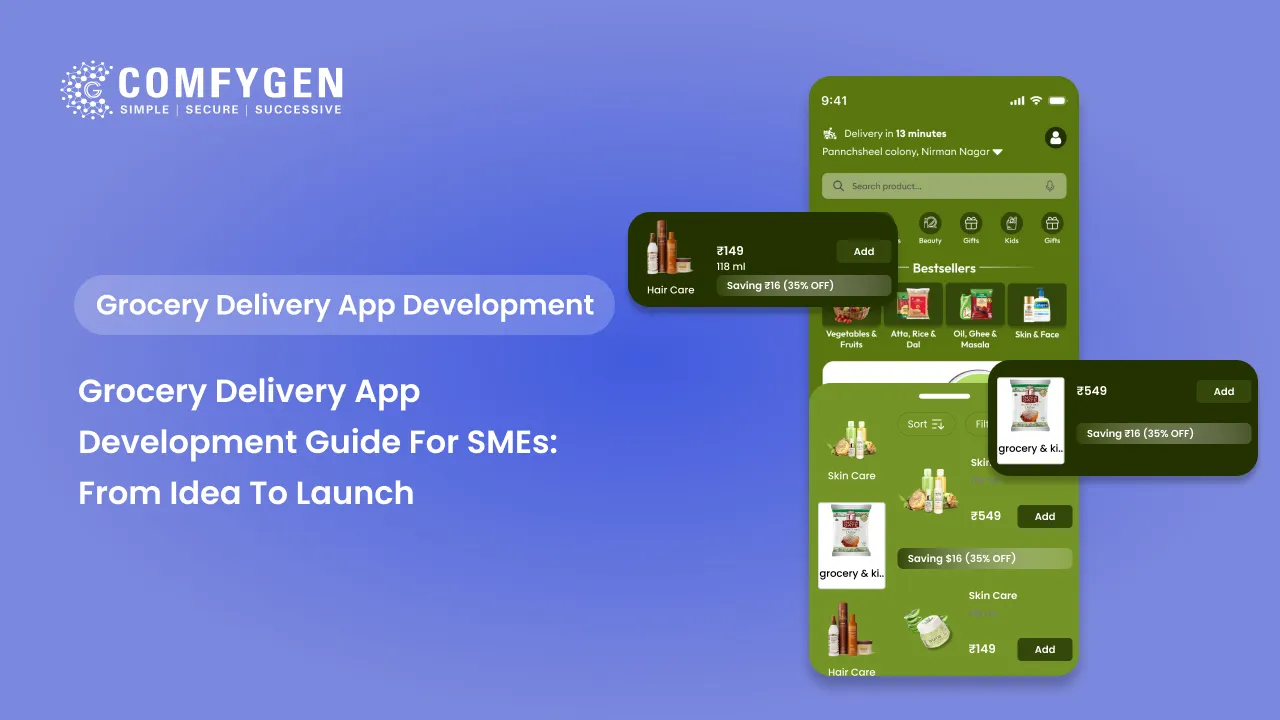





For SMEs, new entrepreneurs, and even large organizations, this shift opens up huge possibilities. Whether it’s grocery delivery app development for startup ideas or grocery delivery app development for enterprises looking to expand their digital presence, the opportunity is massive. More businesses are now looking to collaborate with experienced partners like Comfygen Technologies, a leading grocery delivery app development company, to build scalable and feature-rich grocery apps that match modern customer expectations.
This growth isn’t slowing down. Analysts predict that the online grocery industry will cross trillions of dollars in global revenue before 2030, fueled by increasing smartphone penetration, fast delivery expectations, and the convenience of doorstep shopping. In many regions, quarterly data reveals double-digit growth in online grocery sales, especially in delivery-based models, which are expanding faster than pickup or in-store options.
For SMEs and new entrepreneurs, this shift opens up huge possibilities. More businesses are now looking to collaborate with experienced partners like Comfygen Technologies, a leading grocery delivery app development company, to build scalable and feature-rich grocery apps that match modern customer expectations.
If you want to create an entirely new on-demand grocery platform or enhance an existing system, understanding the right development process is essential. With instant delivery, smart automation, and personalized shopping experiences becoming the new normal, grocery app development demands a strategic approach.
In this guide, we’ll walk you through the complete journey—from researching the market and shaping your business model to choosing features, tech stacks, and launching your app successfully. This Grocery Delivery App Development Guide will equip you with everything you need to build a competitive, future-ready grocery application.
What is a grocery delivery app?
A grocery delivery app is a mobile or web-based application that allows users to browse, order, and receive groceries at their doorstep. Instead of visiting a physical store, customers can explore products, compare prices, add items to their cart, select delivery time slots, and make online payments—all through the app.
These apps connect three major components:
1. Customers
They place orders, track deliveries, and manage payments.
2. Grocery Stores or Sellers
They manage inventory, pricing, product listings, and order fulfillment.
3. Delivery Partners
They pick up orders from stores and deliver them to customers in real time.
Grocery delivery apps often include features like:
- Product search & filtering
- Digital payments
- Live delivery tracking
- Order scheduling
- Offers & discounts
- Smart recommendations
Today, businesses partner with a grocery delivery app development company like Comfygen Technologies to build reliable, scalable apps that support fast delivery, user-friendly navigation, and seamless shopping experiences.
Why Grocery Delivery Apps Are a Game-Changer for SMEs: Exploring Business Models
The grocery industry is quickly undergoing digital transformation, and grocery delivery apps have appeared as a key driver of growth, especially for small and medium-sized enterprises (SMEs). These apps not only allow businesses to reach a larger customer base but also streamline operations, reduce overhead costs, and increase customer satisfaction.
For SMEs, investing in grocery delivery app development is no longer optional—it’s a strategic move to remain competitive. With the increasing use of smartphones and the growing demand for on-demand grocery delivery, businesses can now operate beyond the limitations of physical stores.
Key Benefits of Grocery Delivery Apps for SMEs
- Expanded Reach: Businesses can serve customers beyond their immediate locality, tapping into a larger audience.
- Enhanced Customer Experience: Features like real-time tracking, easy reordering, and personalized recommendations improve loyalty.
- Operational Efficiency: Automated inventory management, order processing, and delivery tracking reduce manual workload.
- Data-Driven Insights: SMEs can analyze customer behavior, purchase patterns, and preferences to optimize offerings.
- Cost Savings: Digital operations reduce the need for large storefronts and minimize human error in inventory and order management.
Exploring Grocery App Business Models
Understanding the right business model is crucial for SMEs looking to invest in grocery app development. Here are the most popular models:
1. Single-Vendor Model:
- Ideal for local stores and small businesses.
- The app represents a single grocery store, managing its own inventory, orders, and deliveries.
- Simple, cost-effective, and easy to manage.
2. Multi-Vendor Marketplace Model:
- Suitable for entrepreneurs planning large-scale operations.
- Multiple grocery sellers can list products, with the app acting as a centralized marketplace.
- Commissions, featured listings, and subscription plans can be revenue sources.
3. Hyperlocal On-Demand Delivery Model:
- Focuses on fast delivery within a specific locality.
- Often integrated with real-time tracking and AI-based route optimization.
- Perfect for SMEs aiming to provide same-day or instant grocery delivery.
Partnering with a professional grocery delivery app development company like Comfygen Technologies ensures that SMEs can choose the right business model, implement essential features, and scale their operations efficiently.
By adopting these models, SMEs not only improve profitability but also create a seamless shopping experience for their customers, positioning themselves as competitive players in the rapidly growing online grocery market.
Grocery delivery app development costs
The cost of developing a grocery delivery app depends on several factors, including the app’s features, design complexity, development approach, and the experience level of the development team. For SMEs and startups, understanding these cost components is crucial for planning a realistic budget and avoiding unexpected expenses.
1. Key Factors That Influence Grocery Delivery App Development Cost
App Type & Business Model
The complexity of your business model significantly impacts development cost:
- Single-vendor grocery app → Lower cost
- Multi-vendor marketplace → Higher cost due to additional features like vendor dashboards
- On-demand hyperlocal model → Requires real-time tracking, increasing development time and cost
Features and Functionalities
Basic grocery apps with essential features are more affordable, while advanced features raise the total cost:
- Basic Features: User login, product listing, cart, payment, order tracking
- Advanced Features: AI recommendations, subscription plans, route optimization, wallet system, multi-language support
More features = More development hours = Higher cost.
Platforms (Android, iOS, or Both)
Developing for:
- Android only → lower cost
- iOS only → moderate cost
- Both platforms → almost double the cost unless you use cross-platform technologies like Flutter
UI/UX Design
Modern grocery apps demand intuitive interfaces, smooth navigation, and attractive mobile design.High-quality UI/UX increases the overall budget but ensures better user experience and higher retention.
Technology Stack
Using advanced technologies, APIs, and backend frameworks (Node.js, Python, Flutter, AWS) can affect overall pricing.
Backend Development
A strong backend is essential for managing:
- Inventory
- Orders
- Delivery operations
- Payments
- Notifications
The more scalable and secure the backend, the higher the cost.
Location and Expertise of the Development Team
Development cost differs based on the region:
- India (Affordable)
- USA, Canada, UK (High cost)
This is why many SMEs prefer working with companies like Comfygen Technologies, known for high-quality yet cost-effective grocery app solutions.
2. Approximate Cost Breakdown (Estimated Range)
The cost can vary widely based on the scope:
(Prices may vary based on feature customizations, integrations, and specific business needs.)
| Type of Grocery App | Estimated Development Cost |
| Basic Grocery App | $8,000 – $15,000 |
| Mid-Level App with Add-on Features | $15,000 – $30,000 |
| Advanced Multi-Vendor Grocery App | $30,000 – $60,000+ |
3. Hidden or Additional Costs to Consider
Planning for these in advance can save SMEs from sudden financial strain. Beyond development, there are other essential expenses:
- App maintenance (15–20% annually)
- Server hosting charges
- Third-party API integrations (payment, SMS, Google Maps)
- UI/UX redesign or upgrades
- Marketing and app store optimization
4. How Comfygen Technologies Helps Reduce Development Cost
Partnering with Comfygen Technologies, a leading grocery delivery app development company in India, can significantly lower your overall investment because:
- They offer cost-effective development packages
- They use pre-built modules to reduce time and cost
- They provide end-to-end support, reducing third-party expenses
- Their expert developers ensure fewer errors and faster delivery
Understanding Grocery Delivery App Development: A Complete Guide
This comprehensive Grocery Delivery App Development Guide breaks down each part of the process to help SMEs understand what it takes to launch a successful grocery app.
Before starting development, SMEs must define their idea, target audience, service model, and growth expectations.
Step 1: Market Research & Niche Selection
The first step in grocery app development is to understand your customer base and local competitor landscape.
What to Analyze:
- Local customer needs
- Gaps in existing grocery apps
- Competitor pricing & delivery models
- Most demanded grocery categories
- User behavior insights
Choosing the right niche helps SMEs position themselves correctly in the market.
Step 2: Choosing the Right Grocery App Development Model
The business model you choose decides the features, cost, and complexity of development.
Types of Grocery Delivery App Models:
1. Single-Vendor Grocery App
Suitable for:
- Local stores
- SMEs with one physical location
2. Multi-Vendor Marketplace
Perfect for:
- Entrepreneurs planning a large platform
- SMEs wanting to onboard multiple sellers
3. Hyperlocal Delivery Model
Best for:
- Locality-specific delivery services
- Quick commerce solutions
- Fast delivery businesses
Comfygen Technologies specializes in on demand grocery delivery app development for startup models—custom-tailored to SME budgets and goals.
Step 3: Must-Have Features in a Grocery Delivery App
Your app must offer a smooth customer experience to stand out. Feature-rich apps attract users and improve retention.
Customer App Features
- User-friendly onboarding
- Smart search & category filtering
- live cart management
- Multiple secure payment options
- Smart product suggestions
- Delivery time slots
- live delivery tracking
- Order history & repeating orders
- Push notifications & deals
Store Admin Panel Features
- Inventory management
- Order management system
- Pricing & discount control
- Customer support panel
- Analytics dashboard
Delivery Partner App Features
- Quick registration
- Delivery request management
- Route & map integration
- Earnings tracker
When you hire a grocery delivery app developer from Comfygen Technologies, you get a solution that includes all essential modules required for efficient daily operations.
Step 4: Advanced Features to Stay Ahead of Competitors
To beat industry giants, SMEs must integrate premium features that ensure speed, convenience, and personalization.
Advanced Features
- AI-driven product recommendations
- Voice-enabled product search
- Multi-language support
- Subscription models for daily essentials
- In-app loyalty rewards
- Barcode scanning
- Automated inventory sync
- Multiple seller dashboards
- Secure digital wallet integration
These features give SMEs a competitive edge, helping them attract more customers and increase order frequency.
Step 5: Choosing the Right Tech Stack
A robust tech stack ensures your app performs smoothly even during peak hours.
Recommended Tech Stack for Grocery App Development
Frontend:
- React Native
- Flutter
- Kotlin
- Swift
Backend:
- Node.js
- Python
- Laravel
Databases:
- MongoDB
- PostgreSQL
- MySQL
Cloud & Deployment:
- AWS
- Google Cloud
- Azure
APIs & Integrations:
- Payment gateways
- Maps & navigation APIs
- SMS/Email services
Comfygen Technologies uses the latest technologies to build secure, scalable, and fast grocery delivery platforms.
Step 6: QA testing and performance optimization
Quality Assurance (QA) Testing and Performance Optimization are among the most critical stages in grocery delivery app development guide for enterprises. Before your app goes live, it must be thoroughly tested to ensure it delivers a smooth, error-free, and secure experience to users. This step helps SMEs avoid technical failures, negative customer feedback, and costly post-launch fixes.
1. Functional Testing
Functional testing verifies that the complete customer journey is seamless from start to finish. This ensures every app feature works exactly as intended. QA teams check:
- User registration & login
- Product browsing and search
- Cart & checkout process
- Payment gateway functionality
- Order placement and tracking
2. UI/UX Testing
A smooth UI/UX increases customer satisfaction and boosts conversions. The user interface must be intuitive and easy to navigate. Testers analyze:
- Screen responsiveness
- Consistency in icons, buttons, and layouts
- Ease of browsing categories
- Accessibility for all age groups
3. Performance Testing
Performance optimization ensures the app can handle real-world usage without lagging or crashing. This includes:
- Load testing – checking how the app behaves with heavy traffic
- Speed optimization – ensuring pages load within seconds
- Stress testing – verifying stability during peak hours
- Battery & resource usage – ensuring the app doesn’t drain mobile resources
For SMEs, this is crucial because even a few seconds of delay can lead to abandoned carts and lost orders.
4. Security Testing
Security testing protects the app from vulnerabilities such as data breaches or unauthorized access. Since grocery apps handle sensitive data, security is non-negotiable. This involves:
- Encryption check
- Secure payment gateway validation
- Data protection compliance
- Firewall and API security testing
5. Bug Fixing and Optimization
After fixes, the app undergoes retesting to ensure everything works perfectly. Once issues are identified, developers fix bugs and optimize the code for:
- Faster performance
- Better scalability
- Improved stability
How to Hire the Best Grocery Delivery App Developer
Choosing the right developer determines the success of your app. SMEs often prefer outsourcing because it is more cost-effective than hiring an in-house tech team. Comfygen Technologies provides expert grocery delivery app developers who specialize in building feature-rich, secure, and future-ready grocery applications.
Qualities of a Good Grocery App Developer:
- Strong knowledge of mobile app frameworks
- Experience in building on demand grocery delivery app development solutions
- Familiarity with UI/UX principles
- Experience with APIs and third-party integrations
- Ability to build scalable admin and delivery modules
Why Choose Comfygen Technologies for Grocery App Development?
Comfygen Technologies is one of the most trusted names in grocery delivery app development company, offering fast, scalable, and cost-effective solutions for SMEs and startups. If you need a fully custom platform or a ready-made white-label grocery delivery app, Comfygen delivers high-quality results that help businesses launch quickly and grow sustainably.
Key Reasons to Choose Comfygen:
1. End-to-End Development Expertise
From idea validation to launch, Comfygen handles everything—design, development, testing, and deployment.
2. Ready-to-Launch White-Label Solutions
Launch your grocery app fast with customizable white-label templates designed for quick branding and low-cost deployment.
3. Skilled Grocery App Developers
Experienced developers build secure, scalable apps using modern technologies like Flutter, Node.js, and React Native.
4. Feature-Rich & User-Friendly Apps
Comfygen focuses on smooth UI/UX, real-time tracking, multiple payments, inventory automation, and smart recommendations.
5. Affordable & Transparent Pricing
SMEs benefit from cost-effective packages, flexible hiring, and zero hidden charges.
6. Strong QA & Performance Optimization
Every app is tested for speed, stability, and security to ensure error-free performance.
7. Ongoing Maintenance & Support
Comfygen provides continuous updates, bug fixes, and technical support to keep your app running seamlessly.
Case Study: Building a Grocery Delivery App for a Client
A recent client approached Comfygen Technologies with a simple request — they wanted a grocery delivery app similar to Blinkit, with fast delivery features, live tracking, and a clean, user-friendly interface. The client had already explored multiple options in the market but wasn’t able to find a trustable development partner.
After understanding their business requirements, target audience, delivery model, and design expectations, our team created a complete strategy and development plan.
What We Delivered:
- A fully functional grocery delivery app like blinkit
- Ultra-fast product browsing and seamless order placement
- Live delivery tracking with GPS integration
- Smart cart management & instant checkout
- Store dashboard for inventory and pricing
- Delivery partner app for efficient order handling
- Admin panel for end-to-end operations control
Using the latest technologies and our ready-to-customize grocery app modules, we completed the project within the client’s timeline and budget. The final app offered high performance, smooth UI/UX, and all the features needed for a modern grocery delivery platform.
The client was extremely satisfied with the speed of delivery, app quality, and the scalable architecture we developed. Their app successfully launched in the local market and is now expanding to more locations.
Comfygen Technologies continues to support the client with updates, optimization, and new feature integrations—helping them grow just like successful platforms in the quick-commerce industry.
Conclusion
The rising demand for online grocery services makes this the ideal time for SMEs to launch their own grocery delivery app. With the right strategy, features, and technology, you can expand your customer base, streamline operations, and compete confidently in the digital marketplace.
Comfygen Technologies offers reable, affordable, and scalable grocery app solutions—if you’r need a custom build or a ready-made white-label platform.
Ready to build your grocery delivery app? Contact Comfygen Technologies today and turn your idea into a powerful digital business!

Mr. Saddam Husen, (CTO)
Mr. Saddam Husen, CTO at Comfygen, is a renowned Blockchain expert and IT consultant with extensive experience in blockchain development, crypto wallets, DeFi, ICOs, and smart contracts. Passionate about digital transformation, he helps businesses harness blockchain technology’s potential, driving innovation and enhancing IT infrastructure for global success.