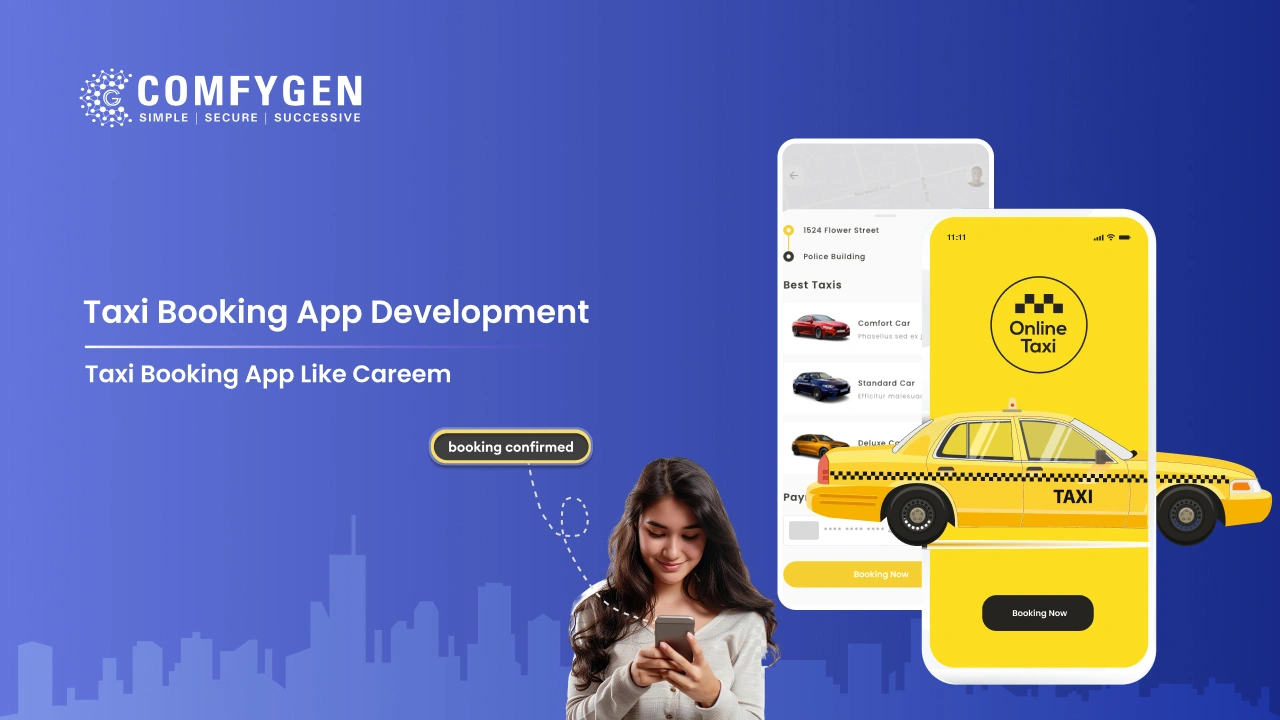
The demand for ride-hailing services is rapidly growing, especially in regions like the UAE and broader MENA market, where platforms like Careem have transformed urban mobility. If you’re planning to develop a taxi booking app like Careem, you’re entering a high-potential industry driven by convenience, digital adoption, and on-demand services.
However, building a successful ride-hailing platform requires more than just an idea. Entrepreneurs and businesses today are actively searching for insights into taxi booking app development cost, essential features, technology stack, and the right taxi booking app development partner before making an investment decision. Whether you want to build a ride-hailing app like Careem or Uber, or launch a fully customized Careem clone app, understanding these critical factors is key to long-term success.
In this blog, we’ll walk you through everything you need to know—from taxi booking app development cost and must-have features to advanced functionalities, regional considerations for the MENA ride-hailing market, and how to choose the best taxi app development company. By the end, you’ll have a clear roadmap to build, launch, and scale a competitive taxi booking app like Careem.
Why Develop an App Like Careem? Market Size & Opportunity in 2026
The ride-hailing industry is entering a high-growth phase in 2026, making it one of the most profitable sectors for startups and enterprises investing in digital mobility solutions. If you’re planning to build a taxi booking app like Careem, the market data clearly shows strong demand, rapid expansion, and long-term scalability.
Massive Market Growth in MENA & UAE
The Middle East and Africa (MEA) ride-hailing market is expected to grow at a CAGR of nearly 18.8% from 2026 to 2033, reaching over $10.9 billion by 2033.
At the same time, the broader MENA region is projected to reach over 145 million users by 2030, highlighting massive adoption of app-based mobility services.
The UAE stands out as a key growth hub, with high smartphone penetration (around 80%) and a rapidly expanding user base, expected to surpass 4 million ride-hailing users by 2028.
High Revenue Potential & Proven Business Model
Apps like Careem have already validated the business opportunity. With billions in annual revenue and consistent growth driven by mobility, delivery, and fintech services, the Careem clone app model offers multiple monetization streams, such as:
How Does Careem’s Business Model Work?
Understanding how Careem operates is essential if you plan to develop a taxi booking app like Careem or launch your own Careem clone app. Its business model is built on a scalable, multi-service platform that connects users, drivers, and businesses while generating revenue through multiple streams.
1. Aggregator-Based Ride-Hailing Model
At its core, Careem follows an aggregator model, where it connects passengers with nearby drivers through a mobile app. The platform does not own vehicles—instead, it enables independent drivers to register, accept ride requests, and earn income.
This model is widely used in taxi app development because it is:
2. Commission-Based Revenue System
The primary revenue stream comes from ride commissions, where the platform charges drivers a percentage (typically 15–25%) on each completed trip.
For businesses looking to develop a taxi booking app like Careem, this ensures:
3. Dynamic Pricing & Surge Model
Careem uses dynamic pricing (surge pricing) based on demand, traffic, and driver availability. During peak hours or high-demand situations, fares automatically increase.
This feature is a must-have in on-demand taxi app features because it:
4. Multi-Service (Super App) Expansion
Careem has evolved beyond ride-hailing into a super app, offering services like:
5. Subscription & Loyalty Programs
Careem also generates revenue through subscription models like Careem Plus, where users pay a monthly fee to access benefits such as:
-
Discounted rides
-
Free delivery services
-
Exclusive offers
6. In-App Advertising & Partnerships
The platform collaborates with brands and local businesses to offer in-app promotions and advertisements, creating an additional revenue stream.
For startups targeting the MENA ride-hailing app development market, this is a valuable strategy to:
-
Increase monetization
-
Build local partnerships
-
Enhance user engagement
Why Invest in a Careem-Like Taxi App in 2026
Investing in a taxi booking app like Careem in 2026 offers strong potential, driven by clear market shifts. Smartphone adoption continues to grow across the Middle East, South Asia, and other emerging regions, making mobile apps the go-to choice for on-demand transportation. At the same time, increasing traffic congestion and fast-paced urban lifestyles are pushing more people toward ride-hailing services for daily travel.
What this really means is the opportunity goes beyond rides. The rise of super apps is opening doors to combine taxi booking services with digital payments, deliveries, and other everyday needs within a single platform. Add to that growing government support for smart mobility and digital transport systems, and businesses have the right environment to launch compliant, scalable, and future-ready taxi booking apps.
| Service |
Potential User Coverage (% of urban smartphone users) |
Target Users (in millions) |
Monthly Revenue per User (USD) |
Potential Monthly Revenue (USD Million) |
| Ride-Hailing |
30–50% |
5–7 |
50–70 |
12–15 |
| Food Delivery |
20–35% |
3–5 |
30–50 |
4–6 |
| Grocery Delivery |
10–20% |
1–3 |
30–50 |
1–2 |
| Digital Payments |
25–40% |
4–6 |
5–10 (fees) |
0.5–1 |
| Bike & Car Rentals |
5–10% |
0.5–1 |
40–60 |
0.5–1 |
| Delivery Services |
10–15% |
1–2 |
20–40 |
0.2–0.8 |
| Rewards & Loyalty |
All active users |
10+ |
Indirect |
Indirect |
Let’s build a Careem-like taxi app that’s scalable, reliable
and built for real users. Get in touch and start your journey today.
Get a Free Quote
Key Features Required to Build a Taxi Booking App Like Careem
Creating a successful taxi booking app like Careem requires a well-structured set of features for users, drivers, and administrators. Each panel plays a crucial role in ensuring smooth operations, safety, and a seamless experience.
1. User App Features
The user app is the primary interface for passengers. Essential features include:
- User Registration & Profile: Easy signup via email, phone, or social media with secure profile management.
- Real-Time GPS Tracking: Allows users to locate nearby drivers and track rides in real time.
- Fare Estimation: Provides an upfront cost estimate based on distance, ride type, and surge pricing.
- Multiple Payment Options: Supports credit/debit cards, mobile wallets, and cash payments.
- Ride Scheduling: Enables booking rides instantly or scheduling for a later time.
- Ratings & Reviews: Users can rate drivers and provide feedback to maintain service quality.
2. Driver App Features
The driver app empowers driver-partners to manage rides and earnings efficiently. Key features include:
- Driver Onboarding & Verification: Collects documents, performs background checks, and verifies eligibility.
- Ride Request Management: Accept or reject ride requests with real-time notifications.
- Navigation & Route Optimization: Guides drivers with GPS-based directions and traffic-aware routing.
- Earnings Dashboard: Displays daily, weekly, and monthly earnings along with ride statistics.
- In-App Chat/Call: Allows secure communication between drivers and passengers.
3. Admin Panel Features
The admin dashboard provides full control over the platform for smooth operations:
- User & Driver Management: Manage accounts, verify profiles, and handle disputes.
- Ride Analytics: Monitor ride patterns, peak hours, and performance metrics.
- Commission & Payout Management: Calculate commissions, process driver payouts, and track financials.
- Promo Codes & Offers: Create discounts, loyalty programs, and marketing campaigns.
- Dispute Resolution: Manage complaints, cancellations, or ride-related issues efficiently.
How Much Does It Cost to Develop a Taxi App Like Careem?
The cost of Careem clone app development for startups and businesses entering the ride-hailing market depends on several factors, including feature set, app complexity, technology stack, and the location of the development team. While basic versions require a lower investment, advanced apps with real-time tracking, multiple payment options, and scalable infrastructure naturally increase development costs.
| Type |
Features |
Estimated Cost (USD) |
| MVP |
Basic user & driver app, admin panel, GPS, payment |
$25,000 – $40,000 |
| Full-Feature App |
Multi-language support, wallet, AI ride matching, in-app chat, loyalty programs |
$70,000 – $120,000 |
| Maintenance (Annual) |
Server hosting, updates, bug fixes, scaling |
15–20% of development cost |
MVP Cost Breakdown
For a Minimum Viable Product (MVP) with essential features—user registration, ride booking, real-time tracking, basic payments, and admin panel—the estimated cost ranges between $25,000 to $40,000. This budget typically covers:
- Core user and driver app development
- Basic admin panel setup
- GPS and map integration
- Standard payment gateway integration
Full-Feature App Cost
A fully-featured taxi booking app, including advanced functionalities like multi-language support, wallet integration, ride scheduling, AI-based ride matching, in-app chat, and loyalty programs, can cost between $70,000 to $120,000. This estimate also includes:
- Advanced analytics and reporting in admin panel
- Surge pricing and dynamic fare calculation
- Cloud infrastructure for scalability
- Security enhancements and GDPR/regional compliance
Regional Pricing (Middle East vs Asia)
Development costs differ based on geography:
- Middle East & North America: $70–$120 per hour due to higher developer rates.
- Asia (India, Pakistan, Bangladesh): $25–$50 per hour, offering more affordable development without compromising quality.
Maintenance & Scaling Costs
Post-launch, ongoing expenses include server hosting, regular updates, bug fixes, and scaling infrastructure as the user base grows. Annual maintenance typically costs 15–20% of the initial development budget.
Technology Stack to Build a Careem-Like Taxi App
Building a taxi booking app like Careem requires choosing the right technology stack to ensure performance, scalability, and a smooth user experience. Here’s a breakdown of the most commonly used technologies:
| Component |
Technology Options / Tools |
Purpose |
| Frontend (User & Driver App) |
React Native, Flutter |
Cross-platform mobile app development |
| Backend |
Node.js, Laravel, Django |
Server-side logic, APIs, and app functionality |
| Database |
PostgreSQL, MongoDB, Firebase Realtime Database |
Storing user, driver, and ride data |
| Maps & Location |
Google Maps API, Mapbox |
Real-time GPS tracking, route optimization |
| Payments |
Stripe, PayTabs, PayPal, Apple Pay |
Secure digital payments |
| Notifications |
Firebase Cloud Messaging (FCM), Twilio |
Push notifications, SMS, and in-app alerts |
| Cloud Hosting & Scaling |
AWS, Google Cloud, Microsoft Azure |
Cloud infrastructure, load balancing, scaling |
| Analytics & Reporting |
Google Analytics, Mixpanel, Firebase Analytics |
Monitor app performance, user behavior, and KPIs |
| AI & Machine Learning |
TensorFlow, Python ML libraries |
Dynamic pricing, predictive ride matching |
| Security |
JWT, OAuth 2.0, SSL/TLS |
User authentication, secure data transmission |
Step-by-Step Process to Build a Taxi Booking App Like Careem
Developing a taxi booking app like Careem requires a tested development process that combines market overview, strong technology, and regional compliance. Below is a clear, End-to-End Taxi booking app development process followed by successful ride-hailing platforms.
| Step |
Phase |
Key Focus |
| 1 |
Market Research & Geo Analysis |
Analyze target regions (UAE/MENA), understand local regulations, user behavior, payment preferences, and ride demand trends |
| 2 |
Features Planning & Monetization |
Define ride types, essential on-demand taxi app features, and revenue models like commissions, subscriptions, and surge pricing |
| 3 |
UI/UX Design |
Design a seamless and intuitive interface with multi-language support (Arabic & English) for better user engagement |
| 4 |
App Development |
Develop rider app, driver app, and admin panel with real-time tracking, secure payments, and API integrations |
| 5 |
Testing & Quality Assurance |
Perform rigorous testing to ensure app performance, security, scalability, and a bug-free user experience |
| 6 |
Launch & Scaling |
Deploy on app stores, implement ASO strategies, scale with cloud infrastructure, and continuously optimize performance |
Step 1: Market Research & Regional Insights
The success of a taxi booking app begins with strong market research and geographic understanding. Since ride-hailing regulations and user expectations differ across regions, this step focuses on aligning the app with both legal requirements and local user behavior.
- Regulations & Compliance: Follow local transport, licensing, and data privacy laws.
- Target Market: Study ride demand and peak hours in the UAE and KSA
- User Preferences: Understand ride types, pricing, wait times, and service quality.
- Payment Methods: Support cash, digital wallets, and online payments.
- Culture & Language: Tailor the app experience to local norms and languages
Step 2: Feature Planning & Monetization Strategy
After completing market and regional analysis, the focus shifts to defining the app’s core features and revenue model. This step plays a critical role in shaping how the taxi booking app functions, earns revenue, and competes in the local market.
- Ride Categories: Offer options like economy, premium, corporate, shared, or women-only rides based on demand.
- Core Features: Include real-time tracking, fare estimates, in-app chat/calls, ratings, SOS safety, and multi-language support.
- Driver & User Experience: Provide flexible availability, earnings dashboards, incentives, and easy ride management.
- Monetization: Plan revenue through commissions, surge pricing, subscriptions, cancellation fees, and in-app ads.
- Cost & Scalability: Focus on essential features to control costs and ensure future growth.
- Time-to-Market: A clear feature roadmap speeds up development and launch.
Step 3: Intuitive UI/UX Design
An intuitive and visually appealing UI/UX design is a major success factor for any taxi booking app. In a highly competitive ride-hailing market, users expect a fast, smooth, and hassle-free booking experience. This step focuses on creating an interface that feels natural, responsive, and easy to use for all types of users.
- Simple & Clean Interface: Use clear icons, readable fonts, and logical navigation for easy ride booking.
- Quick Booking Flow: Minimize steps from pickup to payment for faster bookings.
- User-Friendly Navigation: Smooth transitions, easy access to ride history, saved locations, and tracking.
- Bilingual Support: Offer Arabic and English for broader Middle Eastern accessibility.
- Consistent Experience: Ensure uniform design and performance across devices and platforms.
- Accessibility: Include readable text, clear contrast, and easy touch interactions for all users.
Step 4: Robust App Development
This stage transforms the idea into a fully functional taxi booking platform. Development focuses on building a secure, scalable, and high-performance system that delivers a smooth experience for riders, drivers, and administrators alike.
- Rider App: Seamless booking with ride requests, real-time tracking, fare estimates, multiple payments, ride history, and notifications.
- Driver App: Manage ride requests, navigate efficiently, track earnings, set availability, and get instant updates.
- Admin Dashboard: Control center to manage drivers, monitor rides, configure fares, handle disputes, track revenue, and analyze performance.
- API & Integrations: Connect mapping services, payment gateways, and notifications for real-time data and secure transactions.
- Scalable Backend: Handles high traffic, real-time ride matching, and fast, reliable data processing.
- Security & Data Protection: Protects user data and payments with encryption and secure authentication.
Step 5: Testing & Quality Assurance
Before launching the taxi booking app to real users, rigorous testing and quality assurance processes are carried out to ensure the platform performs flawlessly under all conditions. This step focuses on delivering a stable, secure, and high-quality user experience across regions and devices.
- Functional Testing: Ensure all features—ride booking, payments, notifications, tracking, and cancellations—work correctly for riders, drivers, and admins.
- Performance & Load Testing: Test the app under high traffic and surge demand to prevent crashes or delays.
- Security Testing: Protect user data, payments, and transactions from cyber threats.
- Usability Testing: Confirm smooth navigation and intuitive experience across devices and regions.
- Compatibility Testing: Maintain consistent performance on different OS, devices, and network conditions.
- Bug Fixing & Optimization: Resolve issues, improve speed, and enhance overall performance.
- Quality Validation: Final checks to ensure compliance, standards, and user expectations are met.
Step 6: Launch, Growth & Scaling
After successful testing and quality validation, the taxi booking app is ready to enter the market. This stage focuses not only on launching the app but also on ensuring long-term growth, scalability, and competitive performance in the ride-hailing industry.
- App Store Launch & ASO: Publish on major stores with optimized titles, descriptions, keywords, screenshots, and reviews to boost visibility and downloads.
- Smooth Market Entry: Plan a stable launch with backend support, driver onboarding, and promotional campaigns.
- Cloud Infrastructure & Scalability: Use cloud-based systems to manage growing user traffic and real-time ride requests.
- Performance Monitoring: Track server load, crashes, and user activity to maintain service quality.
- Post-Launch Updates: Release regular updates to fix bugs, improve performance, and add features.
- User Retention & Growth: Use loyalty programs, referrals, promotions, and driver incentives to encourage repeat use.
- Long-Term Competitiveness: Analyze data and regional trends to refine services, expand locations, and stay ahead in the market.
How Long Does It Take to Build a Ride-Hailing App?
The time required to build a ride-hailing app like Careem or Uber depends on several factors, including app complexity, feature set, technology stack, and the development approach you choose. On average, a fully functional taxi booking app like Careem can take anywhere from 3 to 9 months to design, develop, and launch.
Development Timeline Breakdown
Here’s a realistic phase-wise estimate for taxi app development:
-
Planning & Requirement Analysis (1–2 weeks):
Defining business goals, target audience (e.g., UAE or MENA market), and finalizing core features.
-
UI/UX Design (2–4 weeks):
Creating intuitive designs for rider, driver, and admin panels to ensure a seamless user experience.
-
App Development (8–16 weeks):
Building core functionalities such as booking, real-time tracking, payment integration, and notifications.
-
Testing & QA (2–3 weeks):
Ensuring the app is bug-free, secure, and optimized for performance across devices.
-
Deployment & Launch (1–2 weeks):
Publishing the app on platforms and setting up backend infrastructure.
Timeline Based on App Type
-
Basic MVP (Minimum Viable Product): 3–4 months
Includes essential features like ride booking, driver matching, and payments. Ideal for startups validating their idea.
-
Mid-Level App: 5–7 months
Adds features like real-time tracking, fare estimation, and push notifications.
-
Advanced App / Careem Clone App: 7–9+ months
Includes AI-based dispatch, multi-service modules, analytics dashboard, and scalability features for the MENA ride-hailing market.
How to Choose the Right Taxi App Development Company
Choosing the right development partner is key to building a successful taxi booking app like Careem. Comfygen Technologies stands out with its proven expertise in developing ride-hailing apps, deep knowledge of Middle Eastern markets, and experience in delivering scalable, future-ready solutions.
They offer end-to-end support from app design and development to post-launch maintenance, ensuring your Careem-like taxi booking app is compliant, user-friendly, and efficient at handling high volumes of rides. With Comfygen, businesses can confidently launch a robust, market-ready taxi app that meets regional demands.
Conclusion
Investing in a Careem-like taxi app in 2026 offers immense growth potential. With Comfygen Technologies as your Taxi booking App Development partner, you get end-to-end support from app design and development to post-launch maintenance, ensuring a user-friendly, compliant, and scalable ride-hailing platform.
FAQ
How much does it cost to develop a taxi booking app like Careem?
The cost to develop a taxi booking app like Careem typically ranges from $15,000 to $80,000+, depending on the complexity of features, platform (iOS, Android, or both), and the development team's location. A basic MVP with core features like booking, GPS tracking, and payments may cost $15,000–$30,000, while a full-featured app with admin panel, analytics, and multi-city support can go up to $80,000–$150,000 or more. Development companies in India (like Comfygen) offer the same quality at 40–60% lower cost compared to US or European firms.
How long does it take to build a taxi app like Careem?
Building a taxi booking app like Careem typically takes 4 to 9 months from start to launch. A basic MVP can be delivered in 3–4 months, while a fully-featured, production-ready app with a driver app, passenger app, and admin panel generally takes 6–9 months. The timeline depends on the number of features, design complexity, integrations (payment gateways, maps, SMS), and the size of the development team.
What are the must-have features of a taxi app like Careem?
A Careem-like taxi app requires three separate panels, each with its own feature set:
Passenger App: Real-time ride booking, GPS-based driver tracking, fare estimation, multiple payment options (card, cash, wallet), ride history, in-app chat and SOS button, ride scheduling, and ratings & reviews.
Driver (Captain) App: Trip requests and acceptance, navigation with turn-by-turn directions, earnings dashboard, document upload for verification, online/offline toggle, and in-app support.
Admin Panel: User and driver management, real-time ride monitoring, dynamic pricing (surge), promo code management, revenue analytics, dispute management, and push notification control.
What technology stack is used to build a Careem-like app?
A modern ride-hailing app like Careem typically uses the following tech stack:
- Frontend (Mobile): React Native or Flutter for cross-platform iOS and Android development
- Backend: Node.js or Python (Django) for high-performance server logic
- Database: MongoDB or PostgreSQL for scalable data storage
- Real-Time Features: Socket.io for live tracking and instant notifications
- Maps & Navigation: Google Maps API or Mapbox
- Payments: Stripe, PayPal, or regional gateways (PayTabs for MENA)
- Cloud Hosting: AWS or Google Cloud for scalability and reliability
- SMS/OTP: Twilio or Firebase Authentication
What is the difference between building a Careem clone and a custom taxi app?
A Careem clone is a pre-built, white-label solution that replicates Careem's core functionality. It is faster to launch (2–6 weeks) and cheaper ($3,000–$10,000), but offers limited customization, shared codebases, and less competitive differentiation. A custom taxi app is built from scratch to your exact specifications — your branding, unique features, proprietary algorithms, and full scalability. Custom development costs more and takes longer, but it is the only viable path if you plan to scale, raise investment, or build a defensible market position.