In today’s highly competitive and technology-driven business environment, organizations need efficient systems to manage their daily operations, data flow, and decision-making processes. Manual workflows and disconnected tools often lead to errors, delays, and limited visibility across departments. To overcome these challenges, many businesses choose to develop a ERP software solution, as ERP software development enables them to centralize critical functions such as finance, human resources, inventory management, sales, procurement, and customer relationships into a single, integrated platform.
Understanding how to develop a ERP software is crucial for businesses aiming to achieve operational efficiency, scalability, and long-term growth. A well-planned enterprise resource planning software solution not only streamlines internal processes but also enhances data accuracy, reporting, and collaboration across teams. This guide provides a comprehensive overview of the ERP software development journey, including market insights, development steps, key features, costs, challenges, and best practices, helping businesses build reliable, secure, and future-ready ERP systems tailored to their unique needs.
Market Stats
The ERP Software Market is booming, valued around $50-98 billion in 2024 and projected to hit $100-$230 billion by 2030-2035, with strong growth (CAGR 11-14%) driven by cloud adoption, digital transformation, and demand for efficiency, especially in Manufacturing, IT, and Healthcare sectors, with North America leading and SMEs increasingly adopting solutions.
Market Size & Growth:
- 2024 Valuation: Estimates range from approximately $50.4 Billion (SkyQuest) to $97.77 Billion (NextMSC).
- 2030/2035 Projections: Forecasts suggest figures like $199.59 Billion (NextMSC, 2030), $229.79 Billion (Fortune, 2032), or even $225.4 Billion (Research Nester, 2035).
- CAGR: Expected growth rates are robust, often between 11.6% and 13.8%.
Key Drivers:
- Cloud Adoption: Huge demand for scalable, cost-effective cloud ERPs (Public, Private, Hybrid).
- Digital Transformation: Government initiatives and business needs for modernization.
- Operational Efficiency: Streamlining supply chains, managing data, and improving decision-making.
- Industry Needs: Manufacturing, Healthcare, IT, Retail, and Finance are key sectors.
What Is ERP Software?
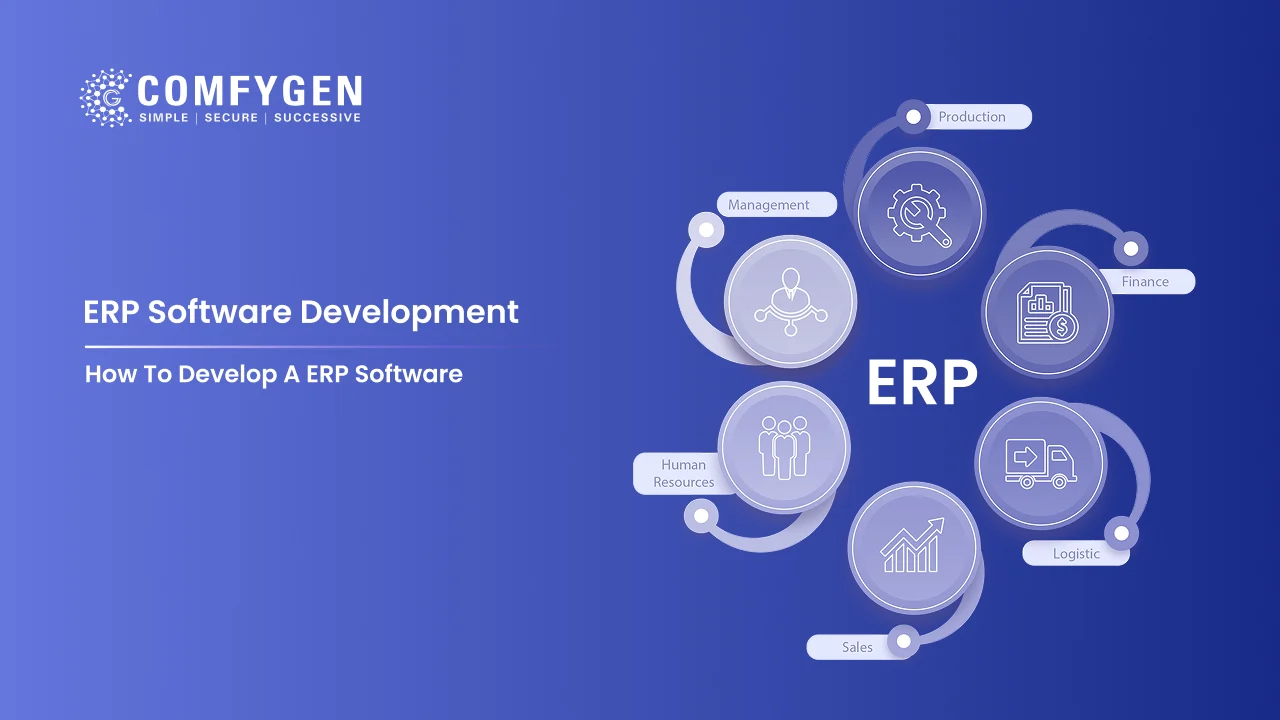
ERP software, also known as enterprise resource planning software, integrates and automates essential business processes such as finance, HR, manufacturing, sales, and supply chain management within a single unified system. Using a centralized database, ERP software solutions eliminate data silos, reduce duplication, and provide real-time insights for accurate decision-making. This business management software enables seamless data flow, improves operational efficiency, and supports scalability, making it a critical solution for startups, SMEs, and large enterprises alike.
Why Businesses Need It
Businesses need ERP (Enterprise Resource Planning) software to centralize operations, automate tasks, and gain real-time insights by integrating finance, HR, manufacturing, sales, and more into a single platform, leading to improved efficiency, better decision-making, reduced costs, enhanced collaboration, and superior customer service, especially as they grow and struggle with disparate systems.
Benefits of Developing Custom ERP Software
Developing a custom ERP software allows businesses to build a system that perfectly aligns with their unique workflows, industry requirements, and growth objectives. Unlike off-the-shelf solutions, custom ERP software development offers greater flexibility, scalability, and control, helping organizations streamline operations and gain long-term value from their investment.
Key Benefits:
- Tailored Functionality: You get only the features and modules relevant to your unique processes, avoiding overpaying for unused functions.
- Increased Productivity & Efficiency: Automates repetitive tasks, integrates departments, reduces manual data entry, and speeds up workflows.
- Scalability & Flexibility: Easily adapts and grows with your business, accommodating new products, teams, or requirements without major overhauls.
- Better Decision-Making: Provides real-time, centralized data and analytics, enabling quicker, more informed strategic decisions.
- Enhanced Data Security & Compliance: Offers greater control over access, permissions, and audit trails, meeting specific regulatory needs.
- Improved User Experience: Designed for your employees, making it easier to learn and use, leading to higher adoption rates.
- Lower Total Cost of Ownership (TCO): Eliminates hefty subscription fees for unused modules, potentially leading to lower long-term costs.
- Product Ownership: Direct control over updates and fixes, reducing reliance on vendor timelines and minimizing business disruptions.
Develop a ERP software to centralize operations and improve efficiency.
Get a Free Quote
Step-by-Step Process to Develop ERP Software
Understanding the ERP software development process and technologies is crucial for building a successful system. Below is a step-by-step guide to develop a ERP software effectively.
1. Requirement Analysis and Business Planning
The first step in ERP system development is understanding business goals, challenges, and operational needs. This phase involves identifying required ERP software modules, user roles, compliance requirements, and future scalability plans.
A well-defined roadmap ensures that the ERP application development aligns with business objectives while minimizing risks and unnecessary development costs.
2. Choosing the Right ERP Modules
Selecting the right ERP software modules is essential for system efficiency. Common modules include finance, accounting, HR, inventory, CRM, procurement, and reporting.
For ERP software for SMEs, it’s important to start with core modules and scale gradually. Custom module selection ensures optimal performance without overcomplicating the system.
3. UI/UX Design for ERP Software
An intuitive UI/UX design improves user adoption and productivity. ERP systems must be easy to navigate, visually clean, and role-based to ensure smooth workflows.
Effective UI/UX design enhances the usability of ERP software solutions, reduces training time, and ensures consistent user engagement across departments.
4. ERP Software Development and Coding
This phase focuses on backend and frontend development using modern frameworks and technologies. Secure APIs, modular architecture, and scalable code are essential for long-term performance.
At Comfygen Technologies, ERP application development follows best coding practices to ensure system reliability, flexibility, and seamless ERP software customization.
5. Testing, Quality Assurance, and Security
Rigorous testing ensures that the ERP system functions flawlessly under real-world conditions. Functional testing, performance testing, and security audits are crucial for data integrity.
Implementing advanced security measures such as role-based access control, encryption, and compliance checks protects sensitive business data and builds system trust.
6. Deployment and System Integration
After testing, the ERP system is deployed either on cloud or on-premise infrastructure. Cloud-based ERP software is increasingly preferred due to its scalability, accessibility, and cost efficiency.
ERP software integration with third-party tools, legacy systems, and payment gateways ensures uninterrupted business operations.
7. Ongoing Maintenance and Support
ERP software development does not end with deployment. Continuous monitoring, updates, performance optimization, and feature enhancements are necessary to keep the system aligned with evolving business needs. Ongoing support ensures smooth operations, system stability, and long-term ROI.
Key Features of ERP Software
ERP software includes a comprehensive set of features designed to streamline business operations and improve organizational efficiency. These features work together to create a centralized and intelligent enterprise resource planning software system that supports growth and data-driven decision-making.
1. Financial Management
The financial management module in ERP software streamlines accounting, budgeting, taxation, invoicing, and financial reporting. It provides real-time visibility into cash flow, expenses, and profitability, ensuring accurate compliance and smarter financial decision-making.
2. Human Resources (HR)
The HR module manages employee data, payroll, attendance, recruitment, and performance tracking. By automating HR processes, ERP software improves workforce management, reduces administrative workload, and enhances employee productivity.
3. Supply Chain Management (SCM)
ERP-enabled supply chain management optimizes procurement, inventory control, logistics, and vendor management. It ensures smooth material flow, minimizes stock shortages, and improves operational efficiency across the supply chain.
4. Customer Relationship Management (CRM)
The CRM module centralizes customer data, sales pipelines, communication history, and support activities. It helps businesses strengthen customer relationships, improve sales performance, and deliver personalized customer experiences.
5. Manufacturing
The manufacturing module supports production planning, scheduling, bill of materials (BOM), quality control, and shop floor management. ERP software enhances production efficiency, reduces wastage, and ensures timely delivery of finished goods.
6. Centralized Data Management
ERP software uses a single, unified database to store and manage business data, ensuring accuracy, consistency, and real-time access across all departments.
7. Real-Time Reporting and Analytics
Advanced reporting tools provide real-time insights, dashboards, and analytics to support faster and more informed business decisions.
8. Cloud and Mobile Accessibility
Modern ERP solutions support cloud deployment and mobile access, enabling flexibility, remote work, and anytime system availability.
Tech Stack for ERP Software Development
Choosing the right tech stack for ERP software development is essential to build a scalable, secure, and high-performing system. A modern ERP solution requires reliable frontend frameworks, robust backend technologies, secure databases, and cloud infrastructure to support effortless Develop a ERP Software integration and long-term scalability.
- Frontend Technologies: Frameworks like React.js, Angular, and Vue.js are commonly used to create responsive, user-friendly, and role-based ERP interfaces that improve usability and user adoption.
- Backend Technologies: Backend development typically involves Node.js, Java, .NET, or Python, enabling secure business logic, API development, and smooth ERP system performance.
- Database Management: Databases such as MySQL, PostgreSQL, MongoDB, and Oracle are used to handle large volumes of structured and unstructured data efficiently.
- Cloud Platforms: Cloud providers like AWS, Microsoft Azure, and Google Cloud support cloud-based ERP software with high availability, scalability, and cost efficiency.
- APIs and Integration Tools: RESTful APIs, GraphQL, and middleware tools ensure seamless integration with third-party systems, CRMs, payment gateways, and legacy software.
- Security and Compliance Tools: Security technologies like SSL encryption, role-based access control, and compliance frameworks protect sensitive business data and ensure regulatory adherence.
Costs and Timelines for ERP Software Development
The cost of ERP software development can range from $30,000 to over $1 million, depending on factors such as system complexity, business size (SMEs or large enterprises), selected modules, level of custom ERP software development, and required third-party integrations. Development timelines typically span several months to over a year, influenced by features, data migration, user training, and implementation processes. Additionally, ongoing maintenance and updates usually account for 15–25% of the initial investment annually, ensuring smooth operation and long-term scalability.
Estimated Costs
Costs for building an enterprise resource planning software can vary widely. Here’s a generalized idea based on typical project scopes:
1. Basic ERP System
- Cost Range: $30,000 – $80,000
- Includes core modules such as finance, HR, inventory, and basic reporting.
- Suitable for small businesses and early-stage Develop a ERP Software for SMEs.
2. Mid-Level Custom ERP
- Cost Range: $80,000 – $180,000
- Adds advanced modules like CRM, SCM, and analytics.
- Includes moderate customization and third-party integration.
3. Advanced/Enterprise ERP
- Cost Range: $180,000 – $500,000+
- Fully customized cloud-based Develop a ERP Software with complex workflows, APIs, compliance, and extensive integration.
- Ideal for large enterprises or industry-specific requirements.
Typical Timelines
The development timeline reflects the phases of the ERP software development process and technologies used. Here’s a general time estimate:
1. Requirement Analysis & Planning
- 2–4 weeks
- Gathering business needs and defining scope.
2. Design (UI/UX)
- 3–6 weeks
- Creating mockups, prototypes, and user flows.
3. Development & Coding
- 12–24+ weeks depending on system complexity.
- Backend coding, frontend interfaces, API integrations, and modules.
4. Testing & QA
- 4–8 weeks
- Functional testing, security tests, user acceptance testing (UAT).
5. Deployment & Integration
- 2–6 weeks
- Cloud/on-premise setup and connecting with external systems.
6. Training & Support
- 1–3 weeks
- User onboarding and knowledge transfer.
| Project Type |
Estimated Cost |
Typical Timeline |
| Basic ERP |
$30K – $80K |
~3–5 months |
| Mid-Level ERP |
$80K – $180K |
~6–9 months |
| Advanced ERP |
$180K+ |
9–15+ months |
Developing an ERP system is a strategic investment, and planning realistic timelines and budgets ensures that Develop a ERP Software delivers strong ROI, better performance, and long-term business value.
Common Challenges in ERP Software Development
Developing a ERP software comes with several challenges that businesses and developers must address to ensure a successful implementation. Understanding these obstacles helps organizations plan better and avoid costly mistakes.
- Complex Integrations
- Data Migration Issues
- User Adoption Resistance
- High Customization Demands
- Security and Compliance
- Cost and Timeline Overruns
By partnering with an experienced ERP software development company like Comfygen Technologies, businesses can mitigate these challenges, implement best practices, and build scalable, secure, and efficient ERP solutions.
How to Choose the Right ERP Software Development Company
Selecting the right ERP software development company is crucial to ensure a successful implementation and long-term ROI. A reliable partner can deliver a secure, scalable, and customized enterprise resource planning software tailored to your business needs.
1. Industry Experience
Look for companies with proven expertise in ERP system development and experience across your industry. Familiarity with industry-specific workflows ensures better alignment with business processes.
2. Customization Capabilities
Choose a company that excels in custom ERP software development, offering tailored modules, seamless integrations, and scalable solutions that grow with your business.
3. Technology Expertise
Ensure the company is proficient in modern tech stacks, cloud deployment, mobile accessibility, and API integration for robust and future-ready ERP software solutions.
4. Client Portfolio and References
Review case studies, client testimonials, and previous ERP projects to gauge reliability, quality, and on-time delivery.
5. Support and Maintenance
Post-deployment support, regular updates, and training services are critical for smooth operations and long-term efficiency.
6. Cost and Timeline Transparency
A trustworthy ERP software development company will provide clear estimates, realistic timelines, and a structured development process without hidden costs.
Conclusion
Developing a robust ERP software is a strategic investment that can transform the way businesses operate, enabling centralized control, streamlined workflows, and data-driven decision-making. From planning and requirement analysis to deployment, integration, and ongoing support, each step in custom ERP software development plays a critical role in ensuring efficiency, scalability, and security.
Partnering with an experienced ERP software development company like Comfygen Technologies ensures that your enterprise resource planning software is tailored to your unique business needs, integrates seamlessly with existing systems, and supports long-term growth. With the right strategy, technology, and support, businesses can achieve improved productivity, better collaboration, and a significant return on investment.