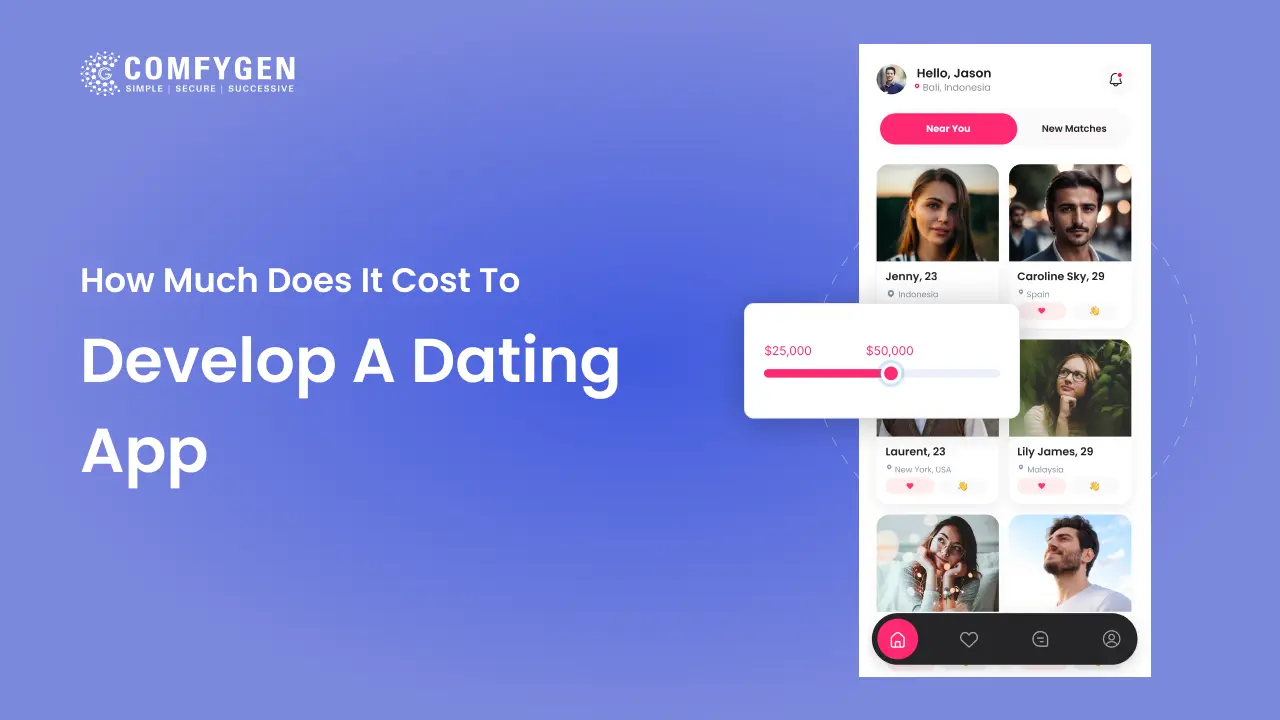





Apps have become one of the most popular ways for people to meet, which has helped the online dating market grow a lot. How much does it cost to build a dating app? If you’re thinking about entering this rich market, you might be wondering. The total cost of dating app development depends on many things, such as the style, features, platform, and technology stack.
It could cost between $25,000 and $40,000 to make a basic dating app with basic features like chatting, making matches, and creating profiles. On the other hand, it could cost between $70,000 and $150,000 or more to make a fully-featured app with real-time geolocation, advanced algorithms, and data security. Cross-platform support, backend technology, and the ability of the app to grow are some of the main things that affect how much it costs to make a dating app.
Before you start this exciting journey, make sure you have a good idea of how much it will cost to build a dating app by breaking it down into its most important parts and things to think about. We’ll walk you through what to expect, whether you’re making a simple app or a high-end platform.
Why Investing in Dating App Development Is Profitable in 2025?
The dating app industry has seen exponential growth, making it a valuable market for companies. With the growing success of online dating, investing in dating app development offers immense profit potential.
1. Market Statistics and Revenue Potential
- According to recent studies, the global online dating market is expected to hit $11.03 billion by 2028, rising at a CAGR of 7.24% from 2023.
- Popular dating apps like Tinder and Bumble make $1.6 billion and $500 million yearly, respectively, through payments, ads, and in-app purchases.
- The average income per user (ARPU) for dating apps is around $8 to $20, based on the area and features given.
These numbers show the profitability of investing in the dating app development cost, especially if the app meets user needs effectively.
2. High User Engagement and Retention
Dating apps usually have a high amount of user engagement. With features like location-based matchmaking and real-time chat, users spend significant time on these platforms. Retention is further boosted by giving unique experiences such as video conversation, gamified dating, and personalized ideas.
3. Subscription-Based Revenue Model
Many apps take a freemium model, where basic features are free, and advanced features (like boosting profiles or exclusive filters) require fees. Premium subscriptions for dating apps can run from $10 to $50 per month, providing a steady income stream.
4. In-App Purchases and Advertising
Additional income can be created through in-app purchases, such as profile boosts or virtual gifts. Advertising agreements also add significant income, especially for apps with a large user base.
5. Growing Demand for Niche Dating Apps
Niche dating apps catering to specific groups (e.g., professionals, pet lovers, or LGBTQ+ communities) are getting ground. These apps often have better user satisfaction and lower competition, making them profitable businesses.
7. Global Reach
With smartphone usage growing worldwide, dating apps have the potential to attract users from various groups. This global reach promises scalability and long-term success.
Investing in this niche is a successful deal due to the rising demand, high engagement rates, and multiple income streams like membership, in-app purchases, and ads. By knowing user needs and leveraging features like chatting and calling in dating apps, companies can tap into a growing market and achieve substantial profits.
Ready to create your dating app? Find out the cost and get started now!
Contact Now
How Much Does it Cost to Create a Dating App
The average cost to build a dating app runs between $25,000 to $150,000 or more, based on the app’s complexity, features, platform, and other development factors. A simple app with minimal features can be created at a cheaper cost, while advanced dating apps with AI-powered matchmaking, geolocation, and real-time features will require a more significant investment.
This estimate covers the cost of design, backend development, third-party integrations, and continued upkeep. For startups or businesses looking to launch a dating app, knowing the breakdown of these costs is important for budgeting successfully. Below is a rundown of the factors adding to the cost of dating app development, along with their average costs.
The table provides a detailed breakdown, giving a clear idea of the factors involved in the cost to develop a mobile dating app. This can help businesses decide on the features and services they value within their budget for a dating app.
| Development Factor | Description | Average Cost |
|---|---|---|
| App Features and Functionality | Basic features like profile creation, messaging, and matchmaking. Advanced features include AI algorithms, video calls, and geolocation. | $10,000 to $50,000 |
| App Platform | Single-platform (iOS or Android) or cross-platform development using frameworks like Flutter or React Native. | $15,000 to $50,000 |
| Geolocation and Real-Time Features | Integration of GPS, distance filters, geofencing, and real-time location updates. | $5,000 to $20,000 |
| UI/UX Design | Template-based design for basic apps and custom, visually appealing designs for advanced apps. | $5,000 to $20,000 |
| Backend Development | Includes data storage, matchmaking algorithms, and real-time analytics. | $10,000 to $40,000 |
| Third-Party Services and APIs | Integration of Google Maps API, payment gateways, and social media logins. | $5,000 to $15,000 |
| Development Team Location | Costs vary depending on whether the team is located in North America, Europe, or Asia. | $20/hour to $200/hour |
| Maintenance and Updates | Annual costs for regular updates, server maintenance, and bug fixes. | 20% to 30% of the development cost |
Ready to create the next big dating platform? Let’s make it happen
Contact us now!
What Affects Dating App Development Cost
The cost to build a dating app is affected by several factors, including the features, platform, design, server development, and even the location of the development team. Below, we dig deeper into each factor, studying how it impacts the overall dating app development price.
1. App Features and Functionality
The features you include will greatly affect the cost to make a dating app. By carefully choosing features, you can strike a balance between cost and usefulness while enhancing the dating app user experience
- Basic Features: Essential features like user registration, profile creation, texting, and matching form the basis of any dating app. These are pretty straightforward to make and cost around $10,000 to $20,000.
- Advanced Features: Features like location-based matchmaking, geolocation filters, AI-powered suggestions, and push alerts make the app more interesting but raise the cost to $30,000 to $50,000.
- Unique Features: To stand out in the competitive market, features like gaming, AR-based profiles, or interest-specific filters are crucial. These can add an extra $10,000 to $20,000 or more to the budget.
2. Dating App Cost Per Platform (iOS, Android, or Both)
The platform you choose greatly affects the dating app development cost. If your target group is diverse, investing in cross-platform development provides better reach but needs higher upfront costs.
- Single Platform Development: Developing for a single platform (either iOS or Android) is more budget-friendly, costing around $15,000 to $30,000.
- Cross-Platform Development: Opting for cross-platform support (using frameworks like Flutter or React Native) broadens your audience but increases the cost to $30,000 to $50,000.
3. Geolocation and Real-Time Features
Geolocation in dating apps is a core tool that drives user interaction and personalization. Accurate location-based matchmaking improves user happiness, but it also demands powerful server development for real-time location changes and privacy management.
- Basic Geolocation: Includes GPS tracking and distance settings, which a location-based dating app costs around $5,000 to $10,000.
- Advanced Geolocation: Offers real-time information, geofencing, and proximity-based alerts, adding $10,000 to $20,000 to the budget.
4. UI/UX Design
A visually pleasing and simple UI/UX dating app design is important for a successful dating app. Investing in a great design ensures users find the app easy to browse, boosting retention and interest.
- Basic Design: Template-based UI with limited change costs around $5,000 to $10,000.
- Custom Design: Unique and engaging interfaces suited to your brand cost $10,000 to $20,000 or more, based on complexity.
5. Backend Development and Scalability
The backend forms the backbone of a dating app, handling user data, matching algorithms, and location tracking. A strong backend ensures the app runs easily, even during peak traffic.
- Basic Backend: For small-scale apps with limited users, costs run from $10,000 to $15,000.
- Advanced Backend: Scalable systems with real-time analytics, AI matching, and data security raise prices to $20,000 to $40,000.
6. Development Team Location
The dating app development cost changes greatly based on the location of your development team. Outsourcing to areas with cheap rates can help reduce total costs without reducing quality.
- North America: High-quality but expensive, with rates of $100 to $200/hour.
- Europe: Balanced quality and cost, with rates of $70 to $150/hour.
- Asia: Budget-friendly with rates of $20 to $50/hour, making it a popular choice for startups.
7. Third-Party Services and APIs
Integrating APIs for tracking technology for dating apps, payment platforms, and social media logins adds to development costs. These services improve the app’s usefulness but require ongoing investment.
- Google Maps API: Essential for location-based features in dating apps, costing $200 to $500 monthly.
- Payment Gateways: Secure connection for in-app payments costs $5,000 to $10,000.
By knowing these factors and planning accordingly, companies can predict the cost to build a dating app that meets user expectations and stands out in the competitive market.
How to Optimize the Cost of Dating App Development
Reducing the dating app development cost without compromising quality requires smart planning. Businesses can save greatly by focusing on important features, using efficient development methods, and opting for cost-effective resources. Below are helpful suggestions to optimize costs, along with the expected savings.
1. Prioritize Core Features Over Extras
Instead of including advanced or unique features initially, focus on the core functions such as profile creation, basic matchmaking, and chatting. Advanced features like icebreakers or AI-based matching can be added later.
Savings: Skipping advanced features during the MVP phase can save $10,000 to $20,000.
Example: A basic dating app with key features costs significantly less than an app with video talking or geolocation integration.
2. Choose Cross-Platform Development
Using frameworks like Flutter or React Native allows you to build for both iOS and Android equally. This removes the need for different teams for each platform.
Savings: Cross-platform development can lower costs by $10,000 to $15,000.
Example: Instead of paying $50,000 for two native apps, a single cross-platform app might cost around $35,000.
3. Leverage Pre-Built APIs and Third-Party Tools
Instead of building unique solutions, combine pre-built APIs for features like tracking, payment platforms, and alerts. Tools like Google Maps API and Twilio are cost-effective.
Savings: Using third-party services can save $5,000 to $10,000.
Example: A unique geolocation solution costs much more compared to adding Google Maps API for location-based matching.
4. Hire Offshore Development Teams
Choosing a dating mobile app development team in cost-effective areas like Asia or Eastern Europe can greatly lower hourly rates without losing quality.
Savings: Offshore teams can lower costs by 30% to 50% compared to North American or European teams.
Example: A team in the US charging $150/hour can be replaced with a team in Asia charging $30/hour, saving $20,000 to $40,000 on a medium-scale job.
5. Use Agile Development Methods
Adopting an agile approach ensures that resources are given efficiently, and needless tasks are avoided. This also allows for ongoing testing and saves rework.
Savings: Agile development can save $5,000 to $15,000 in project costs.
Example: By providing features incrementally, you can avoid spending on unnecessary features that might not be important to users.
6. Outsource Non-Core Tasks
Outsourcing chores like QA testing, app upkeep, or small changes can free up the core team to focus on app development.
Savings: Outsourcing non-core chores can save $5,000 to $10,000.
Example: A specialized QA team in a cost-effective area can handle bug fixes for less than an in-house team.
7. Opt for a Phased Launch
Launch your app in stages, starting with a Minimum Viable Product (MVP). This allows you to gauge user interest and improve based on comments before committing to full-scale development.
Savings: Developing an MVP instead of a full-fledged app originally can save $10,000 to $30,000.
Example: Focus on basic matching and texting initially, adding advanced features like video calling later.
Build your dating app with the experts
Start your project today!
How Much Time Does It Take to Build a Dating App?
The app development time for a dating app depends on its complexity, features, and design. Below is a detailed breakdown of the estimated time required for each stage of development:
| Development Stage | Estimated Time |
|---|---|
| Planning and Research | 2 to 4 weeks |
| UI/UX Design | 4 to 6 weeks |
| Frontend Development | 6 to 8 weeks |
| Backend Development | 8 to 12 weeks |
| Geolocation Integration | 3 to 5 weeks |
| Core Features Implementation | 8 to 10 weeks |
| Advanced Features Development | 6 to 8 weeks |
| Third-Party API Integration | 2 to 4 weeks |
| Testing and Quality Assurance | 4 to 6 weeks |
| Deployment and Launch | 2 to 3 weeks |
Total Estimated Time
| App Complexity | Estimated Development Time |
|---|---|
| Basic Dating App | 4 to 6 months |
| Mid-Level Dating App | 6 to 9 months |
| Advanced Dating App | 9 to 12 months |
How Dating Apps Make Money?
We’ve learned all about the cost of dating mobile app development, but if you’re thinking about how dating apps create revenue, here’s the answer. Dating apps are meant not just to connect people but also to drive profits through unique marketing strategies. Below are some of the most effective income methods, along with examples of popular apps that leverage them.
1. Freemium Model
This is the most widely used model, where the app is free to download and use, but advanced features are hidden behind a paywall. Users can switch to a premium membership for exclusive features like endless swipes, profile boosts, or advanced filters.
Example: Tinder’s Tinder Plus, Tinder Gold, and Tinder Platinum subscriptions offer perks like unlimited likes, top picks, and passport features, adding greatly to its annual income of $1.6 billion. Though it also affects the cost to build a Tinder-like app.
2. Subscription Plans
Subscription-based revenue provides steady monthly income. Users pay for exclusive perks like seeing who liked them, advanced matching algorithms, and ad-free experiences.
Example: Hinge’s subscription plan, Hinge Preferred, offers features like infinite likes and thorough filters, adding to its rise as a premium dating app.
3. Advertising Revenue
Top dating apps monetize through in-app advertising, partnering with brands to show ads within the app. Ads can range from spot ads to paid content.
Example: Plenty of Fish (POF) produces revenue by showing ads to its non-premium users, ensuring a constant income stream.
4. In-App Purchases
Dating apps allow users to purchase virtual items like gifts, profile boosts, or additional likes. These microtransactions enhance the user experience and drive engagement.
Example: Bumble offers Spotlight (to appear at the top of search results) and SuperSwipes to show special interest, generating substantial revenue through in-app purchases.
5. Paid Matching Services
Some apps provide personalized matchmaking services, where users can pay for curated matches or consultations.
Example: Luxy, a high-end dating app for affluent users, offers premium services like curated matches to its exclusive user base.
6. Event-Based Monetization
Apps organize virtual or offline dating events and charge users for participation. These events help create additional revenue streams while building user engagement.
Example: The League hosts exclusive online speed-dating events for its premium members, generating revenue from event fees.
7. Partnerships and Sponsorships
Collaborating with brands for sponsored campaigns or offering exclusive deals within the app can drive additional income.
Example: Coffee Meets Bagel partnered with coffee brands to offer deals for app users, blending sponsorship with user incentives.
8. Data Insights and Analytics
Though less common, some apps generate income by selling anonymized user data (within legal boundaries) to research firms or advertisers.
Example: Apps with a large user base, like Tinder and Bumble, can leverage user behavior data for partnerships with market research companies.
Collaborate with Comfygen for a Robust Dating App
Building a great dating app requires skill in creating seamless user experiences, combining advanced features, and ensuring strong performance. At Comfygen, we specialize in dating app development, providing solutions tailored to your business goals.
Why Choose Comfygen?
Expertise in Location-Based Features: With experience in adding new technologies for apps, we help you implement features like real-time location tracking and proximity-based matching, ensuring a personalized user experience.
Custom Solutions: Whether you need a basic dating app or an advanced platform with AI-powered matching, our solutions are designed to meet your requirements.
Cost-Effective Development: We optimize resources to offer a reasonable price without compromising on quality, ensuring the best cost to build a dating app for your business.
Security and Privacy: Our apps value user safety with features like profile verification, private chat, and data encryption.
How We Help You?
From conceptualization to release, we handle every part of development, including UI/UX design, backend integration, and post-launch support. With Comfygen, your dating app will stand out in a crowded market.
Let’s work to bring your dating app idea to life! Connect with us today to build a profitable and entertaining platform.
Final Words
Dating apps have changed how people meet, giving ease and unique experiences through features like icebreakers and AI-powered matching. As the demand for online dating services continues to grow, investing in dating app development offers a lucrative chance for businesses. However, success takes a deep understanding of user tastes, smooth merging of advanced features in dating apps, and strong privacy measures.
Throughout this blog, we’ve studied the cost to build a dating app, the features that make it interesting, and strategies to improve development expenses. Whether you’re looking for a simple dating app or a feature-rich platform, matching innovation with cost efficiency is important.
Now is the right time to capitalize on this booming business. Take the first step toward making a dating app that not only meets user standards but also drives income and long-term growth.
FAQs
What is the requirement for a dating app development?
Which development team is best for building a dating app?
Are there any extra costs besides the initial development cost?
How long does it take to develop a dating app?
How can I monetize my dating app?

Mr. Saddam Husen, (CTO)
Mr. Saddam Husen, CTO at Comfygen, is a renowned Blockchain expert and IT consultant with extensive experience in blockchain development, crypto wallets, DeFi, ICOs, and smart contracts. Passionate about digital transformation, he helps businesses harness blockchain technology’s potential, driving innovation and enhancing IT infrastructure for global success.