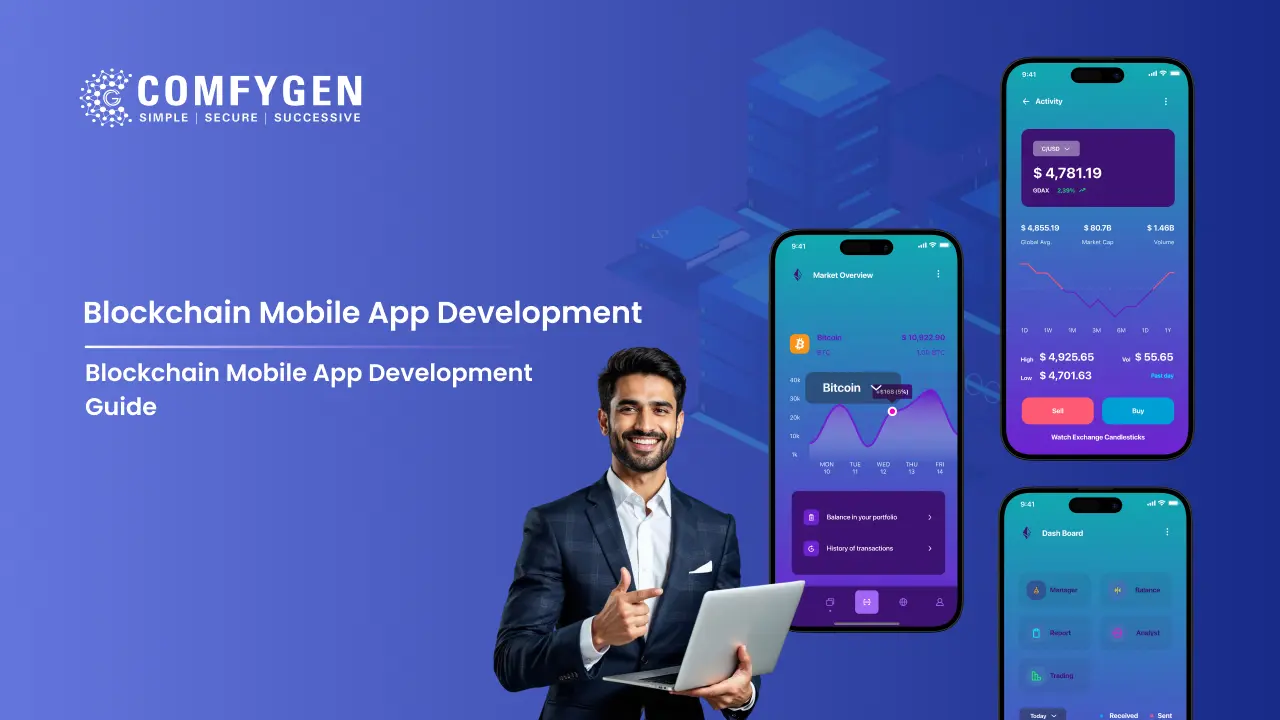





Blockchain technology has revolutionized the digital landscape, offering unprecedented security, transparency, and decentralization. As businesses and entrepreneurs seek to leverage these benefits, blockchain mobile app development has emerged as a critical skill in 2025. This comprehensive guide walks you through every step of creating a blockchain-powered mobile application, from initial planning to deployment and maintenance.
Whether you’re building a cryptocurrency wallet, decentralized finance (DeFi) application, NFT marketplace, or supply chain management system, this guide provides the foundational knowledge and practical steps needed to succeed in blockchain mobile app development.
Understanding Blockchain Mobile App Development
Before diving into Blockchain app development, it’s essential to understand what makes blockchain mobile apps unique. Unlike traditional applications, blockchain apps interact with distributed ledgers, smart contracts, and decentralized networks. These applications offer enhanced security through cryptographic protocols, immutability of data, and transparency in transactions.
Key Benefits of Blockchain Mobile Apps
- Enhanced Security: Cryptographic encryption protects user data and transactions from unauthorized access
- Transparency: All transactions are recorded on an immutable ledger, ensuring accountability
- Decentralization: Eliminates single points of failure and reduces dependence on centralized authorities
- Cost Efficiency: Reduces intermediary fees and streamlines transaction processes
- Trust and Verification: Smart contracts automate processes and ensure trustless execution
Pre-Development Planning Phase
Success in blockchain mobile app development begins with thorough planning. This phase sets the foundation for your entire project and determines its technical architecture, scalability, and market viability.
Define Your Use Case
Identify the specific problem your blockchain app will solve. Common use cases include cryptocurrency wallets, DeFi platforms, NFT marketplaces, supply chain tracking, healthcare data management, voting systems, and identity verification. Your use case will determine the blockchain platform, consensus mechanism, and smart contract requirements.
Choose the Right Blockchain Platform
Selecting the appropriate blockchain platform is crucial for your app’s success. Consider these popular options:
- Ethereum: Ideal for smart contracts, DeFi applications, and NFT platforms with extensive developer support
- Binance Smart Chain: Offers faster transactions and lower fees compared to Ethereum
- Polygon: Ethereum layer-2 scaling solution providing high-speed, low-cost transactions
- Solana: High-performance blockchain known for extremely fast transaction speeds
- Hyperledger Fabric: Enterprise-focused permissioned blockchain for business applications
Conduct Market Research
Analyze your target audience, competitors, and market trends. Understanding user needs, pain points, and preferences will guide your app’s features, user interface design, and marketing strategy. Research regulatory requirements in your target markets to ensure compliance with cryptocurrency and blockchain regulations.
Technical Architecture Design
Designing a robust technical architecture ensures your blockchain mobile app is scalable, secure, and maintainable. This phase involves making critical decisions about the technology stack, infrastructure, and system components.
Technology Stack Selection
Frontend Development:
- React Native or Flutter for cross-platform development
- Swift for iOS native development or Kotlin for Android native development
- js or Ethers.js for blockchain interaction
Backend Infrastructure:
- js with Express for API development
- IPFS (InterPlanetary File System) for decentralized storage
- MongoDB or PostgreSQL for off-chain data storage
- Smart contract development using Solidity, Rust, or Vyper
Smart Contract Architecture
Smart contracts are self-executing programs that run on the blockchain. Design your smart contracts to be modular, upgradeable, and gas-efficient. Implement standard interfaces like ERC-20 for tokens or ERC-721 for NFTs. Plan for contract upgradability using proxy patterns if your business logic may evolve.
Setting Up Development Environment
Establishing a proper development environment accelerates the development process and ensures consistency across your team. This step involves installing necessary tools, frameworks, and blockchain development kits.
Essential Development Tools
- Truffle or Hardhat: Ethereum development frameworks for compiling, deploying, and testing smart contracts
- Ganache: Personal blockchain for local development and testing
- MetaMask: Browser extension for managing Ethereum wallets and interacting with dApps
- Remix IDE: Web-based development environment for writing and testing smart contracts
- js and npm: JavaScript runtime and package manager for installing dependencies
- Git: A version control system for managing code repositories
Configure Blockchain Networks
Set up connections to blockchain test networks (testnets) for development and testing. Obtain test tokens from faucets to perform transactions without spending real cryptocurrency. Configure network providers like Infura or Alchemy to connect your app to blockchain nodes without running your own infrastructure.
Smart Contract Development
Smart contracts form the backbone of blockchain applications, executing business logic in a decentralized and trustless manner. Developing secure, efficient smart contracts requires careful planning, coding, and testing.
Writing Smart Contracts
Begin by writing your smart contracts in Solidity (for Ethereum-based platforms) or the appropriate language for your chosen blockchain. Follow best practices, including using established design patterns, implementing access controls, handling errors gracefully, and optimizing for gas efficiency. Structure your code with clear functions, events, and modifiers to enhance readability and maintainability.
Testing Smart Contracts
Thorough testing is crucial because smart contracts are immutable once deployed. Write comprehensive unit tests using frameworks like Mocha and Chai. Perform integration testing to ensure contracts interact correctly with each other and external systems. Conduct security audits to identify vulnerabilities such as reentrancy attacks, integer overflow/underflow, and unauthorized access.
Deploying Smart Contracts
Deploy contracts first to testnets for final validation before mainnet deployment. Use deployment scripts to automate the process and ensure consistency. Document contract addresses and maintain proper version control. Consider implementing proxy patterns for upgradeable contracts to allow for future improvements without redeploying.
Turn Your Blockchain Startup Idea into a Market-Ready Mobile Application
Hire ExpertsMobile App Frontend Development
The frontend is where users interact with your blockchain application. Creating an intuitive, responsive, and secure user interface is essential for user adoption and satisfaction.
User Interface Design
Design a clean, intuitive interface that simplifies complex blockchain operations for users. Create wireframes and prototypes using tools like Figma or Adobe XD. Focus on user experience (UX) principles, including easy navigation, clear calls to action, and responsive design across different screen sizes. Implement visual feedback for blockchain transactions, which can take time to confirm.
Integrating Web3 Libraries
Integrate Web3.js or Ethers.js libraries to enable your mobile app to communicate with the blockchain. Implement wallet connection functionality that allows users to connect existing wallets or create new ones in your app. Handle transaction signing, balance checking, and smart contract interactions through these libraries. Ensure proper error handling for failed transactions or network issues.
Wallet Integration
Implement secure wallet management within your app. Support multiple wallet options, including WalletConnect for connecting external wallets, in-app wallet creation with secure key storage, and biometric authentication for enhanced security. Use secure key storage solutions like iOS Keychain or Android Keystore to protect private keys. Never store private keys in plain text or transmit them over unsecured channels.
Security Implementation
Security is paramount in blockchain mobile app development. Implementing comprehensive security measures protects user funds, data, and maintains trust in your application.
Smart Contract Security
- Conduct professional security audits by firms specializing in smart contract security
- Implement access control mechanisms using modifiers and role-based permissions
- Use battle-tested libraries like OpenZeppelin for standard functionality
- Implement circuit breakers and emergency stop mechanisms for critical issues
- Validate all inputs and implement proper error handling
Mobile App Security
- Implement end-to-end encryption for sensitive data transmission
- Use biometric authentication (fingerprint, face recognition) for app access
- Secure private key storage using hardware-backed keystores
- Implement secure communication protocols (HTTPS, SSL pinning)
- Regular security updates and vulnerability patching
Testing and Quality Assurance
Comprehensive testing ensures your blockchain mobile app functions correctly, performs well, and provides a smooth user experience across different devices and scenarios.
Testing Methodologies
Unit Testing: Test individual components, functions, and smart contracts in isolation to verify correct behavior.
Integration Testing: Verify that different components work together correctly, including frontend-backend communication and smart contract interactions.
User Acceptance Testing: Conduct beta testing with real users to gather feedback on usability and identify issues.
Performance Testing: Test app performance under various network conditions, device specifications, and user loads.
Test Network Validation
Deploy your app to blockchain testnets like Goerli, Sepolia, or Mumbai to conduct real-world testing without financial risk. Test all transaction types, edge cases, and error scenarios. Monitor gas consumption and optimize where necessary. Ensure proper handling of network congestion and failed transactions.
Deployment and Launch
Successfully launching your blockchain mobile app requires careful planning, coordination, and execution across multiple platforms and services.
Smart Contract Mainnet Deployment
After thorough testing, deploy your smart contracts to the mainnet. Double-check all contract parameters, addresses, and configurations before deployment. Document all contract addresses and maintain a deployment checklist. Consider using multisig wallets for contract ownership to enhance security.
App Store Submission
Prepare your app for submission to the Apple App Store and the Google Play Store. Ensure compliance with each platform’s guidelines, particularly regarding cryptocurrency and financial services. Create compelling app descriptions, screenshots, and promotional materials. Be prepared for review processes that may take several days or require revisions.
Marketing and User Acquisition
Develop a marketing strategy to promote your app launch. Leverage social media, blockchain communities, and crypto forums to build awareness. Consider influencer partnerships, press releases, and content marketing. Offer incentives for early adopters through token airdrops or promotional campaigns.
Maintenance and Updates
Post-launch maintenance is crucial for long-term success. Regular updates, bug fixes, and feature additions keep users engaged and ensure your app remains competitive.
Monitoring and Analytics
Implement monitoring tools to track app performance, user behavior, and transaction metrics. Use analytics platforms to understand user engagement, retention rates, and conversion funnels. Monitor blockchain metrics, including gas prices, transaction success rates, and smart contract events. Set up alerts for critical issues or unusual activity.
Regular Updates
Release regular updates to fix bugs, improve performance, and add new features based on user feedback. Stay current with blockchain platform updates and security patches. Maintain compatibility with the latest mobile operating system versions. Communicate changes clearly to users through release notes.
Community Support
Build and maintain an active community around your app through Discord, Telegram, or dedicated forums. Provide responsive customer support to address user questions and issues. Gather and act on user feedback to guide future development. Maintain transparent communication about roadmap updates and developments.
Cost Considerations and Budget Planning
Understanding the costs involved in blockchain mobile app development helps you plan budgets effectively and make informed decisions throughout the blockchain-based mobile app development process.
Development Costs
- Developer salaries or contractor fees for frontend, backend, and blockchain specialists
- Design costs for UI/UX creation and branding
- Smart contract audit fees range from $5,000 to $50,000+, depending on complexity
- Testing and quality assurance resources
Operational Costs
- Cloud hosting and infrastructure costs for backend services
- Blockchain node access fees through services like Infura or Alchemy
- Gas fees for smart contract deployment and operations
- Marketing and user acquisition costs
- Ongoing maintenance and support expenses
Conclusion
Blockchain mobile app development is not just a trend; it’s a structural shift in how digital products are built, secured, and scaled. From decentralized finance to NFT ecosystems and enterprise-grade blockchain solutions, the opportunity is real and growing fast.
The key is execution. Start with a focused MVP. Validate your idea. Listen to users. Improve in iterations. Blockchain projects succeed when they combine strong technical architecture, airtight security, intuitive UX, and a clear business model. This space moves quickly, so staying aligned with evolving protocols, compliance requirements, and security standards is non-negotiable.
At Comfygen Technologies, we understand that building a blockchain mobile app is more than writing smart contracts or integrating wallets. It’s about designing a reliable, scalable ecosystem that users trust. Whether you’re launching a crypto wallet, DeFi app, NFT marketplace, or enterprise blockchain platform, our team ensures your solution is secure, performance-driven, and ready for real-world adoption.
The decentralized future is taking shape right now. With the right strategy, the right technology, and the right development partner like Comfygen Technologies, you can build blockchain applications that don’t just participate in the revolution but help lead it.

Mr. Saddam Husen, (CTO)
Mr. Saddam Husen, CTO at Comfygen, is a renowned Blockchain expert and IT consultant with extensive experience in blockchain development, crypto wallets, DeFi, ICOs, and smart contracts. Passionate about digital transformation, he helps businesses harness blockchain technology’s potential, driving innovation and enhancing IT infrastructure for global success.