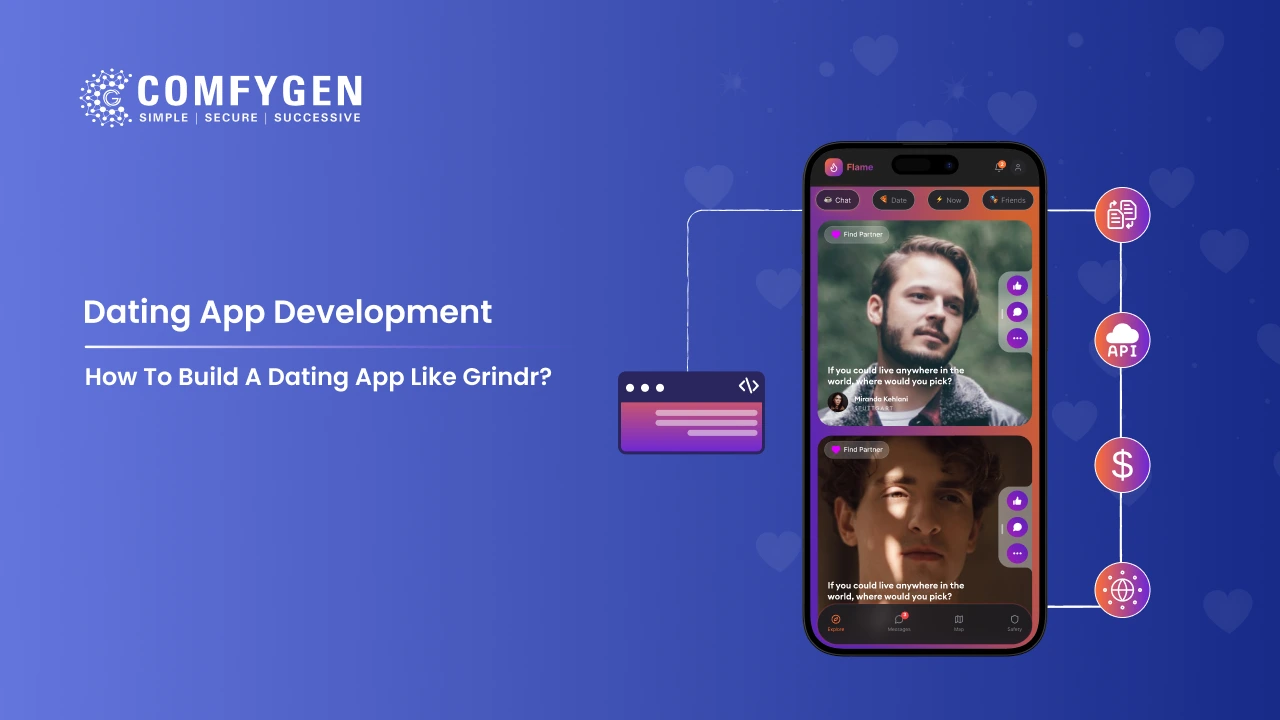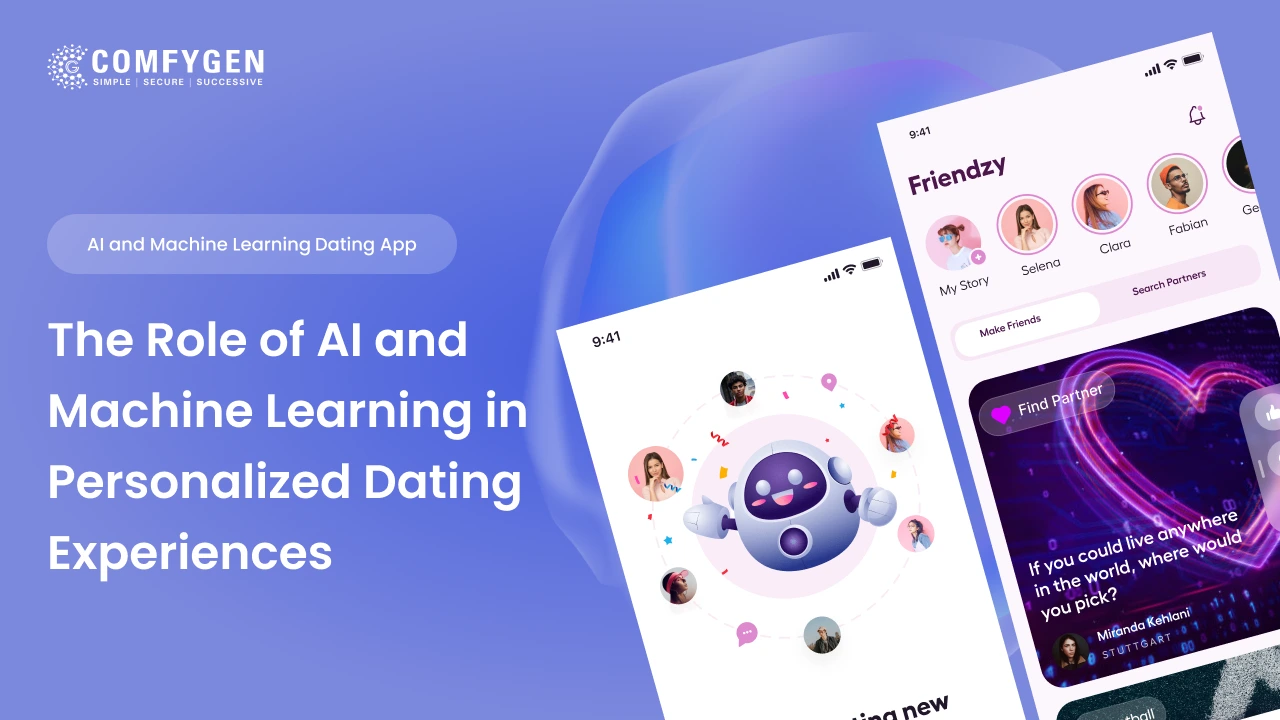





Integrating AI and ML into a dating app is no longer an optional upgrade. It has become the baseline expectation for any new dating platform that wants to compete with Tinder, Bumble, or Hinge on match quality and retention. This guide walks through how AI and ML actually get integrated into a dating app, the features they enable, the cost involved, and the development process from planning to deployment.
If you are building a new dating app or adding intelligence to an existing one, this covers what your development team needs to plan for at each stage.
Why Integrate AI and ML Into Your Dating App
Nearly half of dating app users now say they prefer apps that use AI-driven matching over manual swipe-based discovery. For a business building a dating platform, that shift translates directly into a development requirement: matchmaking, safety, and engagement systems all need to be built around AI and ML from the architecture stage, not bolted on later.
Skipping AI integration at the planning stage typically means a costly rebuild later, since matching logic, data pipelines, and the recommendation engine all need to be designed around the data your AI models will consume.
This is exactly why we recommend planning the AI layer alongside the rest of your dating app development roadmap, not as a separate phase.
Core AI and ML Components to Build Into a Dating App
When you integrate AI and ML into dating app development, you are really building five interconnected systems. Here is how each one works technically and what it requires from your development team:
1. Data Collection and Feature Pipeline
Every AI matchmaking system starts with structured data: profile attributes, stated preferences, swipe history, message response times, and engagement patterns. Your development team needs to design a data pipeline that captures these signals cleanly from day one, since retraining a matching model on incomplete historical data later is expensive and slow.
2. AI Matchmaking Algorithm
This is the core integration point. A matchmaking model typically combines collaborative filtering (what similar users liked) with content-based filtering (profile attribute similarity) and a behavioral layer that weights recent engagement more heavily than older swipe data. Most teams start with a simpler weighted-scoring model at MVP stage and move to a trained ML model once there is enough engagement data to support it.
3. Behavioral and Engagement Modeling
Beyond stated preferences, build a layer that tracks implicit signals, which profiles a user actually opens, how long they view a profile, which prompts they respond to. This data feeds back into the matchmaking model on a feedback loop, so match quality should measurably improve as the app accumulates usage data.
4. AI Chatbot and Conversation Assistance
Integrating a conversational AI layer for icebreaker suggestions and chat assistance requires connecting an NLP model (custom-trained or via an LLM API) to your messaging backend. This is typically a faster integration than the matchmaking engine since you can use a third-party API rather than training a model from scratch.
5. Fraud and Fake Profile Detection
Image recognition models flag duplicate or stock photos, while behavioral models flag bot-like usage patterns (rapid swiping, scripted messages, suspicious account creation patterns). This layer should be integrated early since trust and safety issues compound quickly once an app has real users.
Step-by-Step: How to Integrate AI and ML Into Your Dating App
Here is the practical sequence we follow when integrating AI and ML into a dating app build:
1. Define the Data Model First
Decide which signals your matching model will use (profile data, behavioral data, or both) before any backend work starts. This determines your entire data schema.
2. Start With a Simpler Matching Model at MVP Stage
For MVP, a rules-based or weighted-scoring matching system is faster to ship and easier to debug than a trained ML model with no data to train on yet.
3. Build the Data Pipeline Early
Build the pipelines that capture swipes, message activity, and profile views from launch, even if you are not using ML yet. This is the dataset your future ML model will train on.
4. Introduce ML-Based Matching Once You Have Data
Once you have a few months of engagement data, train a matchmaking model (commonly using gradient boosting or a neural collaborative filtering approach) and A/B test it against your existing scoring logic.
5. Integrate Third-Party AI APIs Where It Makes Sense
Use a pre-trained NLP API for chatbot and conversation-assist features rather than building this from scratch, since the cost-to-benefit ratio rarely favors a custom model here.
6. Add Fraud Detection Before You Scale
Layer in image-recognition and behavioral fraud detection before scaling user acquisition, not after a fraud incident forces a reactive fix.
7. Test the AI Layer Independently
Run closed beta testing specifically on match quality and false-positive rates in fraud detection, not just general app functionality.
8. Monitor Model Performance Post-Launch
Track match-to-conversation rate, not just match volume, since this is the metric that actually tells you whether your AI integration is improving outcomes.
Looking to Integrate AI Into Your Dating App?
Our AI specialists can help you implement intelligent matching systems, profile recommendations, chat assistants, and predictive analytics that drive higher user retention and satisfaction.
Talk to Our Experts
What are the Changes Brought by AI and ML in Dating App Experiences?
Artificial intelligence (AI) and machine learning (ML) have redefined the online dating landscape, enhancing user experiences and making matchmaking smarter, faster, and more personalized. Here’s how AI and ML are transforming the way we interact with dating apps:
Smarter Matchmaking with AI Algorithms
AI-driven matchmaking uses complex dating app algorithms to analyze user preferences, behavior, and engagement patterns. This results in perfect matches that go beyond superficial compatibility, fostering meaningful connections.
- AI analyzes text inputs, likes, and even chat histories to identify patterns.
- Advanced AI matchmaking and machine learning in dating apps ensure better accuracy in pairing users.
Personalization at Its Best
Modern AI dating apps leverage user data to create hyper-personalized experiences. From tailored profile suggestions to customized date ideas, users feel their preferences are truly understood.
- Artificial intelligence matchmakers can adapt to subtle changes in user behavior.
- Features like push notifications highlight relevant profiles, boosting engagement.
Enhanced User Safety
Safety is a top priority, and AI is leading the charge. Artificial intelligence in dating apps helps identify and remove fake profiles, detect suspicious activity, and flag inappropriate behavior.
- By combining behavioral insights with machine learning, apps offer a secure environment for users.
Streamlined Interactions
AI-powered chatbots facilitate seamless conversations, providing icebreakers or responding on behalf of users. This makes connecting with others easier and less awkward.
- This feature, part of AI dating app development, enhances engagement and user retention.
Reducing Bias in Matchmaking
AI and ML algorithms eliminate biases that might arise in manual matchmaking, ensuring equal opportunities for diverse users. This creates a fair and inclusive dating space.
Data-Driven Learning
With every swipe and interaction, dating app machine learning improves app performance. Feedback loops refine matchmaking models, ensuring the app grows smarter with each user session.
Gamification and User Retention
AI development integrates engaging features like perfect matches dating games, encouraging users to spend more time on the app. These gamified elements boost retention rates while adding an element of fun.
By embracing AI and ML algorithms in dating apps, the industry has made dating more accessible and user-centric. Whether you’re exploring a perfect match app or investing in ML dating app development, the focus remains on improving the dating experience for everyone.
Benefits of AI Dating Apps Increasing the App’s User Base
AI-powered dating apps have revolutionized the online dating experience, offering unmatched convenience, personalization, and security. Here’s a look at the key benefits of using AI dating apps:
Enhanced Matchmaking Accuracy
dating apps use advanced AI matchmaking algorithms to analyze user preferences, behavior, and interests. This results in more meaningful and compatible matches, significantly increasing the chances of finding a perfect match.
- AI eliminates guesswork and bases matchmaking on data-driven insights.
- Features like artificial intelligence matchmakers ensure highly accurate connections.
Personalized Dating Experience
With artificial intelligence in dating apps, users enjoy a tailored experience. The app learns from user interactions to refine profile suggestions and recommend suitable matches.
- Machine learning dating apps adapt to changing preferences over time.
- Personalized notifications keep users engaged and informed.
Improved User Safety
Safety is a significant concern in online dating, and AI addresses this effectively. Through advanced moderation tools, AI identifies and removes fake profiles, detects fraudulent behavior, and flags inappropriate content.
- Apps powered by AI dating app development offer robust safety features.
- Users benefit from a secure and trustworthy platform for dating.
Seamless Communication
AI-powered chatbots facilitate smoother communication by suggesting icebreakers or guiding conversations. This reduces awkward silences and encourages genuine interactions.
- Chatbot assistance in AI-based dating apps improves user engagement.
- Efficient messaging systems simplify interactions.
Time Efficiency
AI streamlines the dating process by quickly identifying compatible matches, saving users the time and effort of endless swiping.
- Dating app algorithms analyze user behavior to provide instant, relevant recommendations.
- This is especially beneficial for busy professionals seeking meaningful connections.
Gamification and User Engagement
Features like perfect matches dating games keep users entertained and invested in the app. Gamification elements encourage consistent usage and enhance the overall experience.
Inclusivity and Reduced Bias
AI-driven dating app machine learning ensures inclusivity by minimizing biases in the matchmaking process. This fosters a fair and diverse dating environment.
Continuous Improvement
Thanks to feedback loops, AI and ML algorithms in dating apps get smarter over time, constantly improving the quality of matches and overall user experience.
By integrating these benefits, AI dating apps are setting a new benchmark for the online dating industry, ensuring users enjoy a seamless, secure, and highly personalized journey to find their perfect match.
Also Read: How to Design an Engaging UI/UX for a Dating App?
Common AI Integration Challenges in Dating Apps
Teams integrating AI and ML into a dating app consistently run into the same set of technical and operational hurdles:
Cold-Start Problem
AI matchmaking needs significant user data to perform well, but new apps launch with none. Plan for a rules-based fallback during the cold-start period.
Data Privacy Compliance
Compliance with GDPR, CCPA, and similar regulations needs to be built into the data pipeline from day one, not retrofitted after a model is already trained on non-compliant data.
Algorithmic Bias
Matching models can replicate biases present in historical engagement data. Regular auditing of model outputs is necessary, not a one-time check.
Evolving Fraud Patterns
Sophisticated bad actors adapt to detection systems, so fraud models need continuous retraining rather than a single launch-time configuration.
Infrastructure Complexity
Training and serving ML models in production requires more specialized infrastructure than a typical CRUD app backend, which adds to both build and hosting cost
Ready to Build the Next Tinder or Bumble?
Empower your dating platform with AI-driven matching, smart user insights, automated moderation, and personalized interactions. Let’s discuss how AI can help you attract, engage, and retain users
Book a Free Discovery Session
Cost of Integrating AI and ML in Dating App Development
The cost of integrating AI and ML into a dating app depends heavily on whether you start with a simpler scoring model or a fully trained ML system from day one. Here is a realistic breakdown:
|
Integration Component |
Average Cost |
What It Covers |
|---|---|---|
|
Basic Rules-Based Matching |
$8,000 – $20,000 |
Weighted-scoring matchmaking logic, no ML training required. |
|
Trained ML Matchmaking Model |
$25,000 – $70,000 |
Data pipeline, model training, A/B testing infrastructure. |
|
AI Chatbot Integration |
$5,000 – $20,000 |
NLP API integration for conversation assistance and icebreakers. |
|
Fraud & Fake Profile Detection |
$10,000 – $30,000 |
Image recognition, behavioral anomaly detection. |
|
Data Infrastructure |
$8,000 – $25,000 |
Storage, pipelines, and privacy-compliant data handling. |
|
Ongoing Model Maintenance |
15% – 20% of build cost / year |
Retraining, monitoring, and performance tuning. |
For most founders building a new dating app, a practical path is to launch with a rules-based matching system ($8,000-$20,000) and budget separately for a trained ML upgrade ($25,000-$70,000) once the app has 3-6 months of engagement data to train on.
How Comfygen Helps With AI and ML Integration in Dating Apps
Comfygen builds the AI and ML layer for dating apps as part of full-stack development, covering data pipeline architecture, matchmaking model design, fraud detection, and conversational AI integration. We work with founders at every stage, whether you need a rules-based MVP matching system or a fully trained ML matchmaking engine for an app that already has engagement data.
If you are planning to integrate AI and ML into a new or existing dating app, we can scope the right starting point for your data maturity and budget.
Final Verdict
AI and ML have redefined the online dating landscape, making connections smarter, more personalized, and more meaningful. From advanced AI matchmaking algorithms to intuitive machine learning in dating apps, these technologies are shaping the future of relationships.
The integration of features like perfect match apps, dating app algorithms, and artificial intelligence in dating apps has not only improved user experiences but also set new benchmarks for innovation. As we look ahead, the possibilities in AI dating app development are limitless, promising even more immersive and inclusive platforms.
Embracing this evolution ensures that users can enjoy safer, smarter, and truly personalized journeys to finding their perfect match.
Frequently Asked Questions
How much does it cost to integrate AI into a dating app?
A basic rules-based matching system costs roughly $8,000 to $20,000. A fully trained ML matchmaking model, including data pipeline and testing infrastructure, typically costs $25,000 to $70,000.
Do I need machine learning for my dating app from day one?
Not necessarily. Most successful dating apps launch with a simpler rules-based or weighted-scoring matching system, then introduce trained ML matching once they have a few months of real engagement data to train on.
What AI features should be prioritized first in a dating app?
Matchmaking logic and fraud detection should be prioritized first, since they directly affect match quality and user trust. Conversational AI features like chatbot icebreakers can be added afterward using third-party APIs.
How long does it take to integrate AI and ML into a dating app?
A basic rules-based matching system can be integrated in 4 to 8 weeks. A trained ML matchmaking system, including data pipeline setup and testing, typically takes 3 to 5 months.
Can Comfygen add AI matchmaking to an existing dating app?
Yes. We assess your current data collection setup first, since the existing data determines whether you can move directly to a trained ML model or need to build out data pipelines before training one.

Mr. Saddam Husen, (CTO)
Mr. Saddam Husen, CTO at Comfygen, is a renowned Blockchain expert and IT consultant with extensive experience in blockchain development, crypto wallets, DeFi, ICOs, and smart contracts. Passionate about digital transformation, he helps businesses harness blockchain technology’s potential, driving innovation and enhancing IT infrastructure for global success.