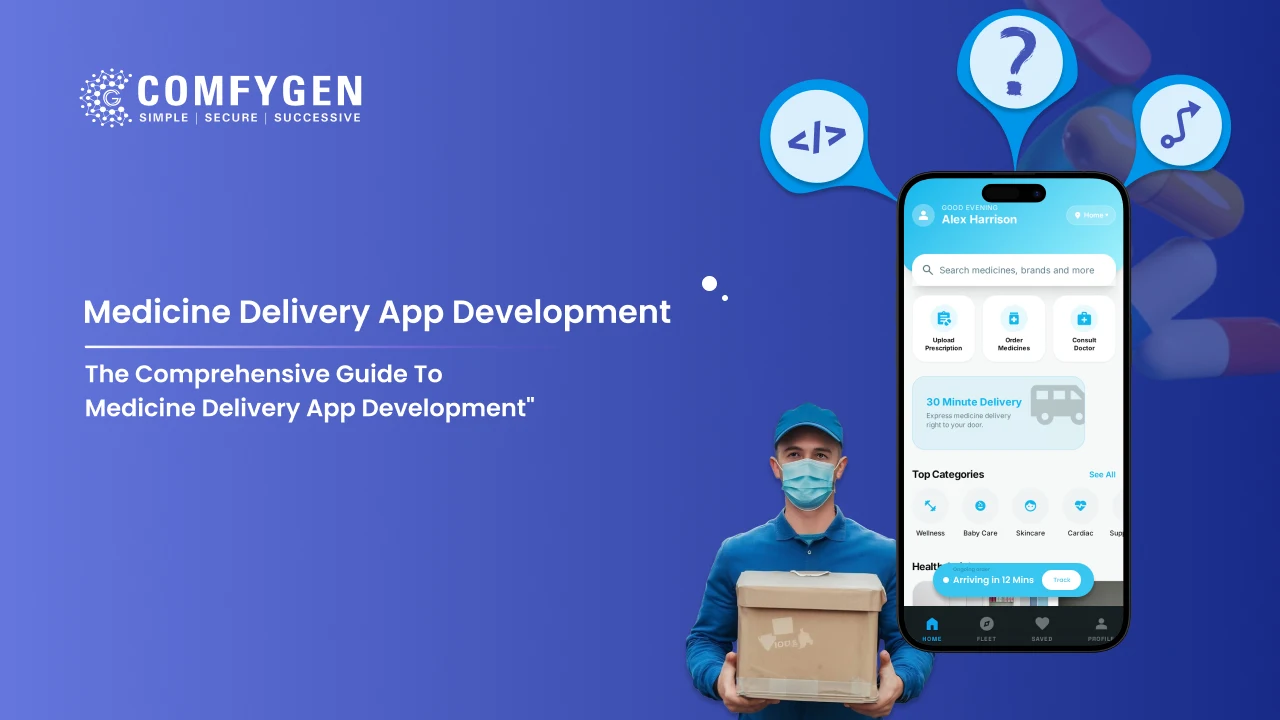





The healthcare industry is rapidly embracing digital transformation, and medicine delivery apps have emerged as one of the most impactful innovations. With increasing demand for convenience, speed, and contactless healthcare solutions, medicine delivery app development has become a high-potential business opportunity for startups, pharmacy chains, and healthcare enterprises.
This comprehensive guide will help you understand everything about On-Demand Medicine Delivery App Development, from market insights and features to cost, challenges, and why Comfygen Technologies is the right partner to build a scalable and secure solution.
Medicine Delivery App Market Statistics
The medicine delivery app market is experiencing remarkable growth, driven by rapid digital health adoption, increasing mobile usage, and the growing demand for convenient healthcare services. The global ePharmacy market is projected to reach USD 177.8 billion by 2026, growing at a strong compound annual growth rate (CAGR) of approximately 13.8% to 16.8%. This expansion highlights the immense potential of medicine delivery app development for startups, pharmacy chains, and healthcare enterprises.
Market Size & Growth (Global & Regional)
- Global E-Pharmacy: Expected to reach $177.8 billion by 2026, with a CAGR of about 13.8%-16.8%.
- North America: Holds the largest market share, contributing significantly to global revenue.
- Asia-Pacific (India): Fastest-growing region, with India’s ePharmacy market projected to reach $1.11 billion by 2025 and grow robustly through 2030.
What is Medicine Delivery App Development?
Medicine delivery app development is the process of creating digital platforms that connect patients with pharmacies, allowing users to order prescription and over-the-counter medicines, health products, and get them delivered to their doorstep, streamlining access to healthcare with features like prescription uploads, online payments, and real-time tracking. This development bridges pharmacies, healthcare providers, and patients, creating convenient, contactless healthcare solutions, a trend significantly boosted by the pandemic for managing chronic conditions and accessing essentials.
Why Market Expansion Makes Now the Perfect Time to Invest
The rapid expansion of the digital healthcare ecosystem has made this the ideal time to invest in medicine delivery app development. A powerful combination of strong market growth, evolving consumer behavior, and advanced technologies is driving unprecedented demand for on-demand medicine delivery apps. Businesses that act now can secure a competitive edge in a market poised for long-term sustainability and profitability.
- Significant Market Growth and Long-Term Potential: The global e-pharmacy market is projected to surpass USD 210 billion by 2026 and is expected to reach nearly USD 400.58 billion by 2033, highlighting a massive and sustained growth trajectory. This rapid expansion creates a highly lucrative environment for startups, pharmacy chains, and healthcare enterprises looking to invest in medicine doorstep delivery app development and scalable digital healthcare platforms.
- Shifting Consumer Behavior Toward Digital Healthcare: Consumer expectations have permanently shifted toward digital-first healthcare solutions. Accelerated by the COVID-19 pandemic, users now prioritize convenience, safety, and speed. Studies indicate that nearly 78% of consumers prefer ordering medicines through mobile apps rather than visiting physical pharmacies. This behavioral change has significantly increased demand for on-demand medicine ordering app development with features such as 24/7 access, contactless payments, and real-time delivery tracking.
- Improved Accessibility and Patient Convenience: Medicine delivery apps address critical healthcare accessibility challenges, especially for elderly users, chronically ill patients, and individuals in remote areas. By enabling easy prescription uploads and reliable doorstep delivery, these apps foster customer loyalty and ensure recurring orders—particularly for chronic medication management. This makes medicine delivery app development services a smart investment for building long-term customer engagement.
- Operational Efficiency and Growth for Pharmacies: From a business perspective, investing in a medicine delivery app offers pharmacies improved operational efficiency. Digital platforms enable better inventory control, streamlined order management, and reduced operational costs compared to traditional brick-and-mortar setups. Additionally, pharmacy chain solutions allow businesses to expand their reach beyond physical locations, unlocking new revenue channels.
- Advanced Technology Integration: Modern medicine delivery apps leverage advanced technologies such as AI-driven analytics, predictive demand forecasting, route optimization, and personalized medicine recommendations. Integration with telemedicine platforms and Electronic Health Records (EHRs) creates a seamless healthcare experience, further increasing user trust and engagement. These innovations enhance scalability and position businesses for future growth.
- Favorable Investment and Monetization Opportunities: The growing demand for digital healthcare services has created a favorable investment climate. Medicine delivery apps offer multiple recurring revenue streams, including subscriptions, delivery fees, pharmacy commissions, and premium listings. This strong monetization potential continues to attract investors, making now the perfect time to collaborate with a reliable medicine delivery app consulting service and development partner.
A Timely Opportunity in Digital Healthcare: In essence, the ongoing digital transformation of the healthcare industry has created an exceptional window of opportunity. Backed by rising consumer demand, robust technological infrastructure, and scalable business models, investing in medicine delivery app development today positions businesses for sustained success in the evolving healthcare landscape.
Build Your Medicine Delivery App Today
Start Your ProjectHow To Build a Medicine Delivery App? A Step-by-Step Approach
Building a medicine delivery app in 2026 demands a specialized, healthcare-focused approach that prioritizes regulatory compliance, live logistics, data security, and patient-centric experiences. A well-planned medicine delivery app development strategy ensures scalability, trust, and long-term success in the competitive digital healthcare app development market.
Step 1: Market Research and Business Model Selection
The first step in medicine delivery app consulting service is in-depth market research. Identify your target audience—such as elderly patients, chronic disease managers, families, or urban millennials—and analyze competitors like Tata 1mg, CVS, or Amazon Pharmacy to understand market gaps and user expectations.next, choose the right business model for your app:
- Aggregator (Marketplace) Model: Connects multiple third-party pharmacies with users and earns revenue through commissions.
- Inventory-Based Model: Medicines are stocked and sold directly from your own warehouse or pharmacy.
- Hybrid Model: Combines in-house inventory for high-demand medicines with a marketplace for specialty or rare drugs.
Selecting the right model is crucial for scalable on-demand medicine delivery app development.
Step 2: Prioritize Compliance and Security
Compliance and security are foundational pillars of medicine delivery app development services, not optional add-ons. These apps handle sensitive Protected Health Information (PHI), making regulatory adherence mandatory. key compliance and security considerations include:
- Regulatory Compliance: HIPAA (USA), GDPR (EU), and country-specific healthcare and data protection laws
- Security Measures: End-to-end encryption (AES-256), multi-factor authentication (MFA), and secure APIs using OAuth 2.0
- Prescription Verification: Digital workflows that allow licensed pharmacists to validate prescriptions before order fulfillment
Step 3: Define Key Features Across Four Panels
A robust medicine doorstep delivery app development solution typically includes four interconnected panels:
- Customer Panel: Medicine search with generic alternatives, secure prescription upload, real-time order tracking, multiple payment options, and insurance integration
- Pharmacy Panel: Order management, inventory tracking with low-stock alerts, batch and expiry management, and digital prescription verification
- Delivery Partner Panel: GPS-based route optimization, earnings dashboard, order status updates, and digital proof of delivery (photo or signature)
- Admin Dashboard: Centralized management of users, pharmacies, commissions, promotions, and real-time analytics
Step 4: Select the 2026 Technology Stack
Choosing a future-ready tech stack is essential for scalable on-demand medicine ordering app development.
- Frontend: Flutter or React Native for cross-platform performance
- Backend: Node.js for real-time synchronization, Python/Django for AI-driven features, or Java for enterprise-grade stability
- Database: PostgreSQL for structured medical data or MongoDB for flexible medicine catalogs
- Infrastructure: Cloud-native platforms like AWS, Google Cloud, or Microsoft Azure for high availability and scalability
Step 5: Design for Accessibility (UI/UX)
Healthcare apps serve diverse user groups, including elderly and non-technical users. A user-focused medicine delivery app designing service should prioritize:
- Simple navigation and minimal steps
- Large fonts and high-contrast color schemes
- Voice search and easy prescription uploads
Using tools like Figma for wireframing and interactive prototypes enables early usability testing and faster design validation.
Step 6: MVP Development and Testing
Launching a Minimum Viable Product (MVP) helps validate your idea quickly while minimizing risk. An MVP should include core features such as medicine search, prescription upload, payments, and order tracking. Testing is critical:
- Functional and performance testing across devices
- Security testing to protect medical data
- Automation using AI for prescription scanning and delivery route optimization
Step 7: Launch and Ongoing Maintenance
Once tested, deploy the app to the Apple App Store and Google Play Store, ensuring all healthcare compliance guidelines, privacy policies, and metadata requirements are met. Post-launch maintenance is equally important:
- Regular security updates and bug fixes
- Feature enhancements based on user feedback
- Annual maintenance costs typically range between 15%–25% of the initial development cost
Essential Features of A Medicine Delivery App
A modern medicine delivery app must be designed to deliver more than just convenience—it should ensure patient safety, regulatory compliance, operational efficiency, and real-time logistics. To achieve this, a robust medicine delivery platform is built around multiple dedicated panels, each serving a specific role in the healthcare delivery ecosystem. These panel-based features together create a seamless, trustworthy, and scalable on-demand medicine delivery app development solution.
1. Customer Panel (Patient App Features)
The customer panel is the most user-facing component of medicine delivery app development, focused on accessibility, trust, and ease of use.
Key features include:
- Advanced Medicine Search: Search medicines by brand name, generic name, or medical condition, with AI-powered suggestions for cost-effective alternatives.
- Secure Prescription Upload: Users can upload prescriptions via image or PDF, which are verified by licensed pharmacists before order approval.
- Real-Time Order Tracking: GPS-enabled tracking allows users to monitor their medicine delivery from the pharmacy to their doorstep.
- Smart Refill & Reminder System: Automated alerts notify users when medicines are about to run out, ideal for chronic care patients.
- Multiple Payment Options: Support for UPI, cards, digital wallets, and insurance integrations for smooth checkout.
- Order History & Support: Easy access to past orders, invoices, and in-app customer support.
2. Pharmacy / Pharmacist Panel Features
The pharmacy app development panel is the operational backbone of medicine doorstep delivery app development, ensuring accuracy, compliance, and efficient order processing.
Core features include:
- Prescription Verification Dashboard: Pharmacists can review high-resolution prescription uploads and validate them digitally.
- Inventory Management System: Real-time stock tracking with alerts for low inventory and near-expiry medicines.
- Order Management Workflow: Tools to accept, prepare, pack, and dispatch orders efficiently.
- Barcode / QR Code Scanning: Improves accuracy during picking and packing, reducing fulfillment errors.
- Medicine Substitution Management: Allows pharmacists to suggest approved generic alternatives when required.
3. Delivery Partner Panel Features
The delivery partner panel supports fast, reliable logistics—an essential part of on-demand medicine delivery app development.
Key functionalities include:
- Order Assignment & Notifications: Real-time alerts for new delivery requests.
- AI-Powered Route Optimization: GPS-based navigation calculates the fastest and safest delivery routes.
- Live Order Status Updates: Delivery partners can update order progress in real time.
- Digital Proof of Delivery: Photo or signature capture ensures delivery confirmation and transparency.
- Earnings & Performance Dashboard: Provides delivery history, payouts, and performance insights.
4. Admin Panel (Super Admin Dashboard Features)
The admin panel provides centralized control and analytics, making it critical for scalable medicine delivery app development services.
Key features include:
- User & Pharmacy Management: Manage patients, pharmacies, delivery partners, and access permissions.
- Commission & Pricing Control: Configure commission models, delivery charges, and discounts.
- Order & Transaction Monitoring: Real-time visibility into all orders, payments, and refunds.
- Analytics & Reporting: Insights into sales, user behavior, popular medicines, and delivery performance.
- Compliance & Security Management: Monitor prescription validation, data security, and regulatory adherence.
- Marketing & Promotion Tools: Manage banners, offers, and referral programs.
Why Panel-Based Architecture Matters
By implementing these panel-specific features, businesses can build a future-ready, secure, and AI-driven medicine delivery app that meets both user expectations and healthcare industry standards.
A well-structured multi-panel system ensures:
- Better user experience
- Regulatory compliance
- Operational transparency
- Scalability for pharmacy chains
- Faster on-demand deliveries
Future-Ready Features Powering the Success of Your Medicine Delivery App
the success of a medicine delivery app no longer depends on being a simple transactional ordering platform. To truly stand out and scale, a platform must evolve into a proactive, intelligent healthcare companion that anticipates patient needs, ensures safety, and delivers seamless care experiences. Future-ready technologies play a critical role in building trust, improving adherence, and capturing long-term market share in on-demand medicine delivery app development.
1. AI-Driven Personalization & Agentic Orchestration
Modern medicine delivery app development services are increasingly powered by Agentic AI Development—multiple specialized AI agents that work behind the scenes to manage complex healthcare workflows.
- Predictive Refills: AI analyzes dosage patterns, prescription history, and consumption behavior to proactively schedule refills for chronic medications, preventing therapy gaps and missed doses.
- Adherence Coaching: Conversational AI coaches use gamification techniques such as pill streaks, rewards, and adaptive reminders that align with a user’s daily routine rather than static alarms.
- AR-Based Pill Identification: Augmented Reality enables users to scan a tablet using their phone camera to instantly verify shape, color, and markings, reducing medication errors and improving patient safety.
2. IoT-Enabled Cold Chain Management & Wearable Sync
Integration with the Internet of Medical Things (IoMT) ensures both medicine quality and real-time patient monitoring.
- Cold Chain Compliance Monitoring: IoT sensors embedded in delivery vehicles or packaging track temperature and humidity for sensitive medicines such as insulin and vaccines. Users are alerted if storage conditions are compromised during transit.
- Wearable & Biometric Data Sync: Integration with wearables like Apple Watch, glucose monitors, and fitness trackers allows the app to correlate medication schedules with real-time vitals such as heart rate or blood glucose levels—enabling early detection of side effects or non-adherence.
3. Blockchain-Based Medicine Traceability & Security
Counterfeit medicines remain a global concern, making blockchain development a vital component of future-ready medicine delivery app development.
- Authenticity Verification: Each medicine pack carries a unique QR code or Hash ID that patients can scan to view its complete journey—from manufacturer to pharmacy—ensuring authenticity.
- Tamper-Proof Health Records: Prescriptions and sensitive patient data stored on a decentralized blockchain ledger are virtually impossible to alter, supporting strict HIPAA and GDPR compliance.
4. Integrated Telehealth Ecosystems
Future medicine delivery apps are designed as unified digital healthcare platforms rather than isolated services.
- Seamless E-Prescription Flow: During in-app video consultations, doctors issue digital prescriptions that automatically move into the delivery pipeline, enabling a single-session “consult-to-deliver” experience.
- Post-Discharge Care Coordination: Hospitals use these platforms to schedule follow-up medicine deliveries, lab tests, and nurse visits after patient discharge—managed through one centralized interface.
5. Hyperlocal Geofencing & Advanced Logistics
Logistics innovation is redefining speed and convenience in on-demand medicine delivery.
- Geofencing-Based Notifications: Location-based triggers send automated alerts when users are near a pharmacy where their order is ready for pickup or delivery.
- Next-Generation Delivery Methods: In select urban regions, apps are integrating drone deliveries and EV-bike corridors, reducing last-mile delivery times to under 30 minutes.
Why These Future-Ready Features Matter
Incorporating these innovations ensures your medicine delivery app development strategy is not only relevant today but fully prepared for the future of digital healthcare. by adopting these advanced technologies, businesses can:
- Build deeper patient trust
- Improve medication adherence and health outcomes
- Prevent counterfeit and compromised medicines
- Increase retention through proactive care
- Compete with industry leaders like Tata 1mg
Launch a Secure ePharmacy Platform
Start Your ProjectHow Much Does It Cost To Develop a Medicine Delivery App?
the cost to develop a medicine delivery app typically ranges between $40,000 and $300,000+, depending on the app’s complexity, feature set, and level of advanced technology integration. From a basic MVP to a full-scale enterprise platform with AI, telehealth, and blockchain, the investment varies significantly based on business goals and compliance requirements. understanding the cost structure helps businesses plan budgets effectively and choose the right medicine delivery app development services.
Estimated Development Costs by App Complexity
The scope and sophistication of features play a major role in determining the overall development cost.
- Minimum Viable Product (MVP): $40,000 – $80,000 Ideal for startups and early validation, an MVP includes essential features such as user login, medicine search, prescription upload, basic order placement, and a simple admin panel.
- Mid-Level Medicine Delivery App: $80,000 – $150,000 This version adds real-time order tracking, advanced search with generic alternatives, secure payment gateway integration, automated refill reminders, and pharmacy management features.
- Enterprise / Advanced Medicine Delivery App: $150,000 – $300,000+ Designed to compete with platforms like Tata 1mg, enterprise apps include AI-powered recommendations, telemedicine integration, blockchain-based security, IoT-enabled cold chain monitoring, and advanced analytics dashboards.
Development Cost Breakdown
A standard medicine delivery app development budget is generally distributed across the following stages:
- Frontend & Backend Development (50–65%): Covers mobile apps, web dashboards, APIs, databases, and real-time logistics systems.
Estimated Cost: $30,000 – $120,000+ - UI/UX Design (10–20%): Includes wireframing, prototyping, accessibility-focused design, and user testing.
Estimated Cost: $7,000 – $25,000 - QA & Testing (10–15%): Functional testing, performance testing, and multi-device compatibility checks.
Estimated Cost: $5,000 – $20,000 - Security & Compliance (10–18%): HIPAA, GDPR, and healthcare data protection implementation, encryption, and audits.
Estimated Cost: $10,000 – $50,000+
Key Factors That Influence Medicine Delivery App Development Cost
Several variables can increase or reduce the total cost of on-demand medicine delivery app development:
1. Development Region
Choosing an experienced offshore development partner can significantly reduce costs without sacrificing quality. hourly development rates vary widely by geography:
- North America: $100 – $250/hour
- Western Europe: $50 – $150/hour
- Eastern Europe: $30 – $80/hour
- India & Southeast Asia: $20 – $50/hour
2. Compliance & Regulatory Audits
Mandatory HIPAA or GDPR certifications, ongoing security monitoring, and data protection audits can add $10,000 – $50,000 to the initial budget.
3. Third-Party Integrations
typically costs an additional $5,000 – $30,000, depending on complexity. integrating external services such as:
- E-prescription systems
- Telemedicine APIs
- Payment gateways
- Logistics and mapping services
4. Ongoing Maintenance & Support
Post-launch, businesses should budget 15–20% of the original development cost annually for:
- Cloud hosting and server costs
- Security patches and updates
- Bug fixes and feature enhancements
Final Cost Insight
The total cost of medicine delivery app development ultimately depends on your business model, target market, compliance requirements, and long-term scalability goals. Starting with an MVP and gradually upgrading to advanced features is often the most cost-effective and low-risk approach.
Partnering with an experienced development company like Comfygen Technologies helps optimize costs while ensuring security, compliance, and future-ready performance.
Monetization Strategies for a medicine delivery app
A successful medicine delivery app is built on diversified and sustainable revenue models. To achieve long-term profitability in competitive medicine delivery app development, leading platforms adopt a hybrid monetization approach by combining multiple income streams. This strategy not only maximizes revenue but also ensures affordability and scalability for users and partner pharmacies.
Primary Revenue Streams
1. Commission on Medicine Sales
The most widely used monetization model in on-demand medicine delivery app development is commission-based revenue. The platform charges partner pharmacies a commission—typically ranging from 10% to 30%—on every order placed through the app. This model works best for aggregator and marketplace-based digital pharmacy platforms.
2. Delivery & Service Fees
In addition, small service or convenience fees may be applied per transaction to support operational and logistics costs, making this a reliable revenue stream. medicine delivery apps often apply tiered delivery charges based on:
- Distance from the pharmacy
- Delivery urgency (standard vs express 30–60 minute delivery)
3. Subscription-Based Plans
This model significantly improves customer retention in medicine doorstep delivery app development. subscription plans generate predictable recurring income, especially from users managing chronic conditions. Monthly or annual memberships may include:
- Free or unlimited medicine deliveries
- Priority order processing
- Exclusive discounts and offers
Advanced & B2B Monetization Models
1. Sponsored Listings & Featured Promotions
Pharmacies can pay to boost their visibility through sponsored listings, homepage banners, or top placement in search results. This advertising model is especially effective for pharmacy chain solutions seeking increased digital exposure.
2. In-App Advertising
Targeted in-app advertisements from pharmaceutical brands, wellness companies, and medical device manufacturers provide additional revenue while remaining relevant to the healthcare-focused audience.
3. Affiliate Partnerships
Affiliate partnerships expand the app’s healthcare ecosystem while adding new revenue streams. medicine delivery apps can earn referral commissions by integrating third-party healthcare services such as:
- Diagnostic lab testing
- Telemedicine consultations
- Health insurance providers
4. Data Insights & Analytics (Compliance-Driven)
Aggregated and anonymized health data can be monetized through insights shared with pharmaceutical companies, insurers, or research organizations. All data usage must strictly comply with HIPAA, GDPR, and healthcare data protection laws.
5. White-Label Licensing
White-label licensing allows pharmacy chains or healthcare organizations to launch their own branded apps using your core technology. This B2B model creates high-margin, scalable revenue opportunities in medicine delivery app development services.
Service-Based Revenue Opportunities
1. Telehealth Consultation Fees
Apps that integrate telemedicine services can charge per-consultation fees or offer premium healthcare memberships that include doctor video or chat consultations.
2. Diagnostic & Home Sample Collection Services
Revenue can also be generated by partnering with diagnostic labs to offer at-home sample collection and test processing through the app.
3. Healthcare E-Commerce Expansion
Beyond medicines, platforms can sell health-related products such as supplements, personal care items, medical devices (e.g., blood pressure monitors), and wellness equipment, increasing average order value.
Key Challenges While Developing a Medicine Delivery App
Building a scalable and compliant medicine delivery app involves navigating regulatory, technical, and operational complexities that directly impact user trust and business growth.
- Regulatory Compliance: Meeting pharmacy laws, prescription validation rules, and regional healthcare regulations across multiple geographies.
- Data Security & Privacy: Protecting sensitive patient health information with HIPAA/GDPR-compliant encryption and secure authentication mechanisms.
- Prescription Verification: Ensuring accurate, pharmacist-approved validation of digital prescriptions without delaying order fulfillment.
- Real-Time Inventory Management: Synchronizing medicine stock, expiry dates, and availability across multiple pharmacies in real time.
- Last-Mile Delivery Optimization: Managing fast, reliable, and temperature-safe deliveries, especially for urgent and critical medications.
- Scalability & Performance: Supporting growing user traffic, pharmacy partners, and transactions without app downtime or performance issues.
- Multi-Vendor Management: Handling commissions, onboarding, and operations for multiple pharmacy chains within a single platform.
- User Experience & Accessibility: Designing a simple, intuitive interface suitable for elderly and non-technical users.
Why Choose Comfygen as Your Medicine Delivery App Development Company?
Choosing the right technology partner is critical to the success of your digital healthcare venture. Comfygen Technologies stands out as a trusted medicine delivery app development company by combining healthcare expertise, advanced technology, and a business-focused approach.
With Comfygen Technologies, you don’t just get an app—you get a reliable digital healthcare partner committed to turning your medicine delivery idea into a scalable, profitable platform.
- End-to-End Development Expertise: From Medicine Delivery App Consulting Service and UI/UX design to deployment and maintenance, Comfygen handles everything under one roof.
- Healthcare Compliance First Approach: We build apps fully compliant with HIPAA, GDPR, and regional pharmacy regulations, ensuring complete data security and legal adherence.
- Custom & Scalable Solutions: Our Medicine Delivery App Development Services are tailored to your business model—aggregator, inventory-based, or hybrid—and scale as your user base grows.
- Advanced Technology Integration: We leverage AI, telemedicine APIs, blockchain security, and IoT app development, logistics to build future-ready, high-performance apps.
- Strong Supply Chain Expertise: Our solutions include robust Supply Chain Management Solutions and Pharmacy Chain Solutions for seamless inventory and order fulfillment.
- On-Demand Delivery Specialization: We specialize in On-Demand Medicine Ordering App Development and Medicine Doorstep Delivery App Development with real-time tracking and smart logistics.
- Proven Industry Experience: Our team has experience building apps similar to leading platforms, enabling you to develop a medicine delivery app like TATA 1MG with confidence.
- Cost-Effective Development: With a global delivery model, Comfygen offers high-quality development at competitive pricing without compromising on quality.
- Dedicated Support & Maintenance: Post-launch, we provide continuous monitoring, updates, and performance optimization to ensure long-term success.
Conclusion
Medicine delivery app development has become a cornerstone of modern digital healthcare, offering unmatched convenience, accessibility, and efficiency for patients and pharmacies alike. With rapid market growth, advanced technologies like AI, IoT, and telehealth, and strong monetization potential, investing in on-demand medicine delivery apps is a future-proof decision. By partnering with an experienced company like Comfygen Technologies, businesses can build secure, compliant, and scalable solutions that meet evolving healthcare demands and achieve long-term success.
FAQs
What are the areas of compliance for a medicine delivery application?
What is the prescription validation process within a medicine delivery app?
What are the stack technologies that are usually used to develop a medicine delivery app from scratch?
What are the cost factors for a medicine delivery app development company in the US to create an advanced medicine delivery app?
What are the aspects that ensure the scalability of an e-pharmacy application?

Mr. Saddam Husen, (CTO)
Mr. Saddam Husen, CTO at Comfygen, is a renowned Blockchain expert and IT consultant with extensive experience in blockchain development, crypto wallets, DeFi, ICOs, and smart contracts. Passionate about digital transformation, he helps businesses harness blockchain technology’s potential, driving innovation and enhancing IT infrastructure for global success.