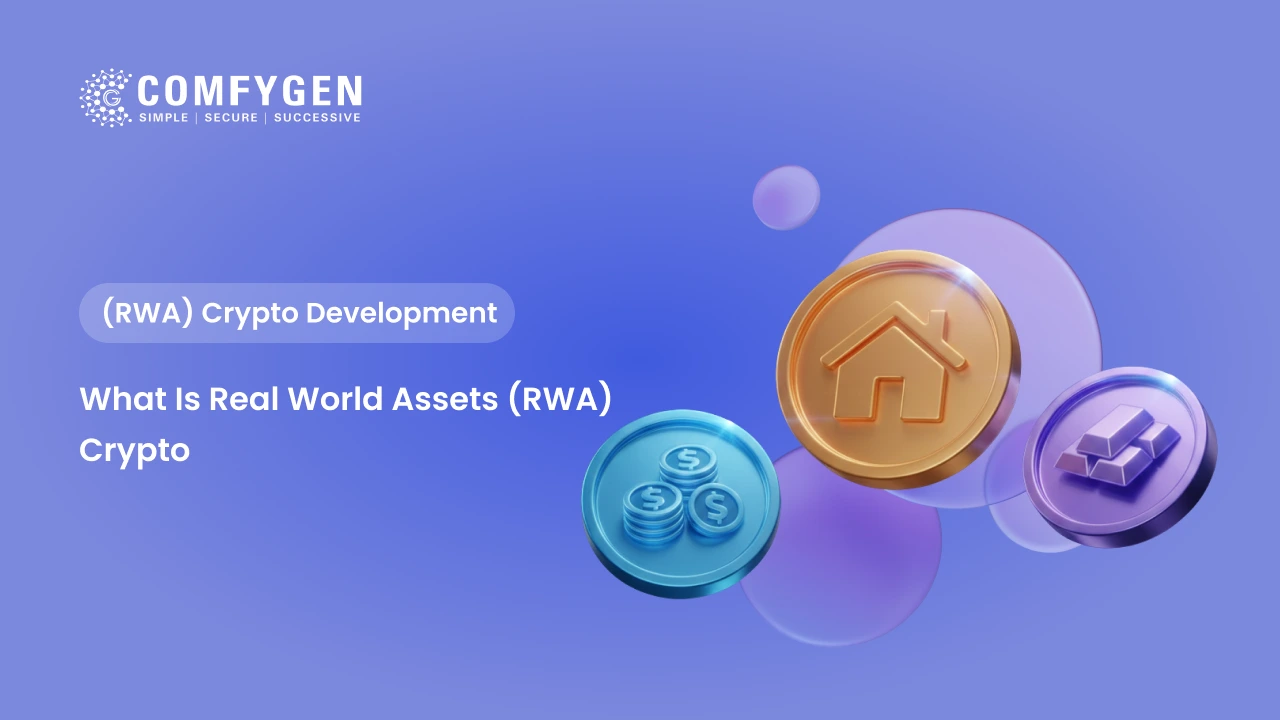





RWA, meaning Real World Assets, Real World Assets (RWA) crypto are tangible or traditional financial assets like real estate, gold, government bonds, or invoices. RWA are represented and traded on a blockchain as digital tokens. Simply put, RWA crypto fills the gap between the physical world and the digital asset ecosystem, allowing investors to access real-world value in a decentralized and programmable way.
This process is called tokenization. Tokenization converts the ownership rights of an asset into a digital token on the blockchain. Each crypto token represents a fraction or the entirety of the underlying asset, which can then be bought, sold, or used as collateral in decentralized finance (DeFi) protocols. This system ensures transparency, immutability, and auditability, while also making traditionally illiquid assets more accessible to a wider range of investors.
Some common examples of RWAs include:
- Real estate: Partial ownership of commercial or residential properties through tokenized shares.
- Commodities: Gold, silver, or oil represented as digital tokens.
- Treasury bills and government bonds: Secure, regulated financial instruments brought onto the blockchain.
- Invoices and trade receivables: Businesses can tokenize outstanding invoices to get immediate liquidity.
How RWA Crypto Works?
Learn how Real World Assets (RWA) crypto works is easier when you break it down into key steps. The core features of RWA crypto are about taking physical or traditional financial assets and making them suitable to be bought or sold on a blockchain.
Here’s how the process unfolds:
- Token Creation
The step to converting the real-world asset into a crypto token is through tokenization. For example, a commercial property can be divided into thousands of tokens, each representing a small share of ownership. These real stats tokens are then issued on a blockchain platform, making them fully digital. - Ownership and Governance
Once tokenized, the digital asset’s ownership is recorded on the blockchain. This ensures transparency, immutability, and verifiable proof of ownership. Governance mechanisms, often built into the smart contract, define how decisions related to the asset are made—such as profit distribution, voting rights, or transfer rules. - Smart Contract Enforcement
Smart contracts automate many of the processes associated with RWAs. For instance, rental income from tokenized real estate can be automatically distributed to token holders, or interest payments from tokenized bonds can be executed without intermediaries. This reduces operational token development costs and minimizes human error. - Custody and Auditing Systems
Physical assets still need secure custody. For example, tokenized gold must be stored in audited vaults, while tokenized invoices require verified documentation. Regular auditing ensures that every digital token is backed by a real-world asset, reinforcing investor confidence.
Types of Real World Assets That Can Be Tokenized
Real World Assets (RWA) crypto opens up a wide spectrum of traditional assets that can be digitized and traded on a blockchain-developed platform. The tokenization process transforms these assets into digital tokens, allowing investors to access markets that were previously difficult or expensive to reach.
Here are the main types of RWAs that are commonly tokenized:
1. Real Estate
Real estate tokenized allows investors to own fractions of residential, commercial, or industrial properties. Instead of buying an entire property, investors can purchase a small portion with digital tokens.
2. Government Bonds and US Treasury Bills
Government-issued debt instruments can be tokenized to provide a secure, transparent, and tradable form of fixed-income investment. Tokenized treasuries make it easier for individuals and institutions to access government bonds without intermediaries, while also enabling faster settlement and lower transaction cost.
3. Commodities
Physical commodities such as gold, silver, and oil are also represented as blockchain tokens. These RWA commodity tokens allow partial ownership, instant transfer, and easier verification of authenticity. Commodities investors can trade on-chain without the logistical challenges of storage or shipping.
4. Supply Chain Assets and Invoices
Businesses can tokenize invoices, receivables, or supply chain goods, turning outstanding payments into liquid assets. This is particularly useful for small and medium enterprises (SMEs) looking for faster access to working capital. Tokenized invoices can be sold or used as collateral in DeFi development protocols.
5. Intellectual Property Rights
Intellectual property, such as patents, trademarks, or music royalties, can also be tokenized. Investors can gain partial ownership of Intellectual Property, while creators receive more transparent royalty distribution. This opens new avenues for monetizing intangible assets on the blockchain.
Why RWA Is Becoming One of the Fastest-Growing Crypto Sectors
Real World Assets (RWA) crypto is the fastest gaining traction because it combines the reliability of traditional finance with the flexibility of blockchain technology.
Here’s why this sector is expanding so quickly:
Yield Opportunities
Tokenized RWAs offer predictable yields that are often more stable than DeFi investments. For example, tokenized real estate or treasury bonds can generate consistent income streams for investors seeking steady returns.
Institutional Adoption
Large financial institutions are increasingly exploring RWA tokens. Token development Companies like Comfygen and JPMorgan are testing tokenized assets for token development portfolio diversification, signaling strong institutional confidence in this sector.
Stable, Low-Risk Returns Compared to DeFi
Unlike high-risk crypto lending or yield farming, RWA crypto is backed by tangible assets. This reduces the chance of total loss and makes it appealing to risk-averse investors.
Benefits of Real-world assets (RWA) Crypto
Real-world assets (RWA) Tokenizing delivers significant advantages for both investors and businesses, creating opportunities that traditional finance often struggles to offer:
- Higher Liquidity: Traditionally illiquid assets like real estate, fine art, or invoices can now be bought, sold, or traded on blockchain platforms. This process allows investors to enter and exit positions quickly, reducing the capital lock-in that often comes with traditional asset classes.
- Fractional Ownership: High-value assets that were previously out of reach for many investors can now be divided into smaller portions. Fractional ownership enables participation with lower capital, broadening access to global investment opportunities, and allowing diversified portfolios even for smaller investors.
- Transparent Ownership Tracking: Every tokenized asset is recorded on an immutable blockchain ledger. This ensures clarity about ownership, reduces disputes, and enhances trust among investors. Businesses also benefit by having verifiable records for audits, compliance, and regulatory reporting.
- Faster Settlement: Transactions that once required days or even weeks to complete through banks or brokers can now settle almost instantly on-chain. This efficiency lowers transaction costs, reduces counterparty risk, and streamlines cross-border asset transfers.
- Borderless Investment Access: Tokenization removes geographical barriers. Investors from different countries can access global markets without the need for local intermediaries, enabling wider participation in lucrative markets such as international real estate, commodities, or treasury-backed tokens.
- Programmable Assets and Smart Contracts: Tokenized assets can be enhanced with smart contracts that automate dividends, rental income distributions, or bond interest payments. This automation reduces administrative overhead and ensures the timely, transparent execution of financial obligations.
- Enhanced Portfolio Diversification: RWA tokens allow investors to diversify across different asset classes—real estate, commodities, debt instruments—without the complexities of traditional investment channels. Diversification reduces risk while maintaining exposure to high-value markets.
- Business Growth Opportunities: For companies, tokenization offers new ways to raise capital, monetize assets, and attract a global pool of investors. It also improves cash flow management by converting illiquid assets like invoices into immediate liquidity.
Start your Real World Asset (RWA) project with Comfygen.
Let’s Connect
Major Real World Asset (RWA) Crypto Use Cases
Real World Assets (RWA) crypto is transforming traditional finance by making tangible and financial assets more accessible, liquid, and efficient. Beyond theory, these tokenized assets are being actively used in multiple sectors, creating new investment opportunities and business solutions:
Real Estate Fractional Investment
Tokenization allows properties—residential, commercial, or industrial—to be divided into digital shares. Investors can purchase fractions of high-value real estate without the need for full ownership. This opens the market to global investors, increases liquidity, and enables smaller investors to diversify across multiple properties. Platforms offering tokenized real estate also automate rental income distribution, ensuring that investors receive timely returns.
Tokenized Treasury Bonds and Government Debt
Governments and financial institutions are beginning to explore blockchain-based tokenization of bonds and treasury bills. Investors can now access these traditionally conservative, low-risk instruments through digital tokens. Tokenized bonds provide predictable yields, faster settlement, and enhanced transparency, allowing even smaller investors to participate in government-backed securities.
SME Invoice Financing
Small and medium enterprises often struggle with cash flow delays due to unpaid invoices. Tokenizing invoices converts them into digital assets that can be sold or used as collateral in DeFi lending platforms. This provides immediate liquidity, reduces reliance on traditional banks, and allows SMEs to manage working capital more efficiently.
Trade Finance
Cross-border trade can be complex, involving multiple intermediaries and delayed payments. Tokenized assets streamline trade finance by digitizing invoices, bills of lading, and other trade documents. Smart contracts automate verification and settlement, ensuring faster, more secure, and transparent cross-border transactions.
Asset-Backed Lending
Loans can now be issued against tokenized real-world assets, including real estate, commodities, and invoices. This reduces dependence on traditional banking systems and collateral processes. Lenders benefit from automated smart contract enforcement, while borrowers gain quicker access to capital without lengthy documentation or approval processes.
Commodities Tokenization
Physical commodities such as gold, silver, or oil can be represented as blockchain tokens. This allows investors to trade commodities globally without worrying about storage, logistics, or authenticity verification. Commodities tokenization also facilitates fractional ownership and opens markets to retail investors who previously lacked access.
Intellectual Property (IP) Monetization
Patents, trademarks, and music royalties can be tokenized, enabling investors to buy partial ownership or revenue rights. Creators can access a global pool of investors and automate royalty distribution through smart contracts, providing both liquidity and transparency for intangible assets.
How to Start Investing in RWA Tokens Safely
Investing in Real World Assets (RWA) crypto offers exciting opportunities, but it requires careful planning and due diligence. Here’s a step-by-step guide to start safely:
Choose a Regulated RWA Platform
Not all tokenization platforms operate under regulatory oversight. Look for platforms that comply with local financial laws and regulations, and that provide transparency about their operations. Regulated platforms reduce legal risks, ensure investor protection, and often follow strict reporting standards.
Check Asset Backing
Before investing, confirm that each token is backed by a real-world asset. Whether it’s real estate, gold, government bonds, or invoices, the platform should provide verifiable proof of ownership and custody. Transparent backing ensures that your investment has actual value and isn’t purely speculative.
Understand the Yield Mechanism
Different RWA tokens generate returns in different ways. For example, tokenized real estate may pay rental income, tokenized bonds provide interest payments, and tokenized invoices can offer short-term yields. Make sure you understand how profits are calculated, distributed, and what risks may affect your returns.
Verify Audits and Security Measures
Reputable platforms undergo independent audits to confirm that tokenized assets exist, are properly valued, and are securely stored. Check for audit reports, smart contract verification, and insurance coverage if available. Audits and security measures minimize risks of fraud, asset mismanagement, or technical vulnerabilities.
Diversify Your RWA Portfolio
Just like traditional investing, diversification is crucial. Spread your investment across multiple asset classes—real estate, commodities, bonds—to reduce exposure to risks tied to a single asset or sector. Diversification increases stability and protects against unexpected market fluctuations.
Keep Up With Regulations and Market News
The RWA crypto space is evolving rapidly. Stay informed about regulatory updates, emerging projects, and market trends. Platforms that adapt to regulatory changes and maintain transparency are generally safer for long-term investment.
The Future of Real World Assets (RWA) in Crypto with ComfyGen
The evolution of Real World Assets (RWA) in crypto is set to redefine global finance, and ComfyGen is at the forefront of helping businesses and investors navigate this transformation. Here’s what the future looks like:
Integration with CBDCs
Central bank digital currencies (CBDCs) are increasingly being explored globally. By integrating RWA tokens with CBDCs, platforms like ComfyGen enable seamless, secure, and borderless access to tokenized assets, bridging traditional monetary systems with blockchain efficiency.
Tokenized Treasury Boom
Government debt tokenization is becoming more mainstream. ComfyGen’s RWA solutions allow investors to access tokenized treasury bills and bonds with transparency and faster settlement, creating a new layer of secure, programmable investment opportunities.
Enterprise Adoption
Corporations are increasingly exploring on-chain asset management to improve liquidity, reduce settlement times, and enhance transparency. ComfyGen’s platform supports enterprises in tokenizing real-world assets like real estate, invoices, and commodities, helping businesses unlock capital that was previously tied up in illiquid assets.
On-chain Finance Merging with TradFi
Traditional finance is slowly merging with blockchain technology. ComfyGen enables this convergence by providing infrastructure for tokenized assets that meet regulatory compliance and institutional standards. This integration improves transparency, speeds up transactions, and opens global markets to investors.
Global Investment Access
With ComfyGen, investors worldwide can access tokenized real-world assets without geographic limitations. By providing secure, audited, and fractional ownership opportunities, ComfyGen democratizes investing in assets that were once exclusive to large institutions.
Conclusion
Real World Assets (RWA) crypto is bridging the gap between traditional finance and blockchain innovation, and ComfyGen is helping make this transition accessible and secure. By tokenizing tangible and financial assets, ComfyGen opens new pathways for liquidity, transparency, and global investment access. As regulations become clearer and institutional adoption grows, RWAs are poised to become a core component of the future financial ecosystem. Investors and businesses leveraging ComfyGen’s RWA solutions will be well-positioned to capitalize on this transformative shift in finance.
What is Real World Assets (RWA) Crypto?
RWA crypto refers to tangible or traditional financial assets, like real estate, government bonds, commodities, or invoices, that are tokenized and represented on a blockchain. Tokenization allows these assets to be traded digitally, providing liquidity, transparency, and fractional ownership.
How does RWA tokenization work?
Tokenization converts a real-world asset into digital tokens on the blockchain. Each token represents a fraction or the entirety of the underlying asset. Smart contracts enforce ownership, manage income distributions, and enable automated transactions, while audits ensure the asset is backed and secure.
What types of assets can be tokenized as RWAs?
Common RWA types include:
- Real estate (commercial and residential)
- Government bonds and treasury bills
- Commodities like gold, silver, and oil
- Invoices and supply chain assets
- Intellectual property rights such as patents and royalties
What are the benefits of investing in RWA crypto?
Investing in tokenized RWAs offers:
- Higher liquidity than traditional assets
- Fractional ownership and global access
- Transparent, immutable ownership tracking
- Faster settlement and automated income distribution
- Diversification opportunities across multiple asset classes
What are the risks associated with RWA crypto?
While RWA crypto is backed by tangible assets, risks include:
- Regulatory changes in different regions
- Custody and storage challenges for physical assets
- Asset valuation fluctuations
- Smart contract vulnerabilities
Due diligence and using trusted platforms like ComfyGen can mitigate many of these risks.
How can I invest safely in RWA tokens?
To invest safely:
- Use regulated and transparent RWA platforms
- Verify the underlying asset backing
- Understand the yield and income distribution mechanisms
- Check for independent audits and security measures
- Diversify across asset types to reduce risk
Are RWAs suitable for beginners?
Yes. RWA crypto is beginner-friendly when approached carefully. Platforms like ComfyGen provide educational resources, verified audits, and simplified investment processes to help new investors participate securely in tokenized real-world assets.
How do RWA tokens differ from traditional investments?
Unlike traditional investments:
- RWA tokens are programmable via smart contracts
- They allow fractional ownership
- Settlements are faster, often instantaneous
- Ownership and transaction records are transparent and immutable
What are the top RWA crypto projects?
Leading projects include:
- MakerDAO (Real-World Collateral)
- Ondo Finance
- Centrifuge
- Maple Finance
- Gold-backed tokens like PAXG
What is Real World Assets (RWA) Crypto?
RWA crypto refers to tangible or traditional financial assets, like real estate, government bonds, commodities, or invoices, that are tokenized and represented on a blockchain. Tokenization allows these assets to be traded digitally, providing liquidity, transparency, and fractional ownership.
How does RWA tokenization work?
Tokenization converts a real-world asset into digital tokens on the blockchain. Each token represents a fraction or the entirety of the underlying asset. Smart contracts enforce ownership, manage income distributions, and enable automated transactions, while audits ensure the asset is backed and secure.
What types of assets can be tokenized as RWAs?
Common RWA types include:
- Real estate (commercial and residential)
- Government bonds and treasury bills
- Commodities like gold, silver, and oil
- Invoices and supply chain assets
- Intellectual property rights such as patents and royalties
What are the benefits of investing in RWA crypto?
Investing in tokenized RWAs offers:
- Higher liquidity than traditional assets
- Fractional ownership and global access
- Transparent, immutable ownership tracking
- Faster settlement and automated income distribution
- Diversification opportunities across multiple asset classes
What are the risks associated with RWA crypto?
While RWA crypto is backed by tangible assets, risks include:
- Regulatory changes in different regions
- Custody and storage challenges for physical assets
- Asset valuation fluctuations
- Smart contract vulnerabilities
Due diligence and using trusted platforms like ComfyGen can mitigate many of these risks.
How can I invest safely in RWA tokens?
To invest safely:
- Use regulated and transparent RWA platforms
- Verify the underlying asset backing
- Understand the yield and income distribution mechanisms
- Check for independent audits and security measures
- Diversify across asset types to reduce risk
Are RWAs suitable for beginners?
Yes. RWA crypto is beginner-friendly when approached carefully. Platforms like ComfyGen provide educational resources, verified audits, and simplified investment processes to help new investors participate securely in tokenized real-world assets.
How do RWA tokens differ from traditional investments?
Unlike traditional investments:
- RWA tokens are programmable via smart contracts
- They allow fractional ownership
- Settlements are faster, often instantaneous
- Ownership and transaction records are transparent and immutable
What are the top RWA crypto projects?
Leading projects include:
- MakerDAO (Real-World Collateral)
- Ondo Finance
- Centrifuge
- Maple Finance
- Gold-backed tokens like PAXG

Mr. Saddam Husen, (CTO)
Mr. Saddam Husen, CTO at Comfygen, is a renowned Blockchain expert and IT consultant with extensive experience in blockchain development, crypto wallets, DeFi, ICOs, and smart contracts. Passionate about digital transformation, he helps businesses harness blockchain technology’s potential, driving innovation and enhancing IT infrastructure for global success.