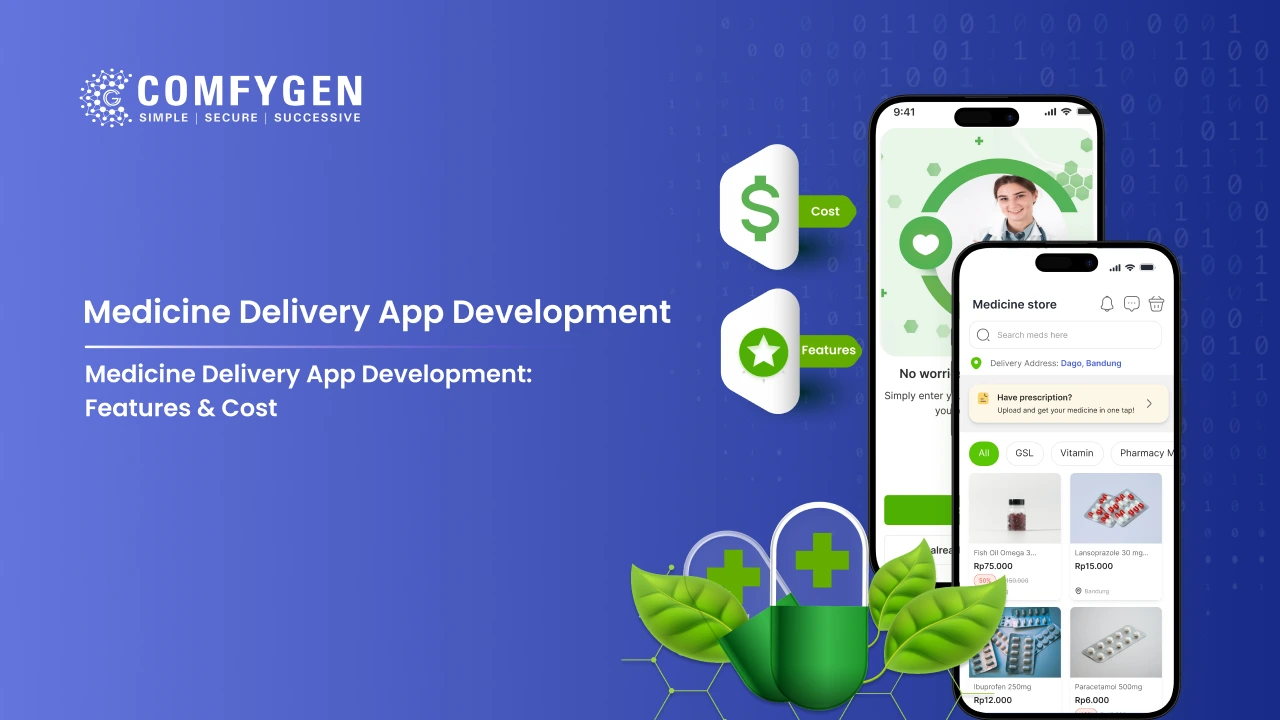





In today’s fast-moving digital world, people prefer getting their medicines delivered right to their doorstep. This rising demand has given a huge boost to on-demand medicine delivery app development, helping pharmacies go online and allowing users to order medicines anytime, anywhere.
If you’re planning to build a medicine delivery app or want to understand its features and cost, this guide will help you with everything you need to know.
Market Overview of Online Medicine Delivery Apps
The online pharmacy market revenue is expected to reach a valuation of USD 82.42 billion in 2025. The revenue is estimated to witness a CAGR of 9.63%, which is expected to reach a valuation of US$130.50 billion by 2029. The market report further shows that user penetration in 2025 is going to be 12.07%, and that will increase to 16.16% by 2029. The average revenue per user is estimated to be USD 88.14.
The online pharmacy and medicine delivery market is growing due to increasing smartphone usage and rising healthcare awareness. People now expect quick medicine delivery, especially for chronic diseases and emergency needs. Online medicine delivery apps reduce waiting time, improve accessibility, and support contactless delivery, making them highly popular among users.
What Is an On-Demand Medicine Delivery App?
An on-demand medicine delivery app is a platform that allows users to order medicines, upload prescriptions, compare prices, and get timely home delivery. The popular medicine delivery apps like 1mg, PharmEasy and Netmeds have already proven how successful this business model can be.
Why These Online Medicine Delivery Apps Are Becoming Popular?
-
Convenience of ordering medicines from home
-
Contactless and safe delivery
-
Easy access to genuine medicines
-
Time-saving for the elderly and busy individuals
-
Offers, discounts, and quick reorders
Why Should Businesses Invest In A Medicine Delivery App?
While businesses invest in an on-demand medicine delivery app development accelerate their customer reach and eradicate location limitations. Businesses will serve a wider healthcare sector audience, which will eventually increase their sales and generate revenue.
Moreover, this investment can also improve operational efficiency through streamlined order processing and delivery logistics. With the growth of telemedicine and digital health trends, having a dedicated platform allows businesses to stay competitive in the ever-developing market.
Business Models for an Online Pharmacy App
Choosing the right business model is one of the most important steps in medicine delivery app development. Your business model decides how the app will work, how you will earn money, and how pharmacies and users will interact.
Here are the top business models you can choose from:
Single Pharmacy Store Model
A single pharmacy store app is designed for one medical store or a pharmacy chain. This type of app allows pharmacy owners to sell medicines online directly to their customers without involving other sellers. Customers can search medicines, upload prescriptions, place orders, and get home delivery from the same pharmacy they trust.
This model is best for local pharmacies and branded medical stores that want to build their own online presence, increase repeat customers, and manage pharmacy inventory software digitally with full control.
Marketplace Aggregator Model
A multi-vendor pharmacy marketplace app connects multiple pharmacies on one platform. Customers can compare medicine prices, availability, and delivery time from different sellers before placing an order. The app owner earns revenue through commissions, subscriptions, or featured listings.
This model works like an eCommerce marketplace and is ideal for startups and large healthcare businesses that want to scale fast, cover multiple locations, and offer a wide range of medicines to users.
Pharmacy Chain Model
Ideal for brands that own multiple pharmacy branches. Your app connects all your branches into one system. Customers can order from the nearest store, check stock availability, and enjoy faster delivery.
Subscription-Based Medicine Delivery App Solutions
A subscription-based medicine delivery app is designed for patients who take medicines regularly, such as for diabetes, blood pressure, heart problems, or other chronic conditions. Users can set weekly or monthly subscriptions so medicines are delivered automatically without placing orders every time.
This model improves customer convenience, ensures timely medicine supply, and helps businesses build long-term customer relationships with predictable recurring revenue.
Planning to Launch an Online Medicine Delivery App?
Let our experienced team help you build a feature-rich pharmacy app that grows your business.
Key Features of a Medicine Delivery App
A successful on-demand medicine delivery app must offer smooth navigation, fast ordering, and reliable delivery. To help you build a powerful and user-friendly platform, here are the essential features you should include in your medicine delivery app development plan.
User App Features
These medicine delivery app features directly impact the customer experience for users, so they must be simple, fast, and intuitive.
Easy Medicine Search: Users should be able to quickly search medicines using drug names, brands, salt composition, and categories. A smart search improves user satisfaction and boosts conversions.
Prescription Upload: This allows users to use in-app prescription management to upload prescriptions directly from their gallery or camera. It ensures safe and legal medicine purchases, especially for prescription-only drugs.
Dosage Reminders: A helpful feature that reminds users when to take their medicines. This improves user engagement and promotes app loyalty.
Order History: Users can easily repeat previous orders and check past purchases. It simplifies reordering, especially for long-term treatments.
Secure Payment Options: Include multiple payment methods like UPI, credit/debit cards, net banking, and wallets to make checkout fast and secure.
Real-Time Order Tracking: Users can track their order status from pharmacy confirmation to the delivery partner’s location. This increases transparency and trust.
Discounts & Offers: Provide promo codes, loyalty points, and special deals to attract customers and stay competitive in the online pharmacy market.
Pharmacy Panel Features
The pharmacy panel helps store owners manage orders and improve efficiency. These pharmacy delivery app features streamline operations in the development of online medicine delivery apps.
Inventory Management: Pharmacies can manage stock availability, update quantities, and avoid order cancellations due to out-of-stock items.
Order Verification: Pharmacists can review and approve orders based on prescription validity and medicine availability.
Sales Dashboard: A detailed dashboard displays daily orders, earnings, and performance analytics to help pharmacies make better decisions.
Prescription Management: Pharmacies can check uploaded prescriptions, verify them, and keep a digital record.
Offers & Discounts Management: Store owners can run promotions and manage product-specific discounts to attract more customers.
Admin Panel Features
The admin panel is the core of the system. It allows you to manage the app, control operations, and monitor performance.
Manage Users & Pharmacies: Admins can add, remove, or update pharmacy partners, delivery agents, and customers.
Analytics and Reports: Track app performance, sales reports, user activity, and pharmacy engagement. Data insights help in making smarter business decisions.
Payment & Commission Tracking: Admins can manage commissions, payouts, transactions, and revenue flow.
Delivery Management: Assign delivery tasks, track delivery partners, and ensure timely order delivery.
Push Notifications and Alerts: Send important updates like order status, offers, prescription reminders, and system alerts.
Advanced Features of the Medicine Delivery App to Stand Out
To make your on-demand medicine delivery app stand out from competitors, you need advanced features of online medicine delivery that offer more convenience, better personalisation, and higher accuracy. These pharmacy app features not only improve the user experience but also help your app stay relevant in the fast-growing digital healthcare market.
Here are some of the most powerful advanced features of on-demand medicine delivery app development:
AI-Based Suggestions
Artificial Intelligence helps your app understand users better.
How it helps users:
-
Recommends relevant medicines based on past orders
-
Suggests alternative medicines for out-of-stock items
-
Shows personalised health products like vitamins, diabetes supplies, or supplements
Why it’s important:
AI increases user engagement and boosts sales by offering smarter, more personalised suggestions — a must-have in modern AI medicine delivery app development.
Telemedicine Integration
Want to integrate telemedicine to transform your planning medicine delivery app from a delivery platform to a complete healthcare solution.
What it offers:
-
Online doctor consultations through video calls, voice calls, or chat
-
Digital prescriptions generated directly from the doctor
-
Easy follow-ups for patients
Benefits for users:
-
Saves time and travel
-
Offers immediate medical advice
-
Helps users get valid prescriptions for required medicines
This feature ensures your app competes with top platforms by providing a complete online healthcare experience.
Automatic Refill Reminders
This feature is especially useful for patients who take long-term or monthly medications.
How it works:
-
The app tracks users’ past orders
-
Sends reminders before the medicine stock runs out
-
Allows one-click reorder for convenience
Why users love it:
-
No need to remember refill dates
-
Ideal for chronic patients (diabetes, BP, thyroid, etc.)
-
Improves medication adherence
This feature improves both user experience and repeat order rates, helping your business grow.
Multi-Language Support
In many countries, people prefer apps in their local language.
Advantages:
-
Helps non-English speakers use the app comfortably
-
Builds trust among local users
-
Increases downloads and engagement
Offering multiple languages ensures your pharmacy delivery app is accessible to a wider audience.
In-App Chat with Pharmacy
Direct communication between users and pharmacies reduces confusion and improves service quality.
What users can do:
-
Ask questions about medicine availability
-
Get suggestions for alternative brands
-
Clarify dosage or product details
-
Share prescription images instantly
Benefits:
-
Faster issue resolution
-
Better customer satisfaction
-
Reduces order cancellations
This feature adds a human touch to your online medicine delivery app.
Smart OCR Prescription Scanning
OCR (Optical Character Recognition) enables quick and error-free prescription handling.
How it works:
-
Users upload a handwritten or printed prescription
-
OCR scans text and extracts medicine details
-
App automatically adds medicines to the cart
Why it’s useful:
-
Saves time
-
Reduces manual entry errors
-
Helps pharmacists verify prescriptions faster
This feature improves accuracy, speed, and overall user experience — perfect for modern healthcare app development.
Start Your Medicine Delivery App Today
Let’s Connect
How Much Does On-Demand Medicine Delivery App Development Cost in 2026?
The cost to build a medicine delivery app starts from $8,000 to $55,000+. The total budget for medicine delivery app development depends on multiple factors like features, technology, design, and development time. Below is a clear Medicine ordering app development breakdown to help you plan smartly.
Key Factors Affecting the Cost to Build a Medicine Delivery App
The development of a medicine delivery app involves different cost-influencing factors that can significantly impact the overall budget estimation. Understanding these factors can help healthcare businesses make informed decisions and allocate resources in an effective way before consulting a medicine delivery app development company.
Platforms (Android, iOS, or Both)
Building a medicine delivery app for one platform costs less. Developing for both Android and iOS requires extra time and resources, increasing your budget.
UI/UX Design Complexity
A clean, user-friendly design improves the customer experience. Basic pharmacy app designs cost less, while custom illustrations, animations, or highly interactive layouts increase the overall cost.
Technology Stack & Integrations
The tech stack (Flutter, React Native, Node.js, Laravel, etc.) affects pricing.
Also, third-party integrations like:
-
Payment gateways
-
SMS/Email notifications
-
Secure cloud storage
-
Maps & GPS tracking
-
OCR prescription scanning
Backend Development & Database
A scalable backend is required to manage users, pharmacies, orders, delivery partners, and payments. More complex apps need more robust server support, which increases the cost.
Development Team Location and Expertise
The location and expertise of the on-demand medicine delivery app development team also influence app costs. When you hire a local team with a high cost of living, it may lead to higher expenses compared to outsourcing to developers with lower costs.
However, the expertise and experience of the development team are crucial for delivering a high-quality app. Investing in skilled mobile developers may result in higher upfront costs, but it will be beneficial in the long term.
Maintenance & Updates
Even after launch, your app needs regular updates, bug fixes, and feature improvements. Maintenance usually costs 15–20% of the total development price per year.
Estimated Cost Breakdown for Medicine Delivery App Development
Here is an estimated budget based on different medicine delivery app types:
| App Type | Approx Development Cost | What You Get |
|---|---|---|
| Basic Medicine Delivery App | $8,000 – $15,000 | Simple UI, basic features, limited admin controls |
| Medium-Complexity App | $15,000 – $30,000 | Additional features, better UI/UX, advanced admin panel |
| Advanced App (AI + Telemedicine + OCR) | $30,000 – $60,000+ | Full-featured platform with AI, chat, telemedicine, smart scanning, and custom design |
Why Choose Professional On-Demand Medicine Delivery App Development Services?
Building an on-demand medicine delivery app is not just about creating a mobile application—it’s about developing a secure, reliable, and user-friendly healthcare platform. That’s why choosing professional medicine delivery app development services is essential if you want your app to perform smoothly and stand out in a competitive market.
Here’s why partnering with expert developers makes a big difference:
Experience and Expertise
Professional mobile app developers have hands-on experience in creating healthcare and pharmacy delivery apps, which require deeper knowledge than standard apps. They understand:
-
HIPAA & GDPR compliance medicine delivery apps
-
Prescription handling
-
Secure patient data management
-
Medical product listing rules
Portfolio and Case Studies
Do not forget the pharmacy delivery app development firm’s portfolio and case studies to assess the quality and diversity of their previous projects. A strong portfolio showcases their successful online medicine delivery apps, boosting your confidence in their ability to deliver a high-quality app.
Client Reviews and Testimonials
Going through client reviews and testimonials offers valuable insights into the pharma app development partner’s reliable service. You will know about their communication and transparency in their service.
Reach out to their previous clients and, if possible, gather feedback on their experiences with mobile apps in the healthcare sector. If you get positive reviews and strong recommendations, they are a trustworthy partner.
Support and Maintenance Services
The last but most important factor is the availability of support and maintenance services. The support service should be offered after the app’s launch. Ongoing support is essential for addressing issues, implementing updates, and enhancing features based on user feedback.
A custom delivery app development partner who offers holistic post-launch support and service ensures the long-term success of your app. If you’re planning to build your own platform, our guide on how to build a medicine delivery app will help.
Conclusion
Building an on-demand medicine delivery app is a smart business move in the growing healthcare industry. With the right features, technology, and budget planning, you can create a powerful platform that helps users access medicines easily and helps pharmacies grow their business online.
FAQs
What are the must-have features of a medicine delivery application?
What is the estimated cost of developing a medicine delivery app?
What is the duration of developing a medicine delivery app?
How do I choose the right development partner?
Can I integrate third-party services into my medical delivery app?

Mr. Saddam Husen, (CTO)
Mr. Saddam Husen, CTO at Comfygen, is a renowned Blockchain expert and IT consultant with extensive experience in blockchain development, crypto wallets, DeFi, ICOs, and smart contracts. Passionate about digital transformation, he helps businesses harness blockchain technology’s potential, driving innovation and enhancing IT infrastructure for global success.