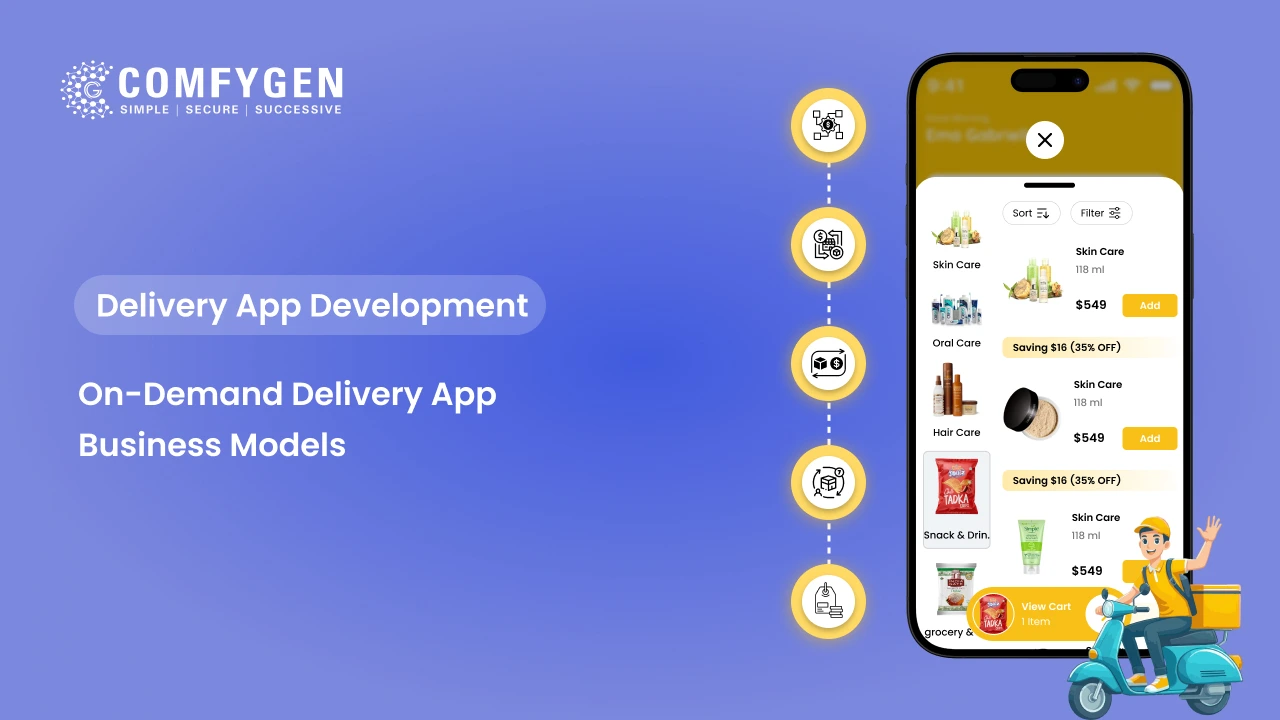





In today’s fast-growing digital world, people expect everything at their doorstep — food, groceries, medicines, personal care products, electronics, and even daily essentials. This behavior has rapidly boosted the On-Demand Delivery App business globally. Startups and entrepreneurs are entering this profitable industry because users love instant services, flexibility, and convenience.
However, simply launching a delivery app is not enough!
To build a successful and profitable On-Demand Delivery business, you must select the right business model that fits your market, budget, and growth plan.
This guide will help you choose the best delivery app business model with real-world examples, future market trends, revenue techniques, and expert insights — enabling your startup to scale faster and earn maximum profit.
What is an On-Demand Delivery App Business Model?
An on-demand delivery app business model defines how your delivery platform will operate and earn revenue. It includes customer flow, vendor participation, delivery management, and monetization strategies. A well-planned business model improves customer experience, reduces operational costs, and helps your startup scale faster.
Why Choosing the Right On-Demand Delivery App Business Model Matters for Startups?
Selecting the right delivery app business model is the foundation of a profitable startup. Every model comes with different operational workflows, cost structures, audience targeting, and revenue outcomes. A strong business model helps your delivery startup grow consistently—even in a competitive market.
Here’s why this decision is crucial:
Better Control Over Operations & Costs
Your business model directly impacts logistics expenses, vendor involvement, and delivery handling.
A well-optimized standard model helps startups:
- Reduce unnecessary delivery and staffing costs
- Optimize resource allocation from day one
- Manage cash flow efficiently
Enhances Customer Experience & Brand Loyalty
Customers love fast, reliable, and transparent services.
The right model ensures:
- Lower delivery time
- Smooth ordering to delivery journey
- High-quality support & fulfillment
Ensures Higher Competitiveness in the Market
Every city has multiple delivery apps. Your model can be a USP.
For example:
- Hyperlocal marketplace = Faster delivery
- Subscription-based delivery = Affordable recurring services
Improved Scalability for Future Growth
Some models allow startups to scale into multiple cities faster with controlled investment, like marketplace and hybrid models.
They help you:
- Expand vendor base
- Increase order volume
- Enter new regions efficiently
Strong Revenue & Profitability Framework
The right business model enables multiple revenue streams such as:
- Commissions from vendors
- Delivery fee per order
- Surge pricing profits
- Membership & subscription plans
- In-app advertising
Who Powers the On-Demand Delivery Business Ecosystem?
A profitable on-demand delivery app business model relies on a powerful ecosystem where every stakeholder plays an important role. To build a successful on-demand delivery startup, it is crucial to understand how each player contributes to customer satisfaction, operational efficiency, and revenue growth.
Here are the major players in the on-demand delivery business ecosystem:
Customers – The Revenue Drivers
Customers are the heartbeat of any on-demand delivery platform. Their demand for convenience, quick deliveries, and seamless digital experience drives the entire business.
Customers expect:
- Fast and real-time delivery updates
- A wide variety of products and services choices
- Secure and smooth payment options
Vendors / Service Providers – The Product Source
Vendors include restaurants, grocery shops, pharmacies, retailers, and service-based providers.
They use the delivery mobile app as a digital marketplace to reach more buyers and increase sales.
Key responsibilities:
- Maintain product availability and quality
- Accept and process orders instantly
- Provide competitive pricing
Delivery Partners / Logistics Providers – The Fulfillment Experts
Delivery partners ensure orders reach customers safely and quickly.
They are the core operational unit of on-demand delivery service.
They handle:
- Order pick-up and drop-off
- Real-time route optimization
- Customer communication during delivery
App Owners / Platform Administrators – The Business Operators
App owners manage the entire on-demand delivery marketplace.
They are responsible for business strategy, revenue generation, and overall system performance.
Their roles include:
- Managing vendor onboarding
- Commission structures and delivery charges
- Marketing and customer support
- Technology upgrades & security
Payment Partners – Secure Transaction Enablers
Digital payments are essential for a frictionless delivery application ecosystem.
Payment partners make sure seamless money flow between customers, vendors, and delivery partners.
They provide:
- Multiple payment methods (UPI, debit/credit cards, wallets)
- Fast settlement and refunds
- Encryption for security & fraud prevention
Want to Develop an Instant
Delivery App like Blinkit?
Get a Free Quote
Top On-Demand Delivery App Business Models in 2026
Choosing the right delivery app business model helps your startup succeed in a highly competitive market. Each model has different operational workflows, cost structures, and scalability advantages. Below is a detailed breakdown to help you identify the best fit for your delivery business goals.
Aggregator Business Model
The Aggregator Business Model is one of the most widely used on-demand food delivery app business models in the food and services industry. In this model, the app acts as a third-party digital marketplace that connects customers with multiple service providers or vendors — without owning delivery infrastructure.
How the Aggregator Model Works
- Customers browse and compare menus or services from different vendors in a single app
- Orders are placed through the app
- Vendors manage preparation, packing, and delivery
- The platform earns a commission for every transaction
Major Benefits of the Aggregator Model
- Low operational cost (no delivery fleet required)
- Easy to scale by adding more vendors
- Wider product/service selection attracts more users
- Vendor competition leads to better customer pricing
Revenue Streams (High Earning Potential)
The aggregator model allows multiple monetization options:
| Revenue Stream | Description |
| Commission Charges | Percentage fee per order from vendors |
| In-App Advertisements | Paid promotion for listed vendors |
| Delivery Charges | Optional fee in partnership delivery setup |
| Subscription Plans | Loyalty programs for customers |
| Surge/Peak Pricing | Extra charges during peak hours |
Examples: Zomato, UberEats
Marketplace Delivery Business Model
The Marketplace Delivery Business Model is ideal for startups that want to manage both vendor listings and delivery logistics. Unlike the aggregator model, in which the platform relies on third-party delivery, the platform owns or manages the delivery process, ensuring faster deliveries and a consistent customer experience.
How the Marketplace Model Works
- Customers place orders through the app
- The platform coordinates with vendors for preparation
- Delivery is handled by the app’s in-house or partnered logistics team
- Real-time tracking ensures transparency from order placement to doorstep delivery
Benefits of the Marketplace Model
- Better Customer Experience: Orders are delivered reliably and on time.
- Full Control of Operations: The platform can monitor delivery times, packaging, and customer feedback.
- Brand Reliability: Customers trust apps that consistently deliver quality service.
- Scalability: Expanding to new areas is smoother with a unified logistics framework.
- Data-Driven Decisions: Analytics on order patterns, delivery performance, and vendor efficiency help optimize operations.
Revenue Streams
| Revenue Stream | Description |
| Commission | A percentage fee from vendors per order |
| Delivery Charges | Fees applied for doorstep delivery handled by the platform |
| Surge Pricing | Extra charges during peak hours or high-demand zones |
| Subscription Plans | Premium memberships offering free delivery or faster service |
| Ads & Featured Listings | Vendors pay to be highlighted in the app |
Who Should Choose the Marketplace Delivery Model
- Startups targeting hyperlocal delivery like groceries, medicines, or daily essentials
- Companies aiming for high customer satisfaction and retention
- Businesses that want data-driven operations and scalability
Examples: Swiggy, Instacart
Single Vendor / Store-Based Business Model
The Single Vendor or Store-Based Business Model is ideal for retailers and D2C brands that want to sell products directly to customers via their own branded delivery app. Unlike aggregator or marketplace models, the brand itself manages the entire operation, from order management to delivery.
This model ensures complete control over quality, pricing, and customer experience, making it a highly profitable approach for established businesses or startups with a strong brand presence.
How the Single Vendor Model Works
- Customers download the brand’s app and place orders
- The store handles order processing, packaging, and delivery
- Payments are collected through the app using integrated payment gateways
- The brand can offer personalized promotions, loyalty programs, and exclusive discounts
This direct-to-customer approach helps build a strong relationship between the brand and the customer, increasing loyalty and repeat orders.
Major Benefits of Store-Based Business Model
- Higher Profit Margins: No third-party commissions reduce costs and increase revenue per order.
- Full Brand Control: Manage pricing, delivery experience, and customer support.
- Customer Loyalty: Direct interaction allows better personalization and rewards programs.
- Enhanced Marketing Opportunities: Push notifications, in-app promotions, and loyalty programs boost engagement.
- Data Insights: Track customer behavior, preferences, and purchase trends for smarter decision-making.
Ideal for businesses that want to strengthen their brand identity and retain full control over operations.
Revenue Streams
| Revenue Stream | Description |
| Direct Sales | Profit from each order without commissions |
| Delivery Charges | Optional fees for doorstep delivery handled by the brand |
| Subscription / Loyalty Programs | Monthly memberships offering discounts or free delivery |
| Exclusive Offers | Promote bundled products or limited-time deals |
Who Should Choose the D2C Business Model
- Retail chains with established products
- D2C startups looking for brand recognition
- Restaurants, bakeries, or cloud kitchens wanting end-to-end control
- Businesses aiming for a high-quality customer experience and repeat orders
Examples: Domino’s, Starbucks Mobile App
This model works exceptionally well when the startup wants complete operational control and maximum profitability, especially in competitive markets where brand loyalty and repeat business are crucial.
Subscription-Based Delivery Business Model
The Subscription-Based Delivery Business Model is designed for startups offering daily essentials and consumables such as milk, groceries, medicines, or meal kits. In this model, customers pay a weekly, monthly, or annual subscription fee to receive products at regular intervals, ensuring predictable revenue and high customer retention.
This model has gained significant popularity in the on-demand delivery industry because it guarantees consistent cash flow while building long-term customer relationships.
How the Subscription-Based Model Works
- Customers select a subscription plan based on their needs (daily, weekly, monthly).
- The app automatically processes orders and schedules deliveries according to the chosen plan.
- Payments are collected upfront or via auto-renewal subscriptions.
- Delivery is fulfilled either by the brand or a partnered logistics provider.
Major Benefits of the Subscription Model
- Guaranteed Recurring Revenue: Subscription fees provide predictable income for the business.
- Customer Loyalty & Retention: Automated deliveries create habit-forming behavior, increasing lifetime value.
- Better Inventory & Demand Planning: Knowing how many orders will arrive each day/week allows efficient stock management.
- Higher Customer Satisfaction: Timely, regular deliveries improve the overall experience.
- Upselling & Cross-Selling Opportunities: Customers can be offered additional products, premium plans, or add-ons.
This model works best for products that customers consume regularly and value convenience, such as groceries, milk, medicine, or meal kits.
Revenue Streams
| Revenue Stream | Description |
| Subscription Fees | Recurring weekly, monthly, or annual payments |
| Delivery Charges | Optional fees for faster or same-day delivery |
| Premium Plans | VIP subscription offering free delivery or exclusive products |
| Product Upselling | Adding complementary items or bundle offers |
| Loyalty Rewards | Encourage long-term retention and repeat purchases |
Who Should Choose This Model
- Milk Delivery Apps – Daily essentials that require repeat orders
- Grocery Delivery Startups – Predictable weekly demand
- Medicine & Health Products Delivery – Regular medication for customers
- Businesses aiming for long-term customer retention and predictable revenue
Example: DailyNanny, BigBasket Subscription, MilkBasket
Hybrid On-Demand Delivery Model
The Hybrid On-Demand Delivery Model combines the best features of the marketplace and aggregator models, allowing startups to operate with both vendor-managed delivery and platform-controlled logistics. This flexible approach is ideal for companies aiming for rapid expansion and diversified revenue streams.
By offering both options, the hybrid model caters to different vendor capabilities and customer preferences, making it one of the most adaptable business strategies in the on-demand delivery industry.
How the Hybrid Model Works
- Vendors can either deliver their products themselves (aggregator style) or use the platform’s delivery network (marketplace style).
- Customers can browse products/services, choose preferred delivery options, and track orders in real time.
- Payment is processed via the app, with commission and delivery fees distributed according to the chosen delivery method.
- Startups gain full operational control, while still leveraging vendor networks for faster scaling.
Major Benefits of the Hybrid Model
- Flexible Vendor Participation: Accommodates both small vendors without delivery capacity and larger vendors with in-house logistics.
- Multiple Revenue Streams: Commission, delivery charges, surge pricing, subscriptions, and ads can all be integrated.
- Rapid Scalability: Expands across cities without heavy investment in delivery infrastructure.
- Improved Customer Experience: Combines vendor reliability with platform oversight for timely delivery.
- Adaptability: Can adjust operations based on demand, seasonal trends, and vendor availability.
Revenue Streams
| Revenue Stream | Description |
| Commission Fees | Percentage from each vendor order |
| Delivery Charges | Platform or vendor delivery fees |
| Surge Pricing | Extra fees during high-demand periods |
| Subscription Plans | Premium membership for loyal customers |
| Advertising | Featured listings for vendors or products |
Who Should Choose This Model
- Startups targeting rapid multi-city expansion
- Businesses that want flexibility in vendor and delivery management
- Companies aiming for diversified revenue streams
- Entrepreneurs looking for a future-proof, scalable delivery solution
Examples: UrbanClap (now Urban Company), Dunzo
Ready to Build Your Own On-Demand Delivery App?
Let’s Connect
Franchise/White-Label Business Model
The Franchise or White-Label Delivery Business Model allows startups and small businesses to launch their on-demand delivery app quickly using pre-built, customizable technology.
Unlike building an app from scratch, this model provides a ready-made platform that can be branded, configured, and launched in a short time, enabling faster time-to-market and quicker ROI.
This model is particularly advantageous for entrepreneurs who want to start a delivery business with minimal technical investment while still offering a professional, feature-rich solution to customers.
How the Franchise / White-Label Model Works
- The startup purchases or licenses a ready-made delivery app solution from a provider.
- Branding, logo, color schemes, and app content are customized to match the business identity.
- The platform supports vendor listing, order management, and delivery operations.
- The business begins serving customers immediately, with minimal setup time.
Major Benefits of Franchise/White-Label Business Model
- Quick Market Launch: Pre-built apps reduce development time from months to days or weeks.
- Low Development Costs: No need to hire a full development team or build from scratch.
- Faster ROI: Early launch leads to immediate revenue generation.
- Customizable & Scalable: White-label food delivery mobile app development solutions can be upgraded with additional features as the business grows.
- Professional Features Out-of-the-Box: Apps typically include GPS tracking, payment gateways, notifications, and analytics.
Revenue Streams
| Revenue Stream | Description |
| Commission Fees | Percentage charged from vendors on each order |
| Delivery Charges | Fees collected from customers for delivery |
| Subscription Plans | Membership plans for loyal users |
| Advertisements | Paid listings or featured vendor promotions |
| Franchise Expansion | License fees for sub-franchise partners |
Who Should Choose This Model
- Small business owners aiming for a professional app instantly
- Entrepreneurs looking for instant branding in the delivery industry
- Businesses with limited technical resources
- Startups targeting fast ROI and market entry
Examples: MilkBasket (white-label solutions for milk delivery), Quick commerce startups using pre-built apps
Revenue Models for On-Demand Delivery Apps
Choosing the right revenue model is critical for the success of any on-demand delivery app startup. A well-planned monetization strategy ensures consistent cash flow, high profitability, and long-term sustainability. Modern delivery apps often combine multiple revenue streams to increase earnings while providing value to customers and vendors.
Here are the most profitable revenue models for on-demand delivery apps:
Commission from Vendors
The commission-based revenue model is the most common strategy for on-demand delivery startups.
- The delivery app earns a percentage of each transaction completed through the platform.
- Vendors pay for the orders received, creating a steady revenue stream.
- This model is widely used in food delivery apps, grocery delivery apps, and local service marketplaces.
Delivery Fee per Order
Charging a delivery fee per order is another essential revenue model.
- Fees can vary based on distance, order size, or urgency.
- Encourages customers to pay for faster or more convenient delivery options.
- Works well for hyperlocal delivery apps, grocery delivery, and daily essentials delivery.
Surge Pricing During Peak Hours
Surge pricing is a dynamic pricing model where delivery fees increase during high-demand periods.
- Helps balance the demand and supply of delivery partners.
- Encourages more riders to work during peak hours.
- Common in food delivery, pharmacy delivery, and courier services.
Subscription Membership Plans
Offering subscription or loyalty plans provides recurring revenue.
- Customers pay weekly, monthly, or annually for benefits like free deliveries, discounts, or priority service.
- Encourages customer retention and habit formation.
- Highly effective for milk delivery apps, groceries, or daily essentials delivery apps.
In-App Advertisements
Monetize your platform by offering advertising opportunities to vendors.
- Vendors can pay for featured listings, banners, or push notifications.
- Generates an additional revenue stream without charging customers directly.
- Works best for marketplace delivery apps with multiple vendors.
Premium Listings for Businesses
Premium vendor listings help vendors get more visibility and orders.
- Vendors pay extra to appear at the top of search results or in featured categories.
- Provides startups with a steady income while helping vendors grow their business.
- Ideal for food delivery apps, grocery marketplaces, and service marketplaces.
Future Trends in On-Demand Delivery Apps (2026 and Beyond)
The on-demand delivery industry is evolving rapidly. Startups that adopt cutting-edge technologies and innovative trends can gain a competitive advantage, improve customer satisfaction, and maximize profitability. Here are the key future trends shaping the delivery app ecosystem:
Drone Deliveries for Faster Fulfillment
Drone delivery is becoming a real solution for fast, small-package deliveries. Startups can now deliver items like food, groceries, and medicines within minutes, especially in crowded cities where traffic slows down traditional delivery.
Drone deliveries reduce labor costs, speed up operations, and help reach remote or hard-to-access areas efficiently.
Many global companies, including Amazon Prime Air and Zipline, are already testing drones for ultra-fast fulfillment.
AI-Powered Dispatching and Intelligent Tracking
Using Artificial Intelligence (AI) in delivery applications helps startups optimize order routing, delivery scheduling, and real-time tracking.
AI can predict traffic patterns, peak hours, and delivery times, making operations more efficient. With AI, customers enjoy faster deliveries and better transparency, while delivery partners are assigned smarter routes.
Delivery apps like Swiggy and Uber Eats already use AI algorithms to match orders with the nearest delivery partner, improving overall efficiency.
Blockchain-Based Delivery App for trust & transparency
Blockchain technology is helping delivery startups maintain secure, tamper-proof records of orders and payments. Both customers and vendors can track deliveries in real-time, which reduces disputes and builds trust.
Blockchain also simplifies vendor payments and ensures accountability across the logistics network. Some startups are already using blockchain to track high-value products like medicines and premium items, enhancing transparency and reliability.
Hyperlocal Express Delivery in Minutes
Hyperlocal delivery focuses on delivering essentials like groceries, snacks, or medicines within the same city or neighborhood, often in under 15–30 minutes. This model ensures faster service, higher customer satisfaction, and better repeat orders.
Startups delivery apps like GoPuff are leading the way in hyperlocal express deliveries, showing how urban delivery apps can achieve rapid growth and strong customer loyalty.
Green Deliveries Using EVs and Eco-Friendly Vehicles
More startups are shifting to eco-friendly and sustainable delivery methods such as electric bikes, scooters, and bicycles. Green deliveries reduce the carbon footprint, appeal to eco-conscious customers, and help brands comply with local environmental regulations.
Customers today increasingly prefer sustainable delivery apps, which builds loyalty and strengthens brand image. Companies like BigBasket and Zomato are already implementing electric vehicles in major cities.
Autonomous Robots and Smart Lockers
Robotic delivery systems and smart lockers are emerging as a futuristic trend in on-demand delivery. Autonomous robots can deliver packages without human contact, while smart lockers allow customers to pick up items 24/7 at convenient locations.
These technologies reduce labor dependency, ensure safer deliveries, and help startups scale efficiently in high-demand areas. Starship Technologies and Amazon Locker are already using robots and smart lockers for deliveries.
Ready to Build an AI-Powered Grocery App?
Request a Demo
How to Choose the Best Delivery Business Model for Your Startup
Choosing the right on-demand grocery delivery app development services is critical for the success of your startup. The right model helps you maximize revenue, scale efficiently, and meet customer expectations. Here’s a step-by-step guide to help startups decide the most suitable business model:
Understand Your Target Market Demand
Before selecting a model, analyze what your customers need. Are they looking for fast grocery deliveries, food delivery, medicine delivery, or subscription-based services? Understanding market demand will help you choose a model that fits your customer preferences and purchasing behavior.
Evaluate Your Logistics and Delivery Capability
Do you have the resources to manage in-house delivery, or will vendors handle deliveries themselves? If you can invest in a logistics network, a marketplace or hybrid delivery model may be ideal. If not, an aggregator model allows vendors to manage delivery while you focus on technology and customer acquisition.
Decide the Number of Vendor Partnerships
The scale of your vendor network influences your business model. If you plan to partner with multiple vendors, models like aggregator or hybrid delivery work well. For a single vendor or D2C startup, a store-based delivery model provides more control and higher profit margins.
Consider Your Startup Budget and Technology Plan
Your investment budget and tech strategy are key in choosing a business model. Marketplace and hybrid models require more technology, advanced features, and delivery management systems, whereas aggregator and white-label apps are more cost-effective and quicker to launch.
Evaluate Long-Term Scalability
Your business model should support future growth and expansion. Subscription-based, hybrid, and franchise/white-label models are highly scalable, while single-vendor models work best for localized markets. Consider multi-city expansion, additional product categories, and evolving customer needs when selecting your model.
Must-Have Features for On-Demand Delivery App Development
A successful on-demand delivery app relies not only on its business model but also on essential features that ensure smooth operations, high customer satisfaction, and scalability. Startups and entrepreneurs must include these core features in their delivery apps to stay competitive and efficient.
Secure Login & User Profiles
Authentication methods such as OTP, social media login, or biometric login ensure account safety. Customers can track their order history, preferences, and subscriptions using their user profiles. The success of an on-demand delivery app depends on security and personalization.
Real-Time GPS Tracking
Real-time GPS tracking allows customers to follow their orders from placement to delivery. It improves customer trust, transparency, and satisfaction, while also helping delivery partners optimize routes and reduce delivery time. GPS tracking is a critical feature in food delivery apps, grocery delivery apps, and courier services.
Multiple Payment Gateways
Integrating multiple secure payment options like credit/debit cards, UPI, wallets, and cash-on-delivery ensures convenience for all users.
This feature minimizes failed transactions and enhances customer confidence. Offering flexible payment methods is essential for on-demand delivery apps targeting diverse audiences.
Vendor & Admin Dashboards
Vendor and admin dashboards allow real-time management of orders, inventory, and delivery operations.
Vendors can monitor sales and fulfill orders efficiently, while admins oversee the entire platform, track performance, and resolve issues promptly.
Dashboards are key for marketplace, hybrid, and subscription-based delivery apps.
Inventory & Order Management
Efficient inventory and order management help vendors and startups track stock levels, prevent shortages, and manage order workflows. This feature is crucial for grocery delivery, food delivery, and subscription-based delivery apps to maintain consistent service quality.
Push Notifications
Push notifications keep users informed about order confirmations, delivery status, special offers, and promotions. This feature increases customer engagement, retention, and repeat orders, making it a must-have for food, grocery, and daily essentials delivery apps.
Support Chat & Reviews
A built-in support chat and review system allows customers to communicate with vendors or support teams and share feedback. This improves trust, transparency, and overall user experience, while also helping startups identify areas for improvement.
On-Demand Delivery App Development Cost in 2026
The cost of developing an on-demand delivery app varies depending on the business model, features, and platform you choose. Here’s a breakdown to help startups plan their budget effectively:
Single-Vendor Delivery App: $10,000 – $30,000 – Ideal for D2C brands or single-store businesses, offering full brand control and higher profit margins.
Aggregator Delivery App: $20,000 – $50,000 – Connects multiple vendors to customers, generating revenue from commission, delivery charges, and ads.
Marketplace Delivery App: $30,000 – $80,000 – Handles both vendor listings and logistics, ensuring faster delivery and enhanced customer experience.
Hybrid Delivery App: $50,000 – $120,000 – Combines marketplace and aggregator features, suitable for startups planning rapid expansion with multiple revenue streams.
Subscription-Based Delivery App: $25,000 – $60,000 – Customers pay weekly or monthly for essentials like milk, groceries, or medicines, ensuring recurring revenue.
Franchise / White-Label Delivery App: $15,000 – $40,000 – Pre-built app technology allows quick market launch with lower delivery app development costs.
Additional Costs of Delivery App Development:
iOS + Android Platforms: $5,000 – $15,000 extra for cross-platform reach.
Advanced Features (AI, GPS Tracking, Chatbots): $10,000 – $30,000 extra to enhance user experience and operational efficiency.
UI/UX Design: $3,000 – $10,000 for an intuitive and user-friendly interface.
Startups can use this on-demand delivery app development cost guide to estimate their investment and select the best app model and features for their business.
Why Choose Comfygen for On-Demand Delivery App Development?
Comfygen is a top-tier on-demand delivery app development company that helps startups, enterprises, and delivery service providers launch profitable delivery platforms with modern technology and feature-rich solutions. We design custom mobile apps that perfectly match your business model, audience, and revenue goals.
Our expert mobile app development team builds scalable delivery platforms using the latest technology, including AI-powered recommendations, smart delivery routing, real-time GPS tracking, and automated order management systems. These intelligent capabilities improve operational efficiency, reduce delivery time, and increase customer satisfaction.
With high-performance architecture, advanced analytics dashboards, multiple payment integrations, and elegant UI/UX, we ensure your delivery app stands strong in the competitive market. We also offer complete security measures, including encryption and fraud protection, to keep transactions safe.
What Makes Comfygen the Right Partner?
- AI-Powered Food Delivery App Development
- Custom & Scalable Delivery App Solutions
- Affordable Pricing with Faster Time-to-Market
- Dedicated Delivery App Developers
- Multi-vendor and Marketplace App Expertise
- Complete Support from Idea to Launch & Beyond
Our On-Demand Delivery App Solutions Include
- Food Delivery App
- Grocery Delivery App
- Pharmacy & Medicine Delivery App
- Logistics & Courier Delivery App
- Hyperlocal Delivery App
Conclusion
The demand for fast and convenient delivery is at an all-time high. Choosing the right custom delivery business model will define your startup’s success, profitability, and future growth. If you are planning to launch your own delivery platform, Comfygen is here to guide you every step of the way.
Ready to build your On-Demand Delivery App? Let’s turn your idea into a revenue-generating business!

Mr. Saddam Husen, (CTO)
Mr. Saddam Husen, CTO at Comfygen, is a renowned Blockchain expert and IT consultant with extensive experience in blockchain development, crypto wallets, DeFi, ICOs, and smart contracts. Passionate about digital transformation, he helps businesses harness blockchain technology’s potential, driving innovation and enhancing IT infrastructure for global success.