Mobile wallet app like PhonePe have transformed digital payments in India with fast, secure, and cashless transactions. With rising smartphone adoption, UPI digital payment usage is growing rapidly, creating huge opportunities for startups and enterprises.
If you are planning to develop a mobile wallet app like PhonePe, this guide will help you understand features, process, technology stack, cost, and monetization.
What is PhonePe and How Does It Work?
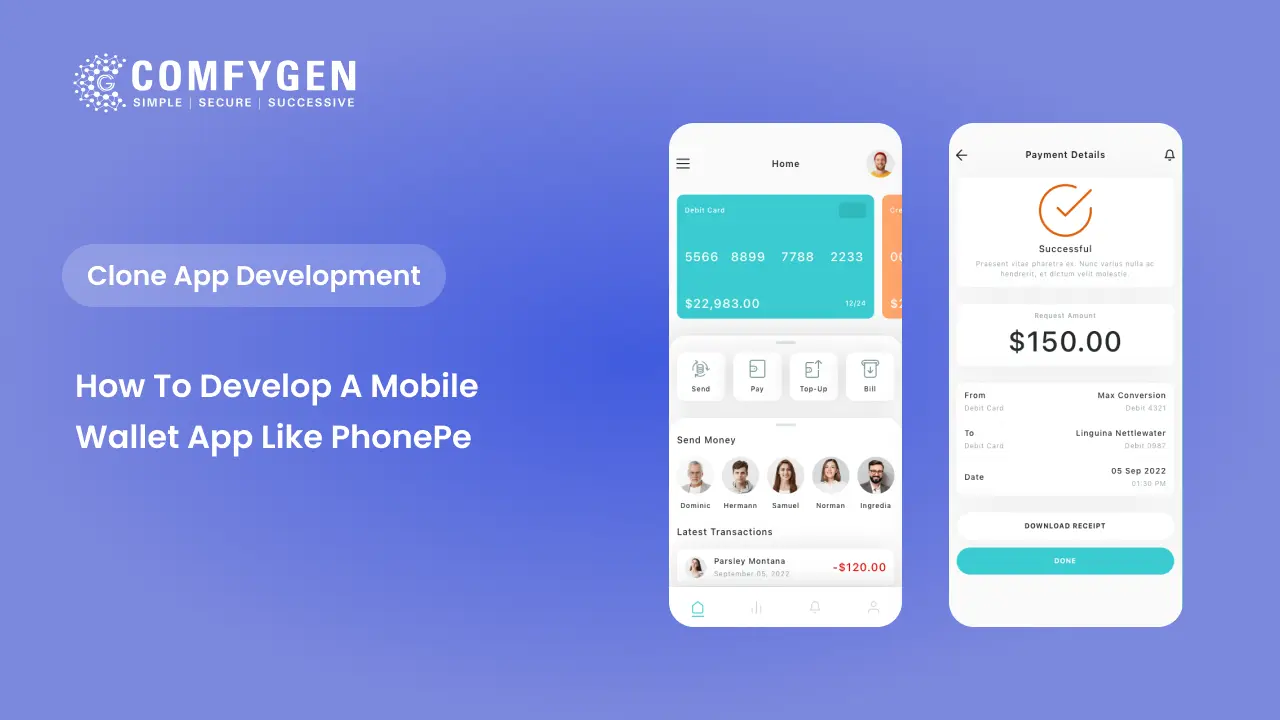
A mobile wallet app like PhonePe is a digital payment platform that allows users to transfer money, pay bills, recharge services, and make online/offline payments through UPI, debit/credit cards, net banking, and wallet balance. The app connects bank accounts securely and enables instant transactions without physical cash or cards.
But PhonePe is more than just a UPI payment app. It’s an entire digital ecosystem. Users can:
- Recharge mobile numbers and DTH accounts
- Pay electricity, gas, and water bills
- Book insurance, buy gold, and invest in mutual funds
- Pay at offline stores via QR codes
- Manage multiple bank accounts within one app
Why Invest in PhonePe Like App Development?
Developing a PhonePe-like online payment app offers exceptional business opportunities because digital transactions are becoming a daily essential service. According to industry reports, the digital payments market is expected to reach $1.7 trillion by 2026, driven by UPI adoption and government push towards cashless economy.
Benefits of Digital Wallet Apps for Businesses and Startups
-
High demand and large user base
-
Strong revenue generation model
-
Low operational cost with scalable technology
-
Enhances user experience & customer loyalty
How Does a Mobile Wallet App Like PhonePe Work?
A mobile wallet app like PhonePe follows a structured and highly secure digital payment process that enables users to perform instant transactions with just a few taps. The system integrates banking APIs, UPI infrastructure, and encryption technology to ensure safe and seamless payment transfers.
Here is a detailed workflow of how a PhonePe-like UPI money transfer app operates:
Easy User Registration & KYC Verification
Users start by signing up using their mobile number. The app verifies the authenticity through OTP-based validation.
After registration, KYC verification is completed using Aadhaar, PAN, or government-approved ID to enable secure transactions and prevent fraudulent activities.
Linking Bank Account and Setting Up UPI
After the identity verification process, users can link their bank accounts directly through the app.
The UPI setup process allows users to create a UPI ID and secure MPIN, enabling real-time money transfers without needing bank account details every time.
Secure Authentication & Payment Authorization
Every transaction is protected with multi-factor authentication, including MPIN and device-level security.
The UPI payment authorization ensures that only the account holder can confirm and complete the transaction, maintaining high security and preventing unauthorized access.
Instant Money Transfer & Real-Time Notifications
Once the payment is authenticated, the transaction is processed instantly through UPI infrastructure.
The system sends real-time push notifications to both sender and receiver with amount, time, and reference ID details.
Transaction History & Digital Receipt
Every transaction is recorded in the app’s wallet history, where users can view completed, pending, and failed transactions. A digital receipt is generated automatically for tracking and banking references.
Essential Features in Mobile Wallet App Development Like PhonePe
When you’re planning to develop a PhonePe clone app, the features you include determine how trustworthy, fast, and enjoyable your app feels to users. The goal is to make transactions effortless while keeping security airtight. Let’s go through the must-have elements your duplicate PhonePe app should include.
User Features
These are what make the app instantly usable and engaging for end users.
- Quick Registration & KYC Verification: Simple sign-up with OTP verification and eKYC to link user identity with their bank account.
- Bank Account Linking: Secure integration with multiple banks through UPI, allowing instant money transfers.
- One-Click Payments: Enable users to send or receive funds using a mobile number, UPI ID, or QR scan in seconds.
- Bill Payments & Recharges: Electricity, gas, DTH, and mobile recharges built right into the app.
- Cashback & Rewards: Offer discounts, referral bonuses, and loyalty points to boost engagement.
- Transaction History: A detailed yet clean interface showing all past transactions, refunds, and rewards.
Admin Features
On the backend, the admin panel powers everything — from user data to transaction control.
- Dashboard & Analytics: Track app usage, total transactions, and revenue in real time.
- KYC & User Management: Verify new users, monitor suspicious accounts, and maintain regulatory compliance.
- Merchant & Partner Management: Onboard new merchants, manage commissions, and handle service integrations.
- Fraud Detection & Monitoring: Flag unusual activity and control payment limits for risk management.
- Role-Based Access: Assign permissions to admins, agents, and support teams for smooth internal operations.
Advanced Features
If you want your PhonePe clone app to stand out, advanced functionality is where you can innovate.
- AI-Driven Fraud Detection: Artificial intelligence-based digital wallet app development models to spot unusual transaction behavior in real time.
- Voice-Activated Payments: Let users complete payments using voice commands for faster accessibility.
- Multi-Language Support: Cater to users across India by adding regional language options.
- Biometric Authentication: Face ID, fingerprint unlock, and secure PIN for better account protection.
- Chatbot & Virtual Support: AI-based chat assistants for handling queries instantly.
Build a Secure and Scalable UPI Wallet
App Like PhonePe Today!
Step-by-Step Guide to Develop a PhonePe-Like App
Building a powerful and secure mobile wallet app like PhonePe requires strategic planning, robust technology, and a smooth development process. Below are the essential steps that every business must follow to create a successful digital wallet app.
Step 1: Market Research & Requirement Analysis
The first step in digital wallet app development is researching the target market. You need to identify what users want, what competitors are offering, and what features your app should include.
Studying the success of PhonePe-like app development helps you understand user behavior and modern payment trends. This stage also defines the app’s purpose, budget, timeline, and required resources.
Step 2: Design Wireframes & UI/UX
A digital payment app must be easy to use and visually clean. The UI/UX design includes creating wireframes and screen layouts that make navigation simple for all users. A smooth and attractive interface helps increase downloads and improves customer experience, which is essential for successful eWallet app development.
Step 3: Choose a Reliable Mobile Wallet Development Company
Partner with a fintech app development company experienced in UPI integration, compliance, and secure payment gateways. The right team can handle regulatory requirements (RBI, NPCI) and ensure your app meets performance and data security standards. Don’t cut corners here — your development partner will shape your app’s stability and trustworthiness.
Step 4: Backend & Frontend Development
This stage involves developing the technical structure of the app. The frontend development manages user interface and interaction, while the backend development handles database management, server-side logic, and secure payment processing. Using reliable technologies like Node.js, React Native, Flutter, or Java ensures app performance and flexibility.
Step 5: Select the Right Tech Stack for Android/iOS
Your tech stack determines speed, scalability, and security.
- Frontend: Kotlin (Android), Swift (iOS), or Flutter for cross-platform.
- Backend: Node.js, Java, or Python with a reliable database (MongoDB, PostgreSQL).
- Server: AWS, Azure, or Google Cloud for uptime and data protection.
- UPI API Integration: Use certified UPI PSP APIs or payment gateways like Razorpay or Paytm.
Step 6: API & UPI Bank Integration
UPI support is the backbone of a PhonePe-like mobile wallet app. Integrating secure APIs such as Razorpay, Paytm, Cashfree, or NPCI UPI APIs enables real-time fund transfer and banking operations. API integration also supports features such as bill payments, merchant transactions, and QR-based payments.
Step 7: Security & Compliance Setup
Security is critical in digital wallet app development. Implementing PCI DSS compliance, KYC verification, end-to-end encryption, two-factor authentication (2FA), and fraud monitoring systems helps maintain user trust and protect financial data. Compliance with regulatory standards ensures safe digital transactions.
Step 7: Testing & Quality Assurance
Before launching the application, detailed testing is performed to identify and fix bugs. Testing covers performance, speed, payment processing, usability, security, and cross-platform compatibility. QA ensures that the PhonePe clone app functions smoothly without errors.
Step 8: Deployment & Launch
After successful testing, the app is deployed on the Google Play Store and the Apple App Store. Deployment involves server configuration, API keys, and security settings. A marketing strategy is also prepared to attract users and merchants.
Step 9: Ongoing Support & Maintenance
Post-launch maintenance is essential to keep the app updated and competitive. Continuous support includes:
Continuous maintenance helps increase user satisfaction and long-term reliability of the UPI wallet app.
How Much Does It Cost to Build a Mobile Wallet App Like PhonePe?
The cost to develop a mobile wallet app like PhonePe depends on many important factors such as app features, UI/UX design, security standards, technology stack, development team experience, and integrated payment services. When planning mobile wallet app development, it is important to set a clear budget and development roadmap based on your business goals.
Features and App Complexity
The more features you add — like AI-driven fraud detection, multi-language support, or instant cashback — the higher the development time and cost.
- Basic version (MVP): Includes UPI payments, bank linking, and bill payments.
- Advanced version: Adds investment options, insurance, voice payments, and analytics.
Tech Stack and Integrations
Choosing the right technology stack affects cost and scalability. A cross-platform app built with Flutter or React Native is more affordable than developing two separate native apps in Kotlin and Swift.
Adding UPI APIs, payment gateways, and KYC systems also adds to integration costs.
Development Team & Location
Where you hire a mobile app development team plays a big role in pricing.
- India-based fintech developers: $25 – $60 per hour
- US/UK-based developers: $80 – $150 per hour
Security, Compliance & Maintenance
Compliance with RBI, NPCI, and PCI DSS standards adds extra cost but is absolutely essential. Regular updates, bug fixes, and new feature rollouts also require ongoing maintenance budgets.
Estimated Cost of PhonePe Clone App Development
Here is the approximate pricing range for Digital Wallet App Development depending on app complexity:
| App Type |
Estimated Cost (USD) |
Timeline |
| MVP / Basic PhonePe Clone |
$25,000 – $40,000 |
10–14 weeks |
| Mid-Level App |
$40,000 – $60,000 |
16–20 weeks |
| Full-Scale App with Advanced Features |
$60,000 – $80,000+ |
24+ weeks |
How AI and Blockchain Enhance PhonePe Clone Apps
Modern fintech apps aren’t limited to payments — they’re becoming smarter, safer, and more transparent thanks to AI and blockchain. If you want your PhonePe clone to stand out, these technologies can give you a real competitive edge.
AI for Predictive Analytics and Fraud Prevention
Artificial Intelligence helps you go beyond basic transaction tracking.
- Fraud detection: AI algorithms identify unusual spending or login patterns in real time.
- User personalization: Analyze payment behavior to recommend offers, merchants, or services.
- Chatbots & support: AI-powered virtual assistants handle user queries 24/7, reducing support costs.
Blockchain for Transparency and Security
Blockchain technology brings an extra layer of transparency to your payment ecosystem.
- Every transaction is recorded on an immutable ledger, reducing fraud risks.
- It enhances cross-border transaction tracking and settlement speed.
- Smart contracts can automate settlements between users and merchants securely.
How to Choose the Best PhonePe Clone App Development Company
Finding the right trusted mobile wallet app development partner can make or break your fintech project. You need a team that understands both technology and regulation — not just app design.
Experience in Fintech and UPI App Development
Choose a UPI payment app development company with proven expertise in mobile wallet development, UPI integration, and secure API management. Review case studies, client testimonials, and past fintech projects.
Full-Service Capabilities
The ideal PhonePe clone app development company should handle everything — from UI/UX design and backend development to deployment, maintenance, and compliance updates.
Post-Launch Support and Scalability
Digital payment systems evolve constantly. Your partner should offer long-term technical support, feature upgrades, and scalability solutions to keep your app competitive as user volume grows.
Future of PhonePe-Like Apps in India
The future of digital payments in India looks unstoppable. With UPI 2.0 expanding capabilities and fintech adoption spreading beyond cities, there’s never been a better time to launch your PhonePe-like app.
UPI 2.0 and Beyond:- Features like overdraft accounts, signed intent verification, and recurring payments are changing how users and merchants interact. Integrating these into your app keeps it future-ready.
AI-Driven Personalization:- Expect AI to dominate customer experience — from tailored offers to spending insights and instant credit scoring.
Cross-Border Payments and Global Expansion:- NPCI’s new UPI partnerships with countries like Singapore and the UAE are opening the door for international UPI transfers — a massive opportunity for wallet apps.
Rise of White-Label and Custom Wallet Solutions:- More businesses are choosing white-label eWallet mobile app development to launch faster and reduce cost. With customization, they can add branding, loyalty programs, and niche fintech features.
Conclusion
Building a PhonePe clone app isn’t about imitation — it’s about innovation within a proven framework. You’ve seen how the right features, security, and tech stack come together to create a fast, reliable, and profitable fintech product.
Start small with an MVP, validate your business model, and then scale based on user feedback. Whether you’re targeting India’s local market or expanding globally, the opportunity in digital payments is wide open.
If you’re serious about entering this space, partner with a trusted PhonePe clone app development company that understands fintech, UPI regulations, and enterprise-grade scalability. With the right partner, you can go from idea to launch faster than you think.
Frequently ask questions
How can I create a PhonePe clone app?
Hire a professional fintech development company experienced in UPI API integration, KYC verification, and secure payment architecture. Start with an MVP, then expand features.
What’s the cost to build a duplicate PhonePe app?
A basic version costs around $25,000–$40,000, while a full-scale app with AI, blockchain, and advanced security can exceed $80,000.
Is it legal to develop a PhonePe-like app?
Yes — as long as you follow RBI and NPCI compliance standards, use authorized UPI APIs, and maintain proper security protocols.
How does a PhonePe clone app make money?
Through merchant fees, ads, cashback partnerships, financial services, and transaction-based commissions.