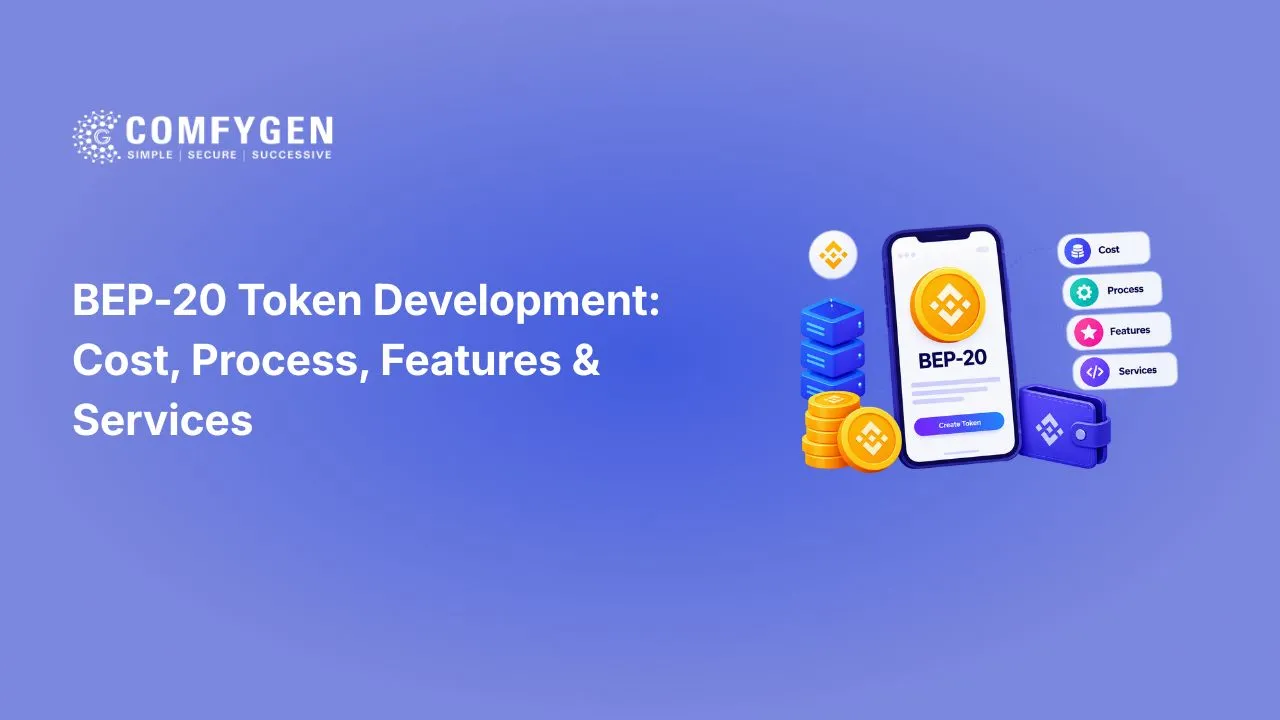





BEP-20 token development is the process of designing, developing, testing, and deploying a token on BNB Smart Chain (BSC). Based on a project, a token can include custom tokenomics, minting and burning, vesting, governance, rewards, wallet integration, and dApp connectivity.
These tokens are used for utility platforms, rewards, gaming, DeFi applications, governance, payments, and digital communities by companies . A BEP-20 token development cost depends on the token’s functionality, smart contract complexity, integrations, testing requirements, and overall project scope.
This guide explains the BEP-20 token development process, features, services, cost factors, security considerations, and how to choose a development company in India.
What Is BEP-20 Token Development?
BEP-20 is a token standard associated with BNB Smart Chain. It defines common functions that allow tokens to be transferred, tracked, approved, and integrated with compatible wallets and applications.
BEP-20 token development process includes
- Token and tokenomics planning
- Smart contract development
- Custom token functionality
- Contract testing
- Security review
- Token deployment
- Contract verification
- Wallet and dApp integration
- Post-launch support
A basic token may need only standard functions, while a project involving staking, governance, rewards, or custom distribution rules requires additional smart contract logic.
How to Create a BEP-20 Token?
Creating a BEP-20 token involves several technical and planning stages.
1. Define the Token Purpose
First, determine how the token will be used. Common use cases include utility, rewards, governance, gaming, payments, and DeFi applications. The use case influences the tokenomics and contract functionality.
2. Plan Tokenomics
Tokenomics defines how the token is created and distributed. Key decisions include:
- Token name and symbol
- Total supply
- Allocation and distribution
- Vesting schedules
- Minting rules
- Burning rules
- Treasury and community allocation
A clear token model should be established before smart contract development begins.
3. Develop the Smart Contract
The contract is developed according to the approved token requirements. Basic functionality can include transfers, balances, approvals, allowances, and supply management.
Custom projects may also require minting, burning, pausing, access control, vesting, rewards, or governance functions.
4. Test the Contract
Testing covers normal transactions as well as edge cases. Developers test token transfers, permissions, supply changes, custom functions, and contract interactions before deployment.
For projects with complex functionality or significant financial exposure, an independent smart contract audit may also be considered.
5. Deploy and Verify the Token
After testing, the contract can be deployed on the intended BNB Smart Chain environment. The deployment process includes recording the contract address and verifying the contract where applicable.
6. Integrate the Token
The token can then be connected to compatible wallets, dApps, websites, mobile applications, staking platforms, payment systems, or other parts of the project.
Key Features of BEP-20 Tokens
A BEP-20 token can include standard and custom functionality based on its purpose, tokenomics, and operating model. Common features include:
- Token name and symbol
- Total and circulating supply management
- Balance tracking
- Transfers, approvals, and allowances
- Minting and token burning
- Pausable transfers
- Access control and role management
- Token vesting
- Reward mechanisms
- Governance functionality
Not every project needs every feature. The smart contract should include only the functionality required for the token’s specific use case and operating model. Keeping the contract focused can also make it easier to test, review, and maintain.
Custom BEP-20 Token Development
Custom BEP-20 token development is suitable when a standard token contract does not meet a project’s requirements.
Custom functionality can include:
- Custom tokenomics
- Minting and burning rules
- Vesting mechanisms
- Reward distribution
- Staking integration
- Governance features
- Wallet integration
- dApp integration
- Exchange integration
- Administrative controls
For example, a gaming platform may require token-based rewards, while a governance project may need voting-related functionality. Defining these requirements early helps developers design the contract around the actual business model.
BEP-20 Token Development Services
A complete BEP-20 token development service can cover different stages of the token lifecycle.
Token Planning and Tokenomics
The development team defines the token’s purpose, supply, allocation, distribution, and other economic rules.
Smart Contract Development
The token contract is developed according to the agreed functionality and technical requirements.
Custom Token Development
Additional functions such as minting, burning, vesting, rewards, or governance can be added when required.
Testing and Security Review
The contract is tested for functionality, permissions, transaction behavior, and relevant edge cases. Independent audits can be considered for projects that require additional security review.
Deployment and Integration
The token is deployed and can be integrated with wallets, dApps, websites, exchanges, or other project components based on the agreed scope.
BEP-20 Token Development Cost
The BEP-20 token development cost depends on the project’s technical requirements rather than the token standard alone.
Major pricing factors include:
- Smart contract complexity
- Custom features
- Tokenomics
- Wallet integrations
- dApp or exchange integrations
- Security testing
- Admin dashboard requirements
- Deployment requirements
- Post-launch support
A basic token contract generally requires less development work than a custom token ecosystem with staking, governance, rewards, integrations, and administrative tools.
For an accurate estimate, the development scope should be defined before the final budget is prepared.
BEP-20 Token Security Considerations
Security should be considered throughout the development process.
Important areas include:
- Access control for privileged functions
- Minting and burning permissions
- Token supply management
- Contract logic
- Input validation
- Transaction testing
- Edge-case testing
- Independent security review where appropriate
No smart contract should be treated as risk-free. Careful design, testing, permission management, and security review can help identify avoidable issues before deployment.
How to Choose a BEP-20 Token Development Company in India?
When selecting a BEP-20 token development company in India, don’t compare providers only by price. Review their:
- Blockchain development experience
- Smart contract expertise
- Customization capability
- Testing and security practices
- Development scope
- Documentation
- Integration experience
- Source-code ownership terms
- Post-launch support
Ask the company to clearly explain what is included in the development package and which services are optional.
For Indian businesses, technical development should also be considered separately from legal and regulatory requirements. Token-related obligations can depend on the project’s structure, use, jurisdiction, and business model, so appropriate professional advice should be obtained where required.
Why Choose Comfygen for BEP-20 Token Development?
Comfygen provides blockchain development services for businesses planning custom token projects. Our BEP-20 token development services can be structured around the project’s requirements, from token planning and smart contract development to testing, deployment, and integrations.
Depending on the project scope, services can include:
- BEP-20 token development
- Custom token functionality
- Tokenomics implementation
- Smart contract development
- Contract testing
- Token deployment
- Wallet and dApp integration
- Post-launch technical support
We focus on understanding the token’s purpose and technical requirements before development so the implementation matches the intended use.
Conclusion
BEP-20 token development involves more than creating a basic token contract. A well-planned project connects the token’s purpose, tokenomics, smart contract functionality, security, integrations, and deployment requirements.
Whether you need a basic token or a customized token ecosystem, defining the technical scope first helps establish a clearer development process and budget.
Planning to create a BEP-20 token? Contact Comfygen to discuss your token requirements, custom features, integrations, and development scope.
FAQ’s
What is BEP-20 token development?
BEP-20 token development is the process of designing, developing, testing, and deploying a token on BNB Smart Chain, including its smart contract, tokenomics, custom features, and integrations.
How do I create a BEP-20 token?
Define the token purpose and tokenomics, specify the required contract functions, develop and test the smart contract, deploy it, and integrate the token with the required applications or wallets.
How much does BEP-20 token development cost?
The cost depends on contract complexity, custom functionality, tokenomics, integrations, security testing, and post-launch requirements. A project-specific scope is needed for an accurate estimate.
Can I customize a BEP-20 token?
Yes. Custom BEP-20 tokens can include features such as minting, burning, vesting, rewards, staking, governance, and role-based access controls.
How do I choose a BEP-20 token development company?
Evaluate the company's blockchain experience, smart contract expertise, security practices, customization capability, development scope, documentation, ownership terms, and post-launch support.

Mr. Saddam Husen, (CTO)
Mr. Saddam Husen, CTO at Comfygen, is a renowned Blockchain expert and IT consultant with extensive experience in blockchain development, crypto wallets, DeFi, ICOs, and smart contracts. Passionate about digital transformation, he helps businesses harness blockchain technology’s potential, driving innovation and enhancing IT infrastructure for global success.