




The demand for instant delivery services has changed the way people shop for groceries and everyday essentials. Consumers now expect products to arrive within 10–30 minutes, creating a massive opportunity for businesses to enter the quick commerce market.
The global online grocery market is expected to reach $2.1 trillion by 2030, growing at a fast rate of 25.3% each year. Grocery delivery apps like Blinkit, Zepto, and Instamart have changed the way people shop by delivering items in just 10 to 15 minutes. As life in cities becomes busier, quick and easy shopping is more important than ever.
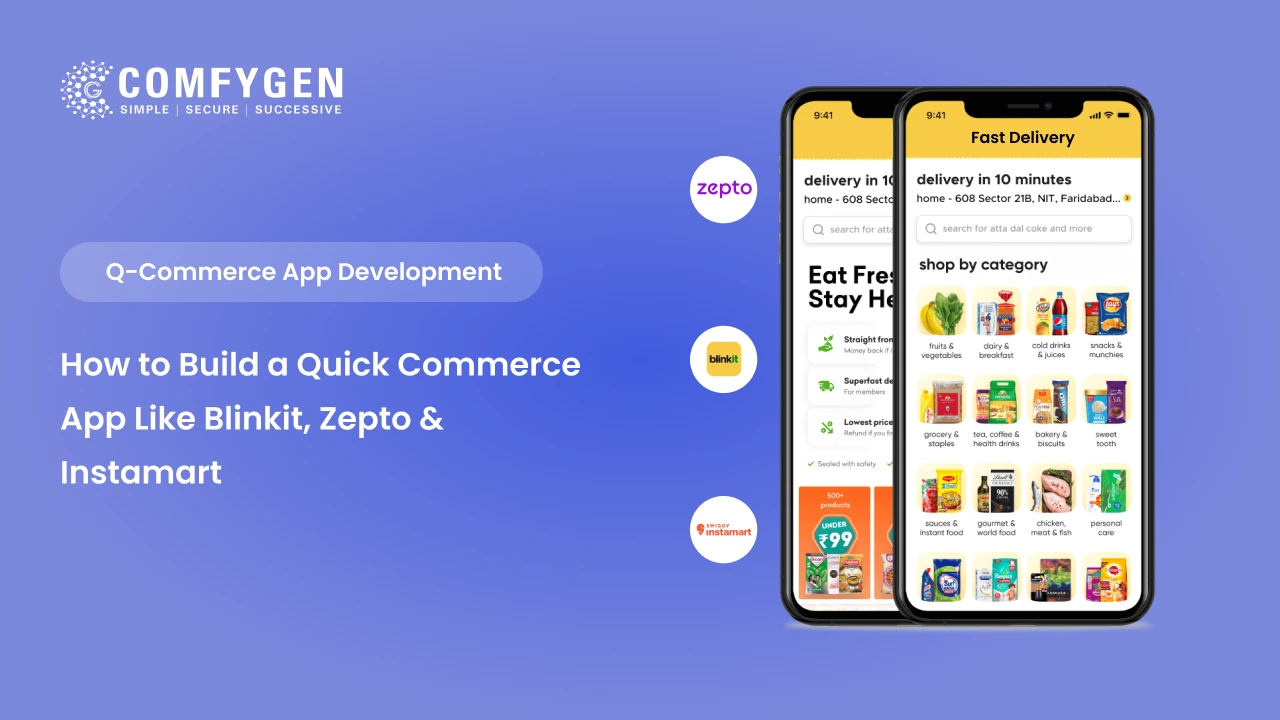
Leading apps like Blinkit, Zepto, and Swiggy Instamart have transformed traditional eCommerce by providing ultra-fast grocery delivery through smart logistics and technology.
If you are a startup founder or business owner looking to launch your own instant delivery platform, building a quick commerce app could be the perfect opportunity. In this guide, we will explain how to build a quick commerce app, key features, development process, technology stack, and the cost of development.
What is Quick Commerce (Q-Commerce)?
Quick Commerce (Q-Commerce) refers to an on-demand delivery model that focuses on delivering products to customers within 10–30 minutes. Unlike traditional eCommerce platforms that may take hours or days, quick commerce apps rely on hyperlocal warehouses (dark stores), optimized logistics, and advanced technology to ensure ultra-fast deliveries.
Quick commerce platforms typically deliver:
- Groceries
- Snacks and beverages
- Household essentials
- Personal care products
- Medicines and pharmacy items
Businesses are investing heavily in quick commerce app development because it provides higher customer retention, fast delivery convenience, and recurring orders.
Why Quick Commerce Is the Future of Retail
Quick commerce is transforming the way consumers shop, particularly in high-demand categories like groceries, personal care products, snacks, and medicines. There is no longer enough speed to deliver products the next day with the traditional e-commerce model.
In today’s world, consumers expect their orders to arrive within 10 to 15 minutes with speed, simplicity, and certainty.
Here’s why quick commerce is not just a trend, but the future of retail:
1. Busy Urban Lifestyles
In metro cities and urban hubs, people are juggling work, family, and social commitments. The time to visit physical stores is shrinking. Q-commerce apps cater to this fast-paced life by delivering essentials at the tap of a button, eliminating the need to plan.
2. The Rise of Instant Gratification
After the success of fast grocery apps like Blinkit and Zepto, people now feel that quick delivery should be normal. With a Q-commerce platform, customers can easily order snacks during a movie or get baby food late at night without waiting.
This growing demand is increasing the popularity of fast delivery apps, where speed, convenience, and real-time tracking create a better shopping experience. A quick commerce app development company helps businesses build these fast and reliable delivery apps.
Fast delivery not only makes customers happy but also encourages them to order again. Businesses that deliver quickly get more repeat orders and keep their customers for a longer time.
3. Growing Demand for Daily Essentials
Grocery items, household products, basic medicines, and toiletries are things people need often. Instead of doing one big weekly shopping trip, many customers now prefer to order small items whenever they need them.
This is where quick commerce becomes useful. It shows real-time stock and delivers items within minutes. An instant grocery delivery app development company can develop a quick commerce app for food, grocery, medicine, and parcel delivery to make this fast shopping experience possible.
Quick commerce apps like Swiggy Instamart and Zepto have changed the grocery delivery market. They focus on instant delivery instead of scheduled time slots, which encourages customers to order more frequently.
Key Factors Driving the Rapid Growth of Quick Commerce Apps
The global demand for quick commerce platforms has increased significantly in recent years. Changing consumer expectations, digital adoption, and improvements in delivery infrastructure are some of the major factors driving this growth.
Below are the key reasons why businesses are investing in quick commerce app development.
1. Rising Demand for Instant Delivery
Modern consumers value convenience more than ever before. Instead of waiting hours or days for deliveries, customers prefer services that can deliver products in 10–15 minutes. Quick commerce apps meet this demand by offering faster and more efficient delivery options.
2. Smart Logistics and Dark Stores
One of the biggest innovations behind quick commerce is the use of micro-warehouses, often called dark stores. These small fulfillment centers are located close to residential areas and are designed specifically for online order processing. This setup enables companies to deliver products much faster compared to traditional retail or e-commerce models.
3. Growth of Smartphone and App Usage
The rapid adoption of smartphones and mobile applications has made online shopping more accessible. Customers can easily browse products, place orders, and track deliveries in real time through mobile apps. This digital convenience plays a major role in the growing popularity of quick commerce services.
4. High Market Growth Potential
The quick commerce market is expected to grow significantly in the coming years. Many startups and established businesses are entering this space to take advantage of the growing demand for instant delivery.
Investing in quick commerce platform development can provide companies with new revenue opportunities and help them stay competitive in the evolving retail landscape.
Want to Develop an
Instant Delivery App like Blinkit?
Get a Free Quote
Quick Commerce Market Highlights
The quick commerce app development industry is witnessing unprecedented growth, driven by evolving consumer behavior, increasing smartphone penetration, and the rise of hyperlocal logistics.
As demand for faster fulfillment continues to rise, the future of instant delivery app development solutions looks promising, with innovative technologies and business models redefining how essentials reach customers in minutes.
Here’s a closer look at the key trends shaping this booming sector:
Market Value & Growth Projections Of Quick Commerce
The quick commerce market in India is projected to reach $5.5 billion by 2025, up from just under $1 billion in 2021. This represents a compound annual growth rate (CAGR) of over 45%, making it one of the fastest-growing retail segments in the country.
10-Minute Delivery Becomes the Norm
10-minute delivery is now becoming normal. Earlier it was a special feature, but today it has become a common standard. In big cities like Delhi, Mumbai, Pune, Bengaluru, Jaipur, and Hyderabad, people expect their orders within 10–15 minutes.
This trend has increased the demand for 10-minute delivery app development. Quick grocery delivery applications like Blinkit, Zepto and Instamart use dark stores and small warehouses placed close to customers to deliver orders very fast.
Millennial & Gen Z Preference for Speed
More than 60% of millennials and Gen Z consumers now prefer quick commerce apps over traditional eCommerce platforms for daily essentials. The main drivers are:
-
Instant convenience
-
No minimum order barriers
-
Flexible payment options (UPI, wallets, COD)
Younger consumers are not only more digitally native but also less brand-loyal, prioritizing delivery speed and app experience over retailer reputation.
Step-by-Step Process to Build a Quick Commerce App
A successful grocery delivery app development involves more than just tech. It requires strategy, market understanding, and a user-first approach. Let’s explore the key steps to build your own Q-commerce app from scratch.
Market Research & Target Audience Analysis
First, understand what your customers really need and where the demand is high. Look at their shopping habits, behavior, and local problems so you can create a q-commerce app like an instant delivery app that actually helps them.
Define Your Unique Selling Point (USP)
With strong competition in the Instant delivery mobile app development market, your app must offer something different. Whether it’s faster delivery, better pricing, or exclusive products, a clear USP helps attract and retain users.
Choose a Scalable Business Model
Choose a model that can grow in the future, whether it is inventory-based, marketplace-based, or a mix of both. A scalable model helps your business grow smoothly as demand increases.
Hire a Dedicated App Development Team
Work with experienced developers like Comfygen Technologies who understand quick commerce systems. A skilled team ensures you get a secure, high-performing app with real-time capabilities and smooth backend integration.
Design UI/UX that Focuses on Speed & Ease
Building a quick commerce app like Instamart is all about saving time. A well-optimized UI/UX design make sure your application is clean, fast, and easy to use, allowing customers to place orders within seconds—even during peak hours.
Build MVP with Core Features
Start lean by launching a Minimum Viable Product (MVP) with must-have features like product listings, order tracking, and payments. This helps you test the market quickly and make smart improvements.
Launch & Continuously Optimize Based on Feedback
Go live in select locations and gather feedback to refine your app. Regular updates, bug fixes, and feature upgrades based on user behavior are key to long-term success.
Ready to Build an AI-Powered Grocery App?
Request a Demo
Cost to Build a Quick Commerce App Like Blinkit or Instamart
The cost to develop a quick commerce app varies depending on features, team size, and technology stack, but on average:
| App Type | Estimated Cost (USD) |
| Basic MVP | $10,000 – $25,00 |
| Mid-range Custom App | $25,000 – $60,00 |
| Fully Scalable Enterprise | $60,000 – $100,000+ |
Key Factors Affecting Quoc Commerce App Development Cost
The total cost to build a quick commerce app depends on several technical and strategic choices. Below are the main elements that influence your budget:
Platform Choice (Android, iOS, Web)
Building for multiple platforms (Android, iOS, Web) increases development time and cost. Choosing between native and cross-platform also impacts your overall budget and user reach.
Features & Complexity
More features mean more development effort. Advanced options like real-time tracking, AI-powered recommendations, and custom delivery modules add to complexity—and cost.
UI/UX Design
A simple, fast, and intuitive design is essential for user retention. Custom designs or animations will raise design costs compared to basic layouts.
Backend Infrastructure
A strong backend handles order processing, inventory, notifications, and delivery tracking. The more scalable and secure your infrastructure, the higher the investment.
Third-Party Integrations (Maps, Payments, Analytics)
Integrating services like Google Maps, Razorpay/Stripe, Firebase, or analytics tools adds functionality but also increases licensing and development expenses.
Testing & Security Protocols
To ensure your app is bug-free and secure, you’ll need thorough QA testing and encryption for data protection. More testing layers equal higher costs—but better performance.
Location-Based Scalability
Planning for multi-city or multi-country operations means setting up geo-specific settings, pricing, logistics, and language support—raising initial development and ongoing maintenance costs.
Essential Features of 10-Minute Delivery Apps
Dark Store & Micro-Warehouse Integration
To ensure fast delivery, the app must connect with local dark stores and micro-warehouses. This helps manage inventory and fulfill orders within 10–15 minutes in nearby areas.
AI-Based Inventory and Route Planning
Artificial Intelligence can predict demand, manage stock levels, and optimize delivery routes in real-time—ensuring efficiency and reducing delivery delays.
Live Notifications & Status Updates
Customers expect real-time updates—from order confirmation to delivery arrival. Push notifications and SMS alerts improve user trust and satisfaction.
Smart Delivery Partner Assignment System
An automated dispatch system assigns the nearest available delivery partner based on location, order weight, and traffic—ensuring timely deliveries with minimal delays.
User-Friendly Mobile Interface
The app should have a clean, responsive, and easy-to-use interface. Users should be able to search, order, and track items in just a few taps without confusion.
End-to-End Encryption & Secure Payments
Security is a top priority. Integrating secure payment gateways with encryption ensures user data and transactions are always protected.
Customer Service Chatbot or Agent
Offering live chat support or AI-based bots helps resolve customer issues quickly—improving experience and building brand loyalty.
Multi-Language & Multi-Region Support
To reach a wider audience, the app should support multiple languages and adapt to different regions with local currency, taxes, and delivery settings.
Build Your Quick Commerce App with Comfygen Technologies
Want to make a q-commerce delivery app like Zepto or Blinkit? You are in the right place. Comfygen Technologies is a trusted quick commerce app development company that builds delivery apps based on your business needs. Whether you need a dark store management app, real-time route planning, or a multi-vendor marketplace, we can build it for you.
Our team has real experience in instant delivery app development with features like AI-based logistics, live tracking, secure payments, and a simple user interface. We help businesses create fast and reliable delivery systems that match the growing demand for 10-minute grocery delivery. If you want to build an app like Zepto, Blinkit, or Instamart, we can bring your idea to life.
Quick commerce is no longer just a trend; it’s a reality. It has become a customer expectation. If you truly want to build a strong competitor to Blinkit, Zepto, or Instamart, this is the best time to get started.
Let Comfygen Technologies bring your grocery delivery app development dream into reality.
Conclusion
Quick commerce is redefining the future of eCommerce by enabling ultra-fast product deliveries within minutes. Businesses that invest in quick commerce app development can capture a rapidly growing market and meet modern consumer expectations.
By understanding the development process, essential features, technology stack, and cost factors, startups and enterprises can successfully launch their own instant delivery platform.
If you are ready to build a quick commerce app like Blinkit, Zepto, or Instamart, partnering with an experienced development company will ensure a scalable and successful product.
FAQs
Quick commerce apps use a blend of modern technologies including: Frontend: Flutter, React Native, Swift (iOS), Kotlin (Android) Backend: Node.js, Python (Django/Flask), Laravel Database: PostgreSQL, MongoDB, Firebase Real-time Tracking: Google Maps API, Mapbox AI/ML: For demand forecasting and route optimization Cloud: AWS, Google Cloud, Azure for scalability Security: SSL encryption, secure payment gateways, token-based authentication Instant delivery apps generate revenue through multiple streams: Delivery charges Commission from partner stores Surge pricing during peak hours Subscription models (like Zepto Pass) In-app ads or brand promotions Private label products or own inventory salesHow much does it cost to develop an instant delivery app?
How long does it take to develop a 10-minute delivery app?
What technologies are used for building quick commerce apps?
How do instant delivery apps make money?
How can Comfygen Technologies help in developing an instant delivery app?

Mr. Saddam Husen, (CTO)
Mr. Saddam Husen, CTO at Comfygen, is a renowned Blockchain expert and IT consultant with extensive experience in blockchain development, crypto wallets, DeFi, ICOs, and smart contracts. Passionate about digital transformation, he helps businesses harness blockchain technology’s potential, driving innovation and enhancing IT infrastructure for global success.